

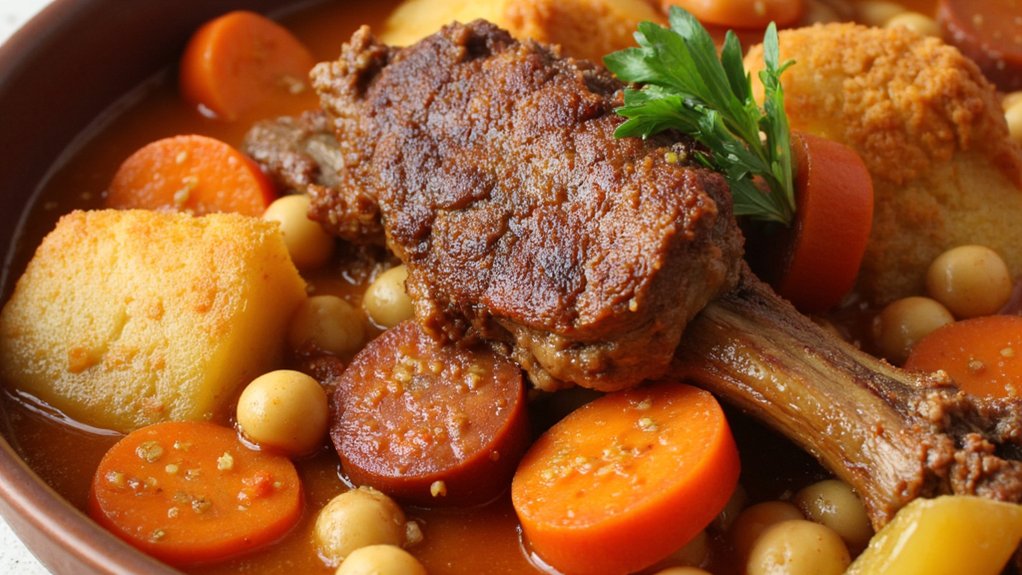
As winter’s chill sets in, I find myself craving the warmth and comfort of Spanish dishes. There’s something about a simmering pot of Cocido Madrileño that feels like a warm hug on a cold day. With hearty chickpeas and tender meats, these recipes are perfect for cozy meals. Each dish is a story in itself, ready to be shared around the table. Curious to explore some rich Spanish winter recipes?
Cocido Madrileño: A Hearty Chickpea Stew
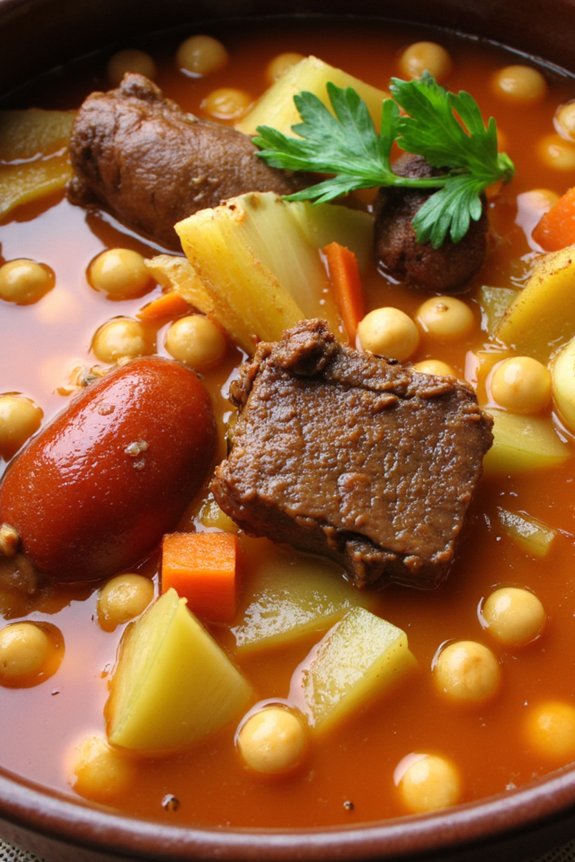
Cocido Madrileño is a traditional Spanish winter recipe known for its warmth and heartiness. This chickpea stew hails from Madrid and is a beloved dish, perfect for those cold winter days. It’s a one-pot meal that brings together a variety of ingredients, resulting in a rich and flavorful stew. The dish typically consists of chickpeas, vegetables, meats, and sausages, all cooked slowly to allow the flavors to meld perfectly.
The beauty of Cocido Madrileño lies in its simplicity and the comfort it brings, making it a staple in many Spanish households during the colder months.
The process of making Cocido Madrileño might seem lengthy, but the end result is well worth the effort. The stew offers a delightful blend of textures and flavors, with the chickpeas providing a hearty base, the meats adding depth, and the vegetables contributing freshness. Traditionally, this dish is served in three separate courses: the broth is served first, followed by the chickpeas and vegetables, and finally the meats.
However, it’s just as delicious when combined into a single hearty stew. Cocido Madrileño isn’t only a meal but a culinary experience that warms the soul as much as it warms the body.
Ingredients for 4-6 servings:
- 1 pound dried chickpeas (garbanzos), soaked overnight
- 1 pound beef shank or brisket
- 1 pound pork belly or pancetta
- 2 chorizo sausages
- 1 morcilla (blood sausage)
- 1 ham bone
- 2 carrots, peeled and cut into large chunks
- 1 leek, cleaned and cut into large pieces
- 1 onion, peeled and halved
- 1 cabbage, quartered
- 2 potatoes, peeled and halved
- 2 cloves garlic, peeled
- Salt to taste
- Black pepper to taste
- A handful of fresh parsley
- Olive oil for drizzling
Cooking Instructions:
- Prepare the Chickpeas: Drain the soaked chickpeas and rinse them under cold water. Set aside.
- Assemble the Ingredients: In a large pot, place the beef shank, pork belly, chorizo, morcilla, and ham bone. Add the chickpeas, carrots, leek, onion, garlic, and parsley.
- Add Water: Pour enough water into the pot to cover all the ingredients by about two inches. Bring to a boil over high heat.
- Simmer the Stew: Once boiling, reduce the heat to low and let it simmer gently. Skim off any foam or impurities that rise to the surface. Cover the pot and cook for about 2-3 hours, or until the meats and chickpeas are tender.
- Add Vegetables: About 45 minutes before the stew is done, add the cabbage and potatoes to the pot. Continue to cook until the vegetables are tender.
- Season and Serve: Taste the broth and season with salt and black pepper as needed. Remove the meats and vegetables from the pot, and slice them if necessary. Serve the broth first, followed by the chickpeas and vegetables, and finally the meats. Drizzle with olive oil before serving.
Extra Tips:
To enhance the flavors of Cocido Madrileño, consider preparing it a day in advance. The flavors will continue to develop as it sits, making it even more delicious when reheated.
If you prefer a thicker broth, mash a few of the cooked chickpeas and stir them back into the pot. Additionally, serving with a side of crusty bread can complete the meal and help soak up the rich broth.
Adjust the seasoning to your taste, and don’t be afraid to experiment with additional spices if you prefer a bit more heat or complexity.
Fabada Asturiana: Asturian Bean Stew
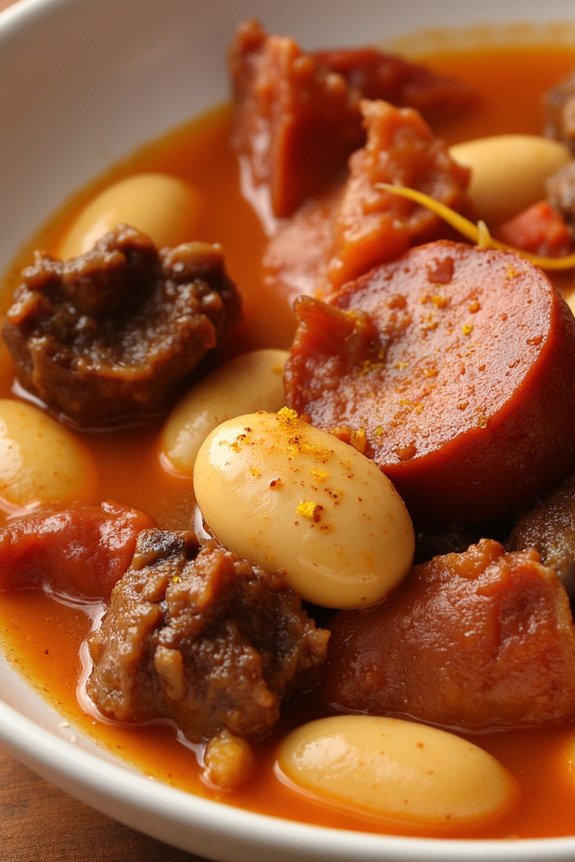
Fabada Asturiana, or Asturian Bean Stew, is a traditional Spanish winter dish hailing from the region of Asturias. Known for its hearty and rich flavors, this stew is a comforting meal perfect for cold days. It features large white beans, known as “fabes,” which are slow-cooked with chorizo, morcilla (Spanish blood sausage), and pancetta, creating a savory and robust dish. The stew is typically prepared in a large pot and simmered over a low flame to allow the flavors to meld together, resulting in a mouthwatering meal that warms both body and soul.
The origins of Fabada Asturiana date back centuries, making it a staple in Spanish cuisine. It’s a dish that isn’t only delicious but also steeped in tradition, often enjoyed during family gatherings or festive occasions. The key to a perfect Fabada Asturiana lies in the quality of its ingredients—particularly the sausages and beans. This comforting stew embodies the essence of Spanish home cooking, bringing people together around the table to enjoy its rich, smoky flavors.
Ingredients (Serves 4-6 people):
- 500g dried white beans (fabes), soaked overnight
- 2 chorizo sausages
- 2 morcilla sausages (Spanish blood sausage)
- 1 piece of pancetta or salted pork belly (about 200g)
- 1 large onion, roughly chopped
- 2 cloves of garlic, minced
- 1 bay leaf
- A pinch of saffron threads
- Salt and black pepper to taste
- Water
Cooking Instructions:
- Prepare the Beans: Drain the soaked beans and rinse them under cold water. Place them in a large pot.
- Add Ingredients: Add the chopped onion, minced garlic, bay leaf, and saffron threads to the pot with the beans.
- Add Meats: Add the chorizo, morcilla, and pancetta to the pot. Confirm they’re evenly distributed among the beans.
- Simmer the Stew: Cover the ingredients with water, ensuring there’s about an inch of water above the beans. Bring the pot to a gentle boil over medium heat.
- Reduce Heat and Simmer: Once boiling, reduce the heat to low, cover the pot, and let the stew simmer for about 2 to 2.5 hours. Stir occasionally and check the water level, adding more if necessary to keep the beans submerged.
- Adjust Seasoning: After the beans are tender and the meats have cooked through, season the stew with salt and black pepper to taste. Remove the bay leaf before serving.
- Serve: Slice the chorizo, morcilla, and pancetta into pieces and serve the stew hot, with plenty of the rich broth.
Extra Tips:
To guarantee the best flavor, use high-quality sausages and pancetta for your Fabada Asturiana. If possible, try to find authentic Asturian products.
The key is to cook the stew slowly, allowing the flavors to develop over time. If the stew seems too thick, add a bit more water during cooking.
For an extra touch, serve with crusty bread to soak up the delicious broth. Enjoy your Fabada Asturiana with a glass of Spanish red wine for a complete culinary experience.
Sopa Castellana: Castilian Garlic Soup

Sopa Castellana, also known as Castilian Garlic Soup, is a comforting and hearty dish perfect for warming up during the cold Spanish winters. This traditional soup is a staple in the region of Castilla y León, where it’s enjoyed for its robust flavors and simple ingredients. The foundation of the soup is a rich broth infused with garlic, enhanced by the smoky depth of Spanish paprika and the savory goodness of jamón serrano or chorizo. The addition of poached eggs gives the soup a creamy texture, making it a satisfying meal on its own.
This recipe for Sopa Castellana is designed to serve 4-6 people, making it ideal for a family dinner or a gathering with friends. The dish is easy to prepare, requiring only a few basic ingredients that are readily available. The key to mastering this recipe is to let the flavors meld together over low heat, resulting in a soup that’s full of aroma and taste. Serve it with crusty bread for a complete and satisfying meal.
Ingredients (Serves 4-6):
- 8 cups chicken or vegetable broth
- 6 cloves garlic, thinly sliced
- 4 tablespoons olive oil
- 200 grams jamón serrano or chorizo, diced
- 1 tablespoon smoked Spanish paprika
- 6 slices of stale bread, preferably crusty
- 4-6 eggs
- Salt and pepper to taste
- Fresh parsley, chopped (optional, for garnish)
Cooking Instructions:
- Prepare the Garlic and Bread: Heat the olive oil in a large pot over medium heat. Add the sliced garlic and sauté until golden brown, being careful not to burn it. Remove the garlic from the pot and set aside.
- Toast the Bread: In the same pot, add the slices of stale bread and let them toast in the flavored oil for about 2-3 minutes on each side, until they’re crispy and golden. Remove the bread and set aside.
- Cook the Jamón Serrano or Chorizo: Add the diced jamón serrano or chorizo to the pot and cook for about 5 minutes until it releases its flavor and turns slightly crispy.
- Combine Ingredients: Return the toasted bread and garlic to the pot. Sprinkle the smoked Spanish paprika over the mixture and stir well to combine, allowing the paprika to coat the ingredients.
- Add Broth: Pour in the chicken or vegetable broth, confirming the bread is submerged. Bring the soup to a gentle boil, then reduce the heat to low. Let it simmer for about 15-20 minutes, allowing the flavors to meld together.
- Poach the Eggs: Carefully crack each egg into a small bowl. Gently slide the eggs into the simmering soup, spacing them evenly. Cover the pot and let the eggs poach for about 5 minutes, or until the whites are set but the yolks remain runny.
- Season and Serve: Taste the soup and adjust the seasoning with salt and pepper as needed. Ladle the soup into bowls, ensuring each portion includes a poached egg. Garnish with fresh parsley if desired.
Extra Tips:
For the best Sopa Castellana, use day-old bread, as it absorbs the broth better and adds texture to the soup. If you prefer a spicier kick, consider using spicy chorizo or adding a pinch of cayenne pepper.
When poaching the eggs, confirm the broth is at a gentle simmer to prevent them from breaking apart. This soup is highly versatile, so feel free to adjust the ingredients to suit your taste, such as adding more garlic or using a different type of cured meat.
Enjoy this comforting dish as a starter or a main course, and savor the authentic flavors of Spain.
Caldo Gallego: Galician Broth
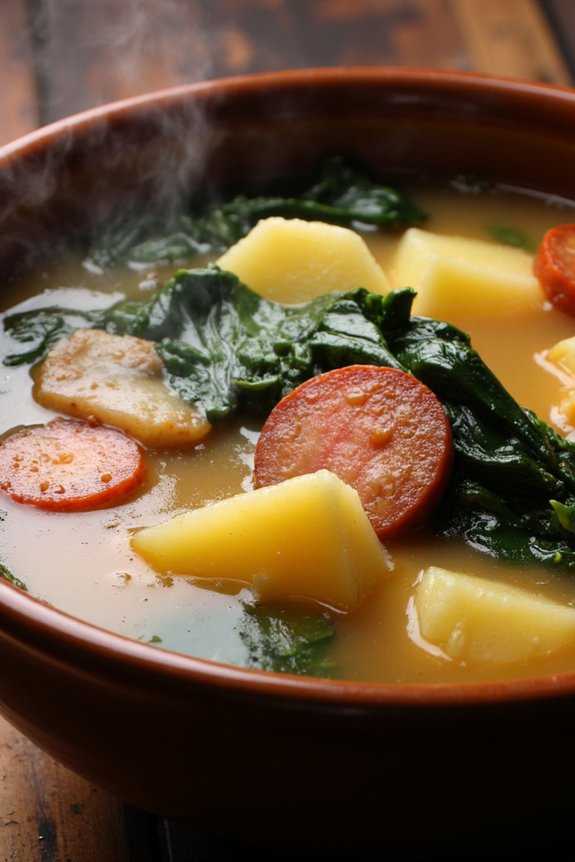
Caldo Gallego, or Galician Broth, is a traditional Spanish soup that hails from the Galicia region in northwest Spain. This hearty and comforting dish is perfect for warming up during the cold winter months. It’s known for its rich and savory flavors, which come from a combination of seasonal greens, potatoes, and a variety of meats. The broth is typically made with ham hock, chorizo, or bacon, giving it a distinctive and mouth-watering taste.
Caldo Gallego isn’t just a soup; it’s a celebration of Galician culinary tradition, bringing together simple ingredients to create a satisfying and nourishing meal.
The preparation of Caldo Gallego involves a slow simmering process, allowing the flavors to meld beautifully. This dish isn’t only delicious but also easy to prepare, making it a perfect choice for a family meal or a cozy dinner with friends. Traditionally, this soup includes grelos, a type of turnip green popular in Galicia, but in the absence of grelos, collard greens or kale can be used as substitutes.
The robust flavors of the broth are balanced with the addition of potatoes, which add a creamy texture to the dish. Served piping hot, Caldo Gallego is sure to become a winter favorite in your home.
Ingredients for 4-6 People
- 1 ham hock or 200g of cured bacon
- 1 chorizo sausage, sliced
- 4 medium potatoes, peeled and diced
- 250g of grelos (turnip greens) or collard greens/kale
- 2 cloves of garlic, minced
- 1 onion, finely chopped
- 1 bay leaf
- Salt and pepper to taste
- 2 liters of water
- Olive oil
Cooking Instructions
- Prepare the Ingredients: Begin by gathering and preparing all the ingredients. Peel and dice the potatoes, slice the chorizo, and chop the greens into bite-sized pieces. Mince the garlic and finely chop the onion.
- Cook the Meats: In a large pot, heat a small amount of olive oil over medium heat. Add the ham hock or bacon and cook until browned on all sides. If using chorizo, add it to the pot and cook for a few minutes until it releases its oils and is slightly browned.
- Sauté Vegetables: Add the minced garlic and chopped onion to the pot. Sauté for about 3-4 minutes until the onion becomes translucent and fragrant.
- Simmer the Broth: Add the water, bay leaf, and a pinch of salt and pepper to the pot. Bring the mixture to a boil. Once boiling, reduce the heat to low and let it simmer for about 1 hour, allowing the flavors to develop.
- Add Potatoes and Greens: After an hour, add the diced potatoes and chopped greens to the pot. Continue to simmer for another 30-40 minutes, or until the potatoes are tender and the greens are cooked to your liking.
- Adjust Seasoning: Taste the broth and adjust the seasoning with additional salt and pepper if necessary. Remove the bay leaf before serving.
- Serve: Ladle the hot Caldo Gallego into bowls, making certain each serving has a good mix of meat, potatoes, and greens. Serve immediately with crusty bread for dipping.
Extra Tips
When making Caldo Gallego, it’s important to allow the broth to simmer for a sufficient amount of time to guarantee that the flavors meld together beautifully.
If you prefer your soup with a thicker consistency, you can mash a few of the cooked potatoes before serving. Additionally, if you can find authentic Galician ingredients like grelos, they’ll provide the most traditional taste.
Remember that this dish can be made ahead of time and even tastes better the next day, as the flavors continue to develop. Enjoy this comforting soup as a perfect way to embrace the winter chill.
Rabo De Toro: Oxtail Stew
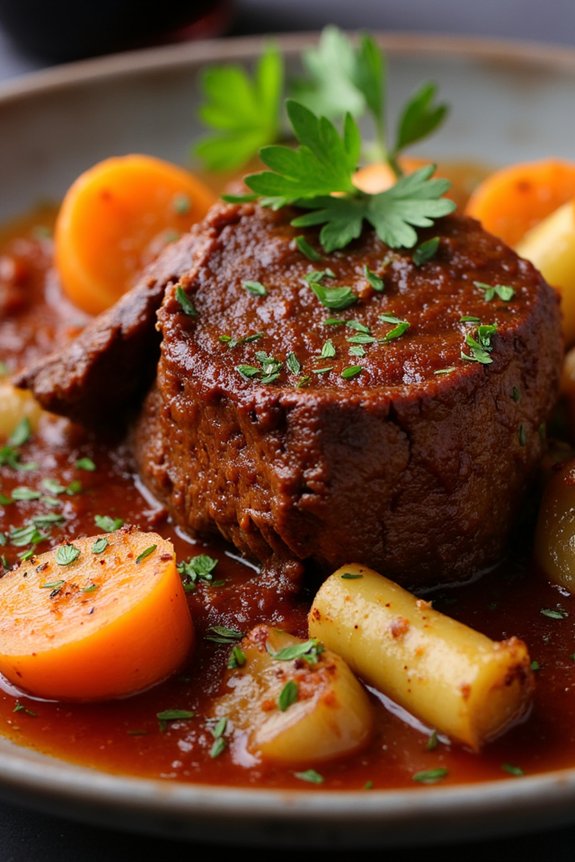
Rabo de Toro, or Oxtail Stew, is a traditional Spanish dish that’s deeply rooted in the culinary heritage of Andalusia. Known for its robust flavors and tender meat, Rabo de Toro is typically enjoyed during the colder months when its hearty nature provides both warmth and comfort. The dish is said to have originated in Córdoba, where it was traditionally prepared following the bullfights, using the tails of the bulls.
Over the years, it has become a beloved winter recipe, celebrated for its rich, slow-cooked flavors that encapsulate the essence of Spanish home cooking.
The beauty of Rabo de Toro lies in its simplicity and the depth of flavor that develops from slow cooking. The oxtail, with its gelatinous texture, becomes melt-in-your-mouth tender, while the sauce, infused with red wine and aromatic vegetables, is a perfect complement to the meat.
This dish is best served with crusty bread or alongside a serving of creamy mashed potatoes to soak up the luscious sauce. When prepared with care and patience, Rabo de Toro is a proof of the culinary magic of transforming humble ingredients into a gourmet experience.
Ingredients (serving size: 4-6 people):
- 2 kg oxtail, cut into sections
- 2 tablespoons olive oil
- 2 onions, chopped
- 2 carrots, chopped
- 2 celery stalks, chopped
- 4 cloves garlic, minced
- 2 bay leaves
- 2 sprigs of fresh thyme
- 1 teaspoon smoked paprika
- 1 teaspoon black pepper
- Salt to taste
- 500 ml red wine
- 500 ml beef stock
- 2 tablespoons tomato paste
- 1 tablespoon flour
- Fresh parsley, chopped (for garnish)
Cooking Instructions:
- Prepare the Oxtail: Pat the oxtail pieces dry with paper towels and season generously with salt and pepper. This helps to create a nice crust when browning the oxtail.
- Brown the Oxtail: Heat the olive oil in a large, heavy-based pot over medium-high heat. Add the oxtail in batches, and brown on all sides. Make sure not to overcrowd the pot to guarantee even browning. Once browned, remove the oxtail and set aside.
- Sauté the Vegetables: In the same pot, add the chopped onions, carrots, and celery. Sauté for about 5 minutes until the vegetables are softened and the onions are translucent.
- Add Aromatics: Stir in the minced garlic, bay leaves, thyme, and smoked paprika. Cook for another minute until fragrant.
- Deglaze the Pot: Sprinkle the flour over the vegetable mixture and stir well. Pour in the red wine, scraping up any browned bits from the bottom of the pot to deglaze it. Let the wine simmer for about 5 minutes to reduce slightly.
- Combine Ingredients: Return the oxtail to the pot, then add the beef stock and tomato paste. Stir to combine all ingredients well.
- Simmer the Stew: Bring the mixture to a gentle simmer, cover, and reduce the heat to low. Let it cook slowly for about 3 to 4 hours, or until the oxtail is tender and the meat easily falls off the bone. Stir occasionally to prevent sticking.
- Adjust Seasoning: Taste the stew and adjust the seasoning with salt and pepper as needed.
- Serve: Garnish the stew with freshly chopped parsley before serving with crusty bread or mashed potatoes.
Extra Tips:
When preparing Rabo de Toro, patience is key, as the slow cooking process is essential for achieving the desired tenderness and flavor.
It’s important to choose a good quality red wine, as it greatly impacts the final taste of the dish. Additionally, if time allows, prepare the stew a day in advance and refrigerate overnight. This allows the flavors to meld together beautifully, and it can be easily reheated before serving.
For a thicker sauce, you can remove the oxtail once cooked and reduce the sauce further by simmering uncovered until it reaches the desired consistency.
Escudella I Carn D’olla: Catalan Winter Soup
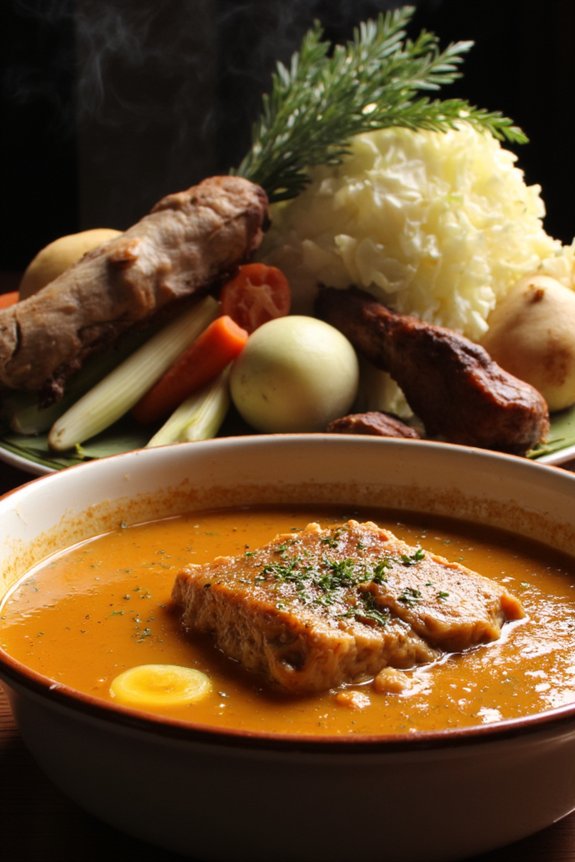
Escudella I Carn D’olla, a beloved Catalan winter soup, is a hearty and comforting dish perfect for warming the soul on chilly days. Traditionally enjoyed as a two-part meal, this dish consists of a rich broth (escudella) served as a first course, followed by the meats and vegetables (carn d’olla) as the second course. The combination of various meats, sausages, and seasonal vegetables creates a complex and flavorful soup that embodies the essence of Catalan home cooking. This dish is particularly popular during the festive season, bringing families together around the table to savor its robust flavors.
The preparation of Escudella I Carn D’olla requires time and patience, as the flavors develop best when simmered slowly, allowing the ingredients to meld together beautifully. While it may seem like an intimidating task, the effort is well worth it, resulting in a meal that’s both nourishing and satisfying. Perfect for serving 4-6 people, this recipe will become a cherished addition to your winter repertoire, bringing a taste of Catalonia into your kitchen.
Ingredients for 4-6 people:
- 500g beef shank
- 300g pork ribs
- 200g pork belly
- 1 chicken (cut into pieces)
- 2 Morcilla (Spanish blood sausages)
- 2 Butifarra (Catalan sausages)
- 1 large onion
- 3 cloves garlic
- 2 large carrots
- 2 leeks
- 3 potatoes
- 1 small cabbage
- 1 small turnip
- 200g chickpeas (soaked overnight)
- Salt and pepper to taste
- Water
Cooking Instructions:
- Prepare the Ingredients: Start by washing and peeling the vegetables. Cut the carrots, leeks, potatoes, and turnip into large chunks. Quarter the cabbage. Peel and crush the garlic cloves and leave the onion whole.
- Brown the Meats: In a large pot, heat a bit of oil over medium heat. Add the beef shank, pork ribs, and pork belly to the pot, browning them on all sides to enhance their flavors. Once browned, remove them from the pot and set aside.
- Build the Broth: In the same pot, add the onion, garlic, and the browned meats. Pour in enough water to cover everything generously. Bring to a boil over high heat, skimming off any foam that rises to the surface.
- Simmer the Soup: Once boiling, reduce the heat to low and let it simmer gently for about 1 hour. Add the chicken pieces, chickpeas, and salt to the pot. Continue simmering for another 1 hour, allowing the flavors to meld.
- Add Vegetables and Sausages: Add the carrots, leeks, potatoes, turnip, and cabbage to the pot. Simmer for an additional 30 minutes. Then, add the Morcilla and Butifarra sausages and simmer for another 30 minutes, or until all the ingredients are cooked through and tender.
- Serve the Escudella: Remove the meats and vegetables from the pot. Strain the broth into a separate container. Serve the broth as a first course, traditionally with small pasta or rice added.
- Present the Carn D’olla: Arrange the meats and vegetables on a large platter as the second course, allowing everyone to help themselves. Season with salt and pepper to taste.
Extra Tips:
When preparing Escudella I Carn D’olla, it’s important to skim the broth during the initial boiling stage to guarantee a clear and clean soup. If you prefer a less fatty broth, you can refrigerate it overnight and remove the solidified fat from the surface before reheating.
Feel free to adjust the vegetables and meats to your preference; some traditional recipes include other ingredients like ham hock or celery. This dish is flexible and can be adapted to use what you have on hand, ensuring a delicious and hearty meal every time.
Marmitako: Basque Tuna Stew
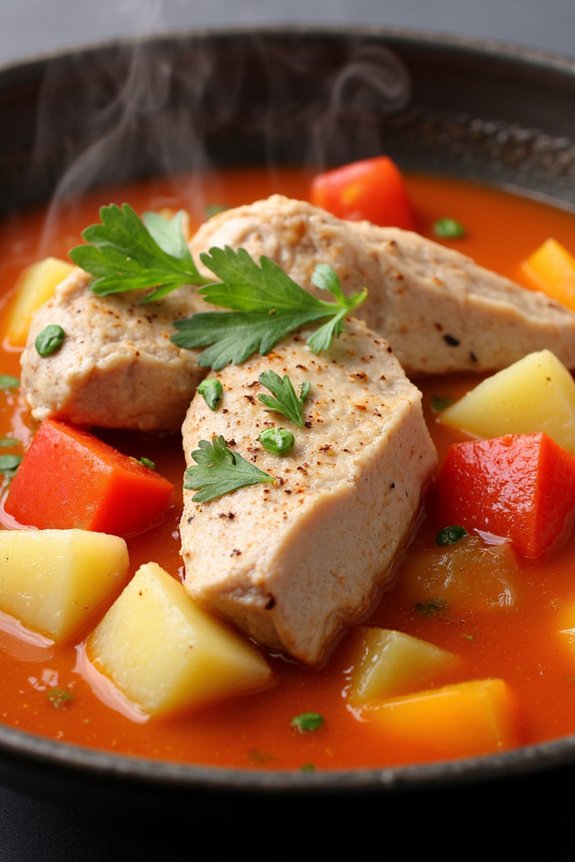
Marmitako, a traditional Basque tuna stew, is a comforting and hearty dish perfect for the cold winter months. Originating from the coastal regions of the Basque Country, this dish was originally a staple for local fishermen, who’d prepare it on board their boats using the freshest catch of the day.
The name “marmitako” comes from “marmita,” which means pot, referring to the pot in which the stew is cooked. Known for its rich flavors, this dish combines tender pieces of tuna with potatoes, peppers, and tomatoes, simmered to perfection in a fragrant broth.
The combination of simple ingredients makes Marmitako both a satisfying and nutritious meal. What makes this dish exceptional is its ability to bring out the natural flavors of the tuna, complemented by the sweetness of the peppers and the robustness of the potatoes.
The stew is traditionally cooked slowly to allow the flavors to meld together, resulting in a dish that’s both hearty and flavorful. Whether you’re looking to warm up on a chilly day or simply enjoy a taste of the Basque culinary tradition, Marmitako is an excellent choice.
Ingredients (Serves 4-6)
- 2 tablespoons olive oil
- 1 large onion, finely chopped
- 2 cloves garlic, minced
- 1 red bell pepper, diced
- 1 green bell pepper, diced
- 1 teaspoon smoked paprika
- 1/2 teaspoon cayenne pepper (optional)
- 4 medium potatoes, peeled and cut into chunks
- 1 can (14 ounces) diced tomatoes
- 1 cup fish stock or water
- 1 1/2 pounds fresh tuna, cut into chunks
- Salt and pepper to taste
- Fresh parsley, chopped, for garnish
Cooking Instructions
- Heat the Oil: In a large pot or Dutch oven, heat the olive oil over medium heat. Add the chopped onion and sauté until it becomes translucent, about 5 minutes.
- Add Garlic and Peppers: Stir in the minced garlic and diced bell peppers. Cook for another 3-4 minutes until the peppers start to soften.
- Season and Spice: Sprinkle the smoked paprika and cayenne pepper (if using) over the mixture. Stir well to coat the onions and peppers with the spices.
- Add Potatoes and Tomatoes: Add the potato chunks to the pot, followed by the diced tomatoes. Stir everything together, making certain the potatoes are well mixed with the tomato and spice mixture.
- Simmer the Stew: Pour in the fish stock or water, and bring the mixture to a gentle boil. Reduce the heat to low, cover the pot, and let it simmer for about 20-25 minutes, or until the potatoes are tender.
- Cook the Tuna: Add the chunks of fresh tuna to the pot. Season with salt and pepper to taste. Cover and cook for an additional 5-7 minutes, until the tuna is cooked through but still tender.
- Finish and Serve: Once the tuna is cooked, remove the pot from the heat. Let the stew sit for a few minutes to allow the flavors to meld further. Garnish with freshly chopped parsley before serving.
Extra Tips
When preparing Marmitako, it’s important to use fresh, high-quality tuna, as this will greatly enhance the flavor of the dish. If fresh tuna is unavailable, you can substitute with frozen tuna, but make sure it’s thoroughly thawed before cooking.
For a deeper flavor, consider adding a splash of white wine or a bay leaf while the stew simmers. Adjust the seasoning according to your taste; adding a little more smoked paprika can give the stew a more robust flavor.
Finally, be cautious not to overcook the tuna to maintain its tender texture.
Pisto Manchego: Spanish Ratatouille

Pisto Manchego, often referred to as Spanish Ratatouille, is a traditional Spanish dish originating from the region of Castilla-La Mancha. This hearty vegetable stew is a staple during the colder months, offering both warmth and comfort. It’s a versatile dish that can be enjoyed as a main course, a side, or even as a tapa.
What makes Pisto Manchego stand out is its use of ripe, fresh vegetables simmered to perfection, allowing the flavors to meld beautifully. Typically, it includes ingredients such as tomatoes, peppers, zucchini, and onions, all cooked in olive oil and seasoned to enhance their natural flavors.
The beauty of Pisto Manchego lies in its simplicity and adaptability. While it can be served on its own, it’s often accompanied by a fried egg or slices of crusty bread. This dish isn’t only delicious but also a great way to incorporate a variety of vegetables into your diet. It captures the essence of Spanish cuisine, where quality ingredients shine through minimalistic preparation.
Whether you’re looking for a vegetarian delight or a comforting meal to warm you up during the winter months, Pisto Manchego is an excellent choice.
Ingredients for 4-6 servings:
- 3 tablespoons olive oil
- 2 large onions, chopped
- 2 cloves garlic, minced
- 2 green bell peppers, chopped
- 1 red bell pepper, chopped
- 2 medium zucchini, diced
- 4 ripe tomatoes, peeled and chopped
- Salt and pepper to taste
- 1 teaspoon sugar (optional)
- 4 eggs (optional, for serving)
- Fresh parsley for garnish
Cooking Instructions:
1. Prepare the Vegetables:
Begin by washing all the vegetables thoroughly. Chop the onions, mince the garlic, and dice the bell peppers and zucchini. Peel and chop the tomatoes, ensuring that they’re ripe and juicy for the best flavor.
2. Cook the Onions and Garlic:
Heat the olive oil in a large skillet over medium heat. Add the chopped onions and minced garlic, sautéing them until the onions become translucent and the garlic is fragrant, about 5-7 minutes.
3. Add Bell Peppers:
Add the chopped green and red bell peppers to the skillet. Stir well and cook for another 5 minutes, until the peppers start to soften.
4. Incorporate Zucchini and Tomatoes:
Add the diced zucchini and chopped tomatoes to the skillet. Stir everything together, ensuring the vegetables are well mixed. Season with salt and pepper to taste.
5. Simmer the Pisto:
Lower the heat and let the mixture simmer for about 20-30 minutes. Stir occasionally, allowing the vegetables to cook down and meld together. If desired, add a teaspoon of sugar to balance the acidity of the tomatoes.
6. Cook the Eggs (Optional):
If serving with eggs, fry them in a separate pan to your liking. Traditionally, a sunny-side-up egg is placed on top of the pisto when serving.
7. Serve and Garnish:
Once the pisto is cooked to your preferred consistency, remove from heat. Serve warm, garnished with fresh parsley. If using eggs, place one on top of each serving.
Extra Tips:
When preparing Pisto Manchego, use the freshest vegetables you can find to enhance the overall taste of the dish. If fresh tomatoes aren’t available, canned tomatoes can be a good substitute, though fresh is always preferred for authenticity.
Adjust the cooking time based on how tender or al dente you prefer your vegetables. For a richer flavor, consider adding a splash of red wine or a pinch of smoked paprika. Finally, this dish can easily be made in larger batches and stored in the refrigerator for a few days, making it a convenient meal option for busy weeks.
Lentejas Con Chorizo: Lentil and Chorizo Stew
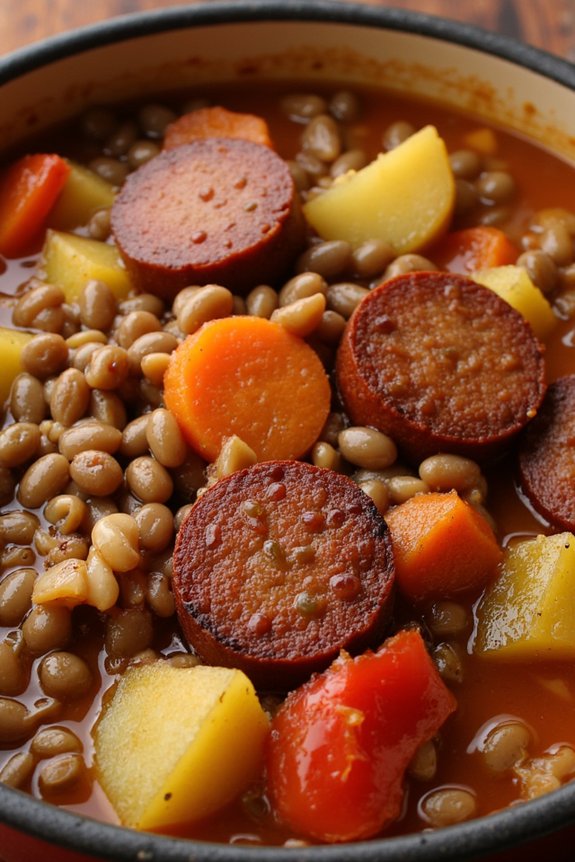
Lentejas Con Chorizo, or Lentil and Chorizo Stew, is a hearty and comforting Spanish dish perfect for warming up during the colder months. This traditional recipe combines the earthiness of lentils with the rich, smoky flavors of chorizo, creating a robust stew that’s both satisfying and full of flavor.
Whether enjoyed as a main course or a side dish, Lentejas Con Chorizo is a staple in Spanish households, particularly during the winter season when the need for warm, nourishing meals is at its peak.
This dish isn’t only delicious but also packed with nutrients. Lentils are a great source of protein, fiber, and essential minerals, while chorizo adds a depth of flavor with its blend of spices and savory taste. The stew is enhanced with vegetables like carrots and potatoes, making it a well-rounded meal.
Easy to prepare and cook, Lentejas Con Chorizo is ideal for both novice and experienced cooks looking to explore Spanish cuisine or simply enjoy a delightful winter meal.
Ingredients (Serves 4-6):
- 1 1/2 cups dried lentils
- 2 chorizo sausages, sliced
- 1 large onion, diced
- 2 cloves garlic, minced
- 2 carrots, peeled and sliced
- 2 medium potatoes, peeled and diced
- 1 red bell pepper, diced
- 1 bay leaf
- 1 teaspoon smoked paprika
- Salt and pepper to taste
- 6 cups chicken or vegetable broth
- 2 tablespoons olive oil
Cooking Instructions:
- Prepare the Ingredients: Begin by rinsing the lentils thoroughly under cold water and set them aside. Slice the chorizo sausages into rounds, and prepare the vegetables by dicing the onion, mincing the garlic, slicing the carrots, dicing the potatoes, and chopping the bell pepper.
- Cook the Chorizo: In a large pot or Dutch oven, heat the olive oil over medium heat. Add the chorizo slices and cook until they’re browned and release their oils, about 5 minutes. Remove the chorizo from the pot and set aside, leaving the oils in the pot.
- Sauté the Vegetables: To the same pot, add the diced onion, minced garlic, sliced carrots, and diced red bell pepper. Sauté the vegetables until they’re soft and the onion is translucent, about 5-7 minutes.
- Add Lentils and Spices: Stir in the smoked paprika, bay leaf, and rinsed lentils. Mix well to coat the lentils and vegetables with the spices.
- Simmer the Stew: Pour in the chicken or vegetable broth, and add the diced potatoes and browned chorizo slices back into the pot. Bring the mixture to a boil, then reduce the heat to low and let it simmer uncovered for about 35-45 minutes, or until the lentils and potatoes are tender.
- Season and Serve: Taste the stew and season with salt and pepper as needed. Remove the bay leaf before serving. Serve the stew hot, garnished with fresh parsley if desired.
Extra Tips: For an even richer flavor, consider adding a splash of red wine to the stew before simmering. If you prefer a thicker stew, use less broth or let it simmer longer to reduce the liquid.
Adjust the seasoning to your liking, and feel free to add a pinch of cayenne pepper for some extra heat. This stew also pairs well with crusty bread for dipping. Leftovers can be stored in the refrigerator for up to three days and often taste even better the next day as the flavors meld together.
Albondigas En Salsa: Spanish Meatballs in Sauce

Albondigas En Salsa, or Spanish Meatballs in Sauce, is a comforting and hearty dish that’s perfect for cold winter nights. These tender meatballs are infused with the rich flavors of garlic, onions, and herbs, and are simmered in a luscious tomato sauce that’s both savory and slightly tangy. This traditional Spanish recipe is beloved for its simplicity, yet it delivers an impressive depth of flavor that will warm you from the inside out.
Whether served as a main dish or as an appetizer, Albondigas En Salsa is bound to become a favorite in your winter recipe repertoire. The beauty of this dish lies in its versatility; it can be tailored to suit your taste preferences by adjusting the spices or adding your favorite vegetables to the sauce.
Traditionally, Albondigas are made with a mixture of beef and pork, which results in juicy and flavorful meatballs, but you can use just one type of meat if you prefer. The sauce, made with ripe tomatoes, onions, garlic, and a hint of paprika, complements the meatballs perfectly, creating a harmonious blend of flavors. Serve it with crusty bread or over a bed of rice for a satisfying winter meal.
Ingredients for 4-6 servings:
- 500g ground beef
- 500g ground pork
- 1 onion, finely chopped
- 3 garlic cloves, minced
- 2 eggs
- 100g breadcrumbs
- 60ml milk
- 2 teaspoons salt
- 1 teaspoon black pepper
- 1 teaspoon smoked paprika
- 1 teaspoon dried oregano
- 1 teaspoon ground cumin
- 2 tablespoons olive oil
- 400g canned crushed tomatoes
- 1 red bell pepper, chopped
- 250ml beef or chicken stock
- 1 bay leaf
- Fresh parsley, chopped (for garnish)
Cooking Instructions:
- Prepare the Meatballs: In a large mixing bowl, combine the ground beef, ground pork, finely chopped onion, minced garlic, eggs, breadcrumbs, and milk. Season with salt, black pepper, smoked paprika, dried oregano, and ground cumin. Mix thoroughly until all ingredients are well incorporated. Shape the mixture into small balls, about the size of a golf ball.
- Brown the Meatballs: Heat the olive oil in a large skillet over medium-high heat. Add the meatballs in batches, making sure not to overcrowd the pan. Cook the meatballs until they’re browned on all sides, about 5-7 minutes. Remove the meatballs from the skillet and set aside.
- Prepare the Sauce: In the same skillet, add the chopped red bell pepper and cook for 2-3 minutes until softened. Add the canned crushed tomatoes, beef or chicken stock, and the bay leaf. Stir well to combine and bring the sauce to a gentle simmer.
- Simmer the Meatballs: Return the browned meatballs to the skillet with the sauce. Confirm they’re submerged in the sauce, then cover the skillet and let it simmer for about 30 minutes. Stir occasionally to prevent sticking, and allow the flavors to meld together.
- Serve: Once the meatballs are cooked through and the sauce has thickened, remove the bay leaf. Garnish with freshly chopped parsley and serve hot with crusty bread or over rice.
Extra Tips: For a smoother sauce, you can blend the sauce ingredients before adding the meatballs. If you prefer a spicier kick, consider adding a pinch of cayenne pepper. Make sure to taste the sauce before serving and adjust the seasoning if needed, as the flavor can deepen as it cooks.
Albondigas En Salsa can also be made a day ahead; the flavors tend to develop beautifully overnight!
Puchero Andaluz: Andalusian Stew
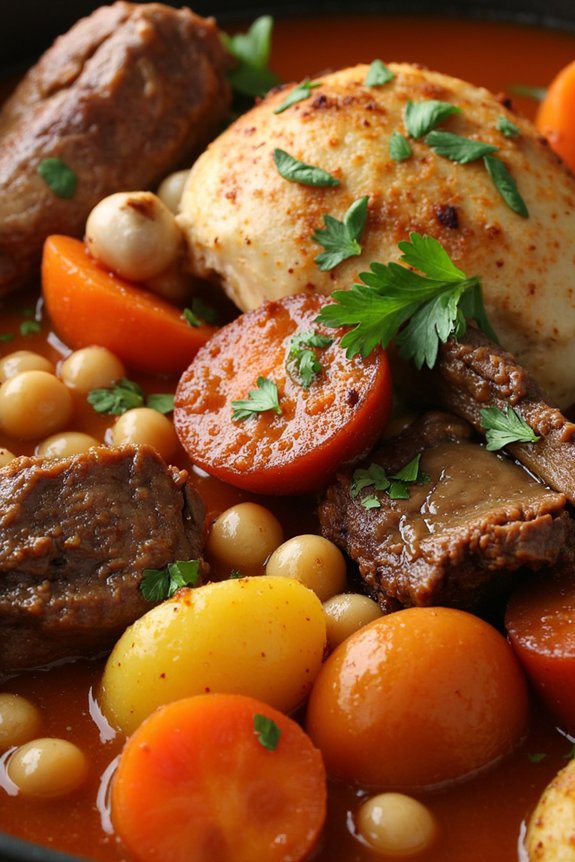
Puchero Andaluz, also known as Andalusian Stew, is a hearty and flavorful dish that originates from the southern region of Spain. This traditional winter recipe is perfect for warming you up on a chilly day. It combines a variety of meats and vegetables, slowly simmered to create a rich and satisfying broth. The beauty of Puchero Andaluz lies in its simplicity and the depth of flavors achieved through the careful selection of ingredients.
Often considered comfort food in Andalusia, this stew is enjoyed by families and friends gathered around the table, sharing stories and laughter.
The essence of Puchero Andaluz is its use of local produce and meats, which may vary depending on the area and family preferences. Nonetheless, the core ingredients typically include a mix of meats such as chicken, pork, and beef, along with a selection of fresh vegetables like carrots, potatoes, and chickpeas. The stew is seasoned with aromatic spices and herbs, giving it a distinct and memorable taste.
This recipe for Puchero Andaluz serves 4-6 people, making it an ideal dish for a cozy family dinner or a small gathering.
Ingredients (serving size: 4-6 people):
- 1 lb (450 g) chicken pieces (bone-in, skinless)
- 0.5 lb (225 g) beef shank
- 0.5 lb (225 g) pork ribs
- 1 chorizo sausage, sliced
- 1 large onion, peeled and halved
- 2 carrots, peeled and cut into chunks
- 2 potatoes, peeled and cut into chunks
- 1 leek, cleaned and cut into large pieces
- 1 cup (200 g) chickpeas, soaked overnight
- 3 cloves garlic, peeled
- 1 bay leaf
- Salt and pepper, to taste
- 2 tablespoons olive oil
- Water (enough to cover ingredients)
- A handful of fresh parsley, chopped
Cooking Instructions:
- Prepare the Chickpeas: Drain the soaked chickpeas and set them aside. Soaking the chickpeas overnight is essential to soften them and reduce the cooking time.
- Brown the Meats: In a large pot, heat the olive oil over medium heat. Add the chicken, beef shank, and pork ribs. Brown the meats on all sides to seal in the flavors, approximately 5-7 minutes. Remove the meats and set them aside.
- Sauté Vegetables: In the same pot, add the onions, carrots, leeks, and garlic. Sauté for about 5 minutes until the vegetables start to soften and the onions become translucent.
- Combine Ingredients: Return the browned meats to the pot. Add the sliced chorizo, potatoes, chickpeas, bay leaf, salt, and pepper. Pour enough water into the pot to cover all the ingredients.
- Simmer the Stew: Bring the mixture to a boil over high heat. Once boiling, reduce the heat to low, cover the pot, and let it simmer for about 2-3 hours. Check occasionally, skimming off any foam or impurities that rise to the surface.
- Check for Doneness: After 2 hours, check if the meats and chickpeas are tender. If not, continue cooking until they reach the desired tenderness. Adjust the seasoning with additional salt and pepper if needed.
- Serve the Stew: Once done, remove the pot from heat. Sprinkle fresh parsley over the stew and let it sit for a few minutes before serving. Divide the stew among bowls, ensuring each serving has a good mix of meats, vegetables, and broth.
Extra Tips:
To enhance the flavor of Puchero Andaluz, consider adding a splash of sherry or a pinch of saffron threads for an authentic touch. Using a mix of meats is crucial for achieving the signature taste, but feel free to adjust the proportions based on personal preference.
If you prefer a thicker broth, mash some of the potatoes or chickpeas towards the end of cooking. Leftovers can be stored in the refrigerator for up to three days and often taste even better after the flavors have melded overnight. Enjoy your Puchero Andaluz with a side of crusty bread to soak up the delicious broth.
