

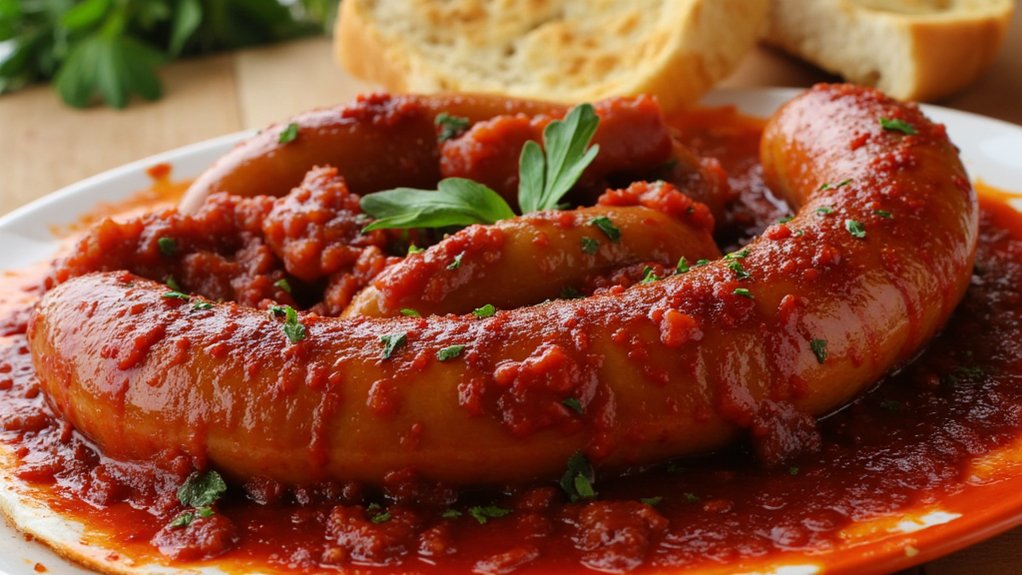
I’m so excited to share some of my favorite Spanish street food recipes that are rich in tradition and full of flavor. Think about enjoying crispy Patatas Bravas or delighting in Churros dipped in rich chocolate. These dishes are more than just food; they’re a taste of the bustling streets of Spain. Ready to start this delicious journey? Let’s explore these mouthwatering creations together.
Patatas Bravas
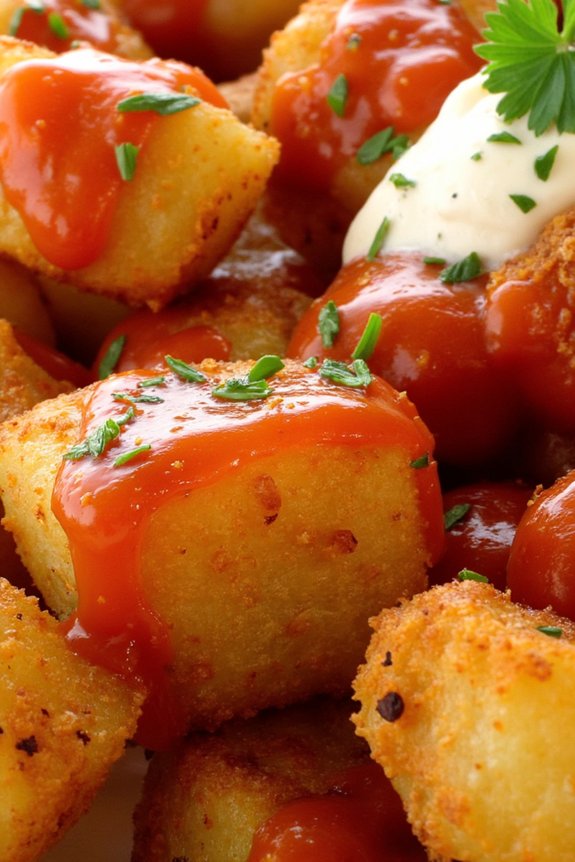
Patatas Bravas is a classic Spanish street food that’s known for its crispy potatoes and spicy, flavorful sauce. Traditionally served as a tapa, this dish has become a staple in Spanish cuisine and is loved by many across the globe. The term “bravas” refers to the spicy nature of the dish, as “bravo” means fierce in Spanish, and the fiery sauce certainly lives up to its name.
The golden, crispy potatoes are often served with a spicy tomato sauce and sometimes an aioli, making it the perfect accompaniment to a cold beer or glass of wine. This dish is perfect for gatherings, as it’s easy to prepare and can be enjoyed by itself or as part of a larger tapas spread.
The key to the perfect Patatas Bravas is getting the potatoes crispy on the outside while keeping them soft and fluffy on the inside. The sauce is what truly defines this dish, with its balance of tanginess and heat. Depending on your preference, you can adjust the spiciness to your liking.
Whether you’re hosting a party or simply want to indulge in some delicious Spanish street food at home, Patatas Bravas is a must-try.
Ingredients (Serves 4-6):
- 2 pounds of potatoes (such as Russet or Yukon Gold)
- 1/4 cup olive oil
- Salt and pepper to taste
- 1 cup canned crushed tomatoes
- 3 cloves of garlic, minced
- 1 teaspoon smoked paprika
- 1/2 teaspoon cayenne pepper
- 1 tablespoon red wine vinegar
- 1/2 cup mayonnaise
- 2 tablespoons lemon juice
- Chopped parsley for garnish
Instructions:
- Prepare the Potatoes: Peel the potatoes and cut them into 1-inch cubes. Soak them in cold water for about 20 minutes to remove excess starch. This helps in achieving a crispier texture. After soaking, drain and pat them dry with paper towels.
- Cook the Potatoes: Heat olive oil in a large pan over medium-high heat. Add the potatoes in a single layer, making sure not to overcrowd the pan. Cook them until they’re golden brown and crispy on the outside, about 15-20 minutes. Stir occasionally to guarantee even cooking. Once done, remove them from the pan and let them drain on paper towels. Season with salt and pepper to taste.
- Prepare the Bravas Sauce: In the same pan, reduce the heat to medium and add a little more olive oil if needed. Add the minced garlic and sauté for about 30 seconds until fragrant. Stir in the crushed tomatoes, smoked paprika, cayenne pepper, and red wine vinegar. Let it simmer for about 10 minutes until the sauce thickens slightly. Season with salt to taste.
- Make the Aioli: In a small bowl, mix the mayonnaise with lemon juice until smooth. This will be used as a cooling element alongside the spicy bravas sauce.
- Assemble the Dish: Place the crispy potatoes on a serving platter. Drizzle the bravas sauce over the potatoes, and then add a few dollops of aioli. Garnish with chopped parsley for a fresh touch.
Extra Tips:
To guarantee your potatoes are extra crispy, make sure they’re completely dry before frying, as moisture can hinder the crisping process. Adjust the level of cayenne pepper in the bravas sauce according to your spice preference.
If you prefer a smoother sauce, you can blend it until creamy before serving. For a smoky twist, try using smoked salt to season the potatoes. If you have leftovers, store the sauce and potatoes separately to maintain their texture when reheating.
Enjoy your Patatas Bravas fresh out of the pan for the best taste and texture.
Churros With Chocolate
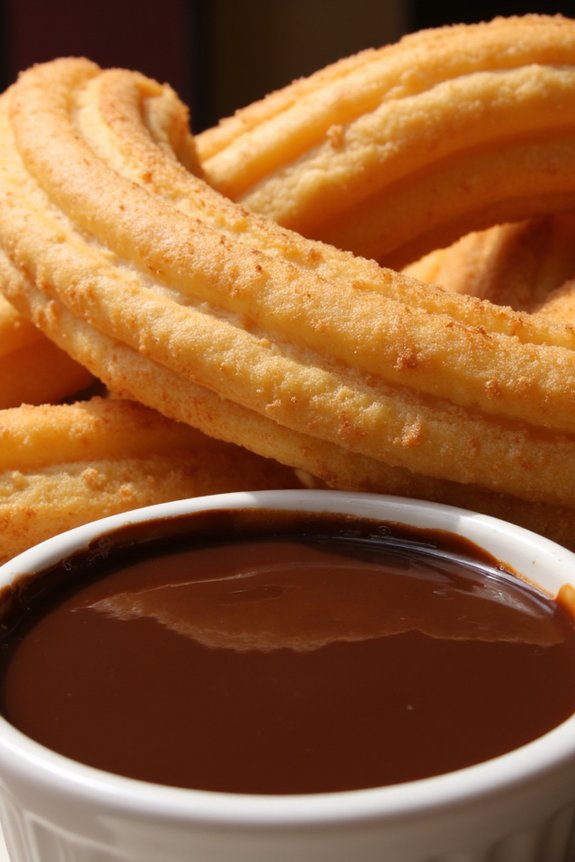
Churros with chocolate is a classic Spanish street food treat that’s beloved by many. These crispy, golden-brown pastries are delightfully crunchy on the outside and soft on the inside. They’re often dusted with sugar and served with a rich, smooth chocolate sauce for dipping, making them an irresistible indulgence.
Traditionally enjoyed as a breakfast treat or a snack, churros with chocolate are now found in many parts of the world, bringing a taste of Spain to people everywhere. The beauty of this dish lies in its simplicity and the quality of the ingredients. Freshly made churros are a world apart from those that have been sitting out for a while, so it’s worth the effort to make them at home.
Once you’ve mastered the basic recipe, you can enjoy these delicious pastries anytime the craving strikes. Perfect for a weekend brunch or a festive gathering, churros with chocolate is sure to impress your family and friends.
Ingredients (serving size: 4-6 people):
- 1 cup of water
- 2 tablespoons of sugar
- 1/2 teaspoon of salt
- 2 tablespoons of vegetable oil
- 1 cup of all-purpose flour
- 1/2 cup of sugar, for dusting
- 1 teaspoon of ground cinnamon
- Vegetable oil, for frying
- 1 cup of heavy cream
- 8 ounces of dark chocolate, chopped
Cooking Instructions:
- Prepare the Dough: In a small saucepan over medium heat, combine 1 cup of water, 2 tablespoons of sugar, 1/2 teaspoon of salt, and 2 tablespoons of vegetable oil. Bring the mixture to a boil, then remove from heat. Stir in 1 cup of all-purpose flour until the mixture forms a smooth dough ball.
- Heat the Oil: Fill a large, deep frying pan with about 2 inches of vegetable oil and heat it to 375°F (190°C).
- Pipe the Churros: Transfer the dough to a piping bag fitted with a large star tip. Pipe strips of dough directly into the hot oil, cutting them with scissors to your desired length.
- Fry the Churros: Fry the churros in batches, turning them occasionally, until they’re golden brown and cooked through, about 2-3 minutes per side. Remove them with a slotted spoon and drain on paper towels.
- Coat with Sugar and Cinnamon: In a shallow dish, combine 1/2 cup of sugar with 1 teaspoon of ground cinnamon. Roll the warm churros in the mixture until evenly coated.
- Prepare the Chocolate Sauce: In a small saucepan, heat 1 cup of heavy cream over medium heat until it begins to simmer. Remove from heat and stir in 8 ounces of chopped dark chocolate until smooth and fully melted.
- Serve: Serve the churros warm with the chocolate sauce for dipping.
Extra Tips: To guarantee your churros come out crispy, make sure the oil is at the correct temperature before frying. If the oil is too cool, the churros will absorb more oil and become greasy.
If you don’t have a piping bag, you can use a resealable plastic bag with the corner snipped off, although a star tip is ideal for achieving the traditional ridged look. For an extra flavor boost, try adding a pinch of nutmeg or vanilla extract to the dough. Enjoy your churros with chocolate immediately for the best taste and texture.
Bocadillo De Calamares
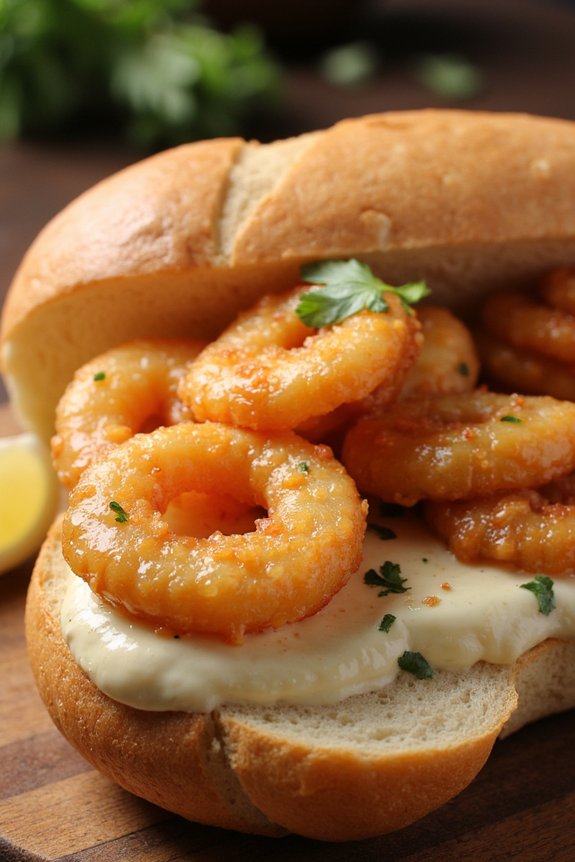
Bocadillo De Calamares is a classic Spanish street food delight that combines the flavors of crispy, golden calamari rings nestled inside a crusty baguette. This sandwich is a staple in Madrid, often enjoyed as a quick lunch or late-night snack. The simplicity of the dish allows the fresh flavors of the squid to shine, complemented by a squeeze of lemon and a hint of aioli. Perfect for seafood lovers, this recipe brings a taste of Spain to your kitchen, allowing you to indulge in this savory treat whenever you crave a taste of the Mediterranean.
To make this dish, it’s vital to focus on the freshness of the calamari and the quality of the bread. The calamari rings are coated in a light batter and fried until perfectly crispy, offering a delightful contrast to the soft interior of the bread. The addition of aioli and a squeeze of lemon elevates the flavor profile, making it a mouthwatering experience. This recipe serves 4-6 people, making it ideal for gatherings or family meals.
Ingredients (serving size: 4-6 people):
- 1 kg fresh calamari, cleaned and cut into rings
- 1 cup all-purpose flour
- Salt and pepper, to taste
- Vegetable oil, for frying
- 2 large baguettes, cut into halves
- 1 cup aioli
- 1 lemon, cut into wedges
Cooking Instructions:
- Prepare the Calamari: Begin by thoroughly cleaning the calamari and cutting them into rings if not already prepped. Pat the calamari rings dry with a paper towel to remove excess moisture, which will help them fry better.
- Season and Coat: In a large bowl, combine the flour with a generous pinch of salt and pepper. Toss the calamari rings in the flour mixture, making sure each ring is evenly coated.
- Heat the Oil: In a deep frying pan or pot, heat vegetable oil over medium-high heat. The oil should be hot enough that a small piece of bread dropped in sizzles immediately.
- Fry the Calamari: Fry the calamari rings in batches, making sure not to overcrowd the pan. Cook each batch for about 2-3 minutes or until they’re golden brown and crispy. Use a slotted spoon to remove them from the oil and drain on a paper towel to remove excess oil.
- Assemble the Bocadillo: Slice the baguettes in half lengthwise and spread a generous amount of aioli on each side. Layer the fried calamari rings inside the baguette, ensuring an even distribution.
- Serve: Squeeze fresh lemon juice over the calamari and close the baguette to create a sandwich. Serve immediately while the calamari is still warm and crispy, with extra lemon wedges on the side.
Extra Tips:
For the best results, verify the oil is at the right temperature before adding the calamari. If the oil is too cool, the calamari will absorb more oil and become greasy rather than crispy.
Additionally, avoid overcooking the calamari, as this can make it rubbery. It’s also advisable to serve the bocadillo immediately after preparation to enjoy the contrast of textures between the crispy calamari and the soft bread.
If you prefer, you can add a few slices of tomato or lettuce for a revitalizing crunch.
Tortilla Española
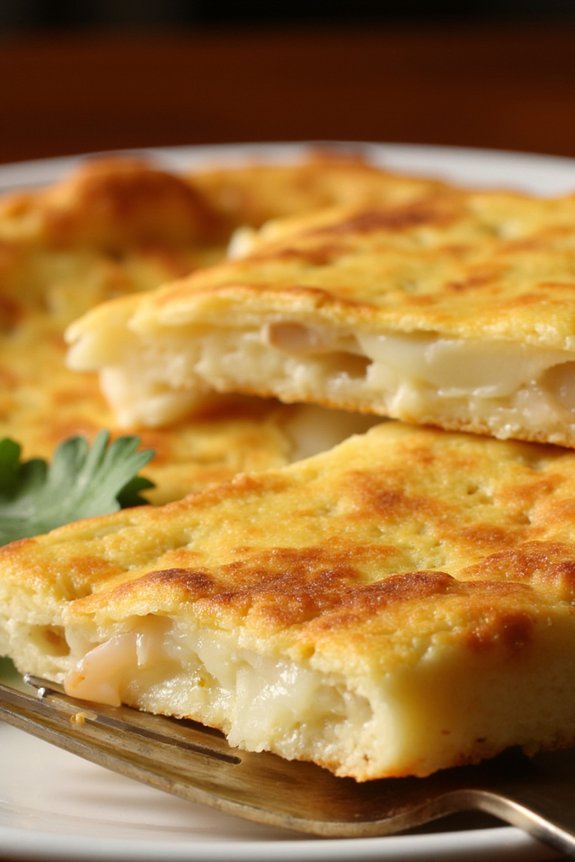
Tortilla Española, also known as Spanish omelette, is a classic dish that perfectly encapsulates the simplicity and flavor that Spanish cuisine is renowned for. This dish is a staple in Spanish street food, bringing together humble ingredients to create something truly delightful.
With its golden crust and tender heart, the Tortilla Española is perfect for any time of the day, whether as a hearty breakfast, a quick lunch, or a satisfying dinner. Its versatility and rich taste make it a beloved choice on the streets of Spain.
Originating from the kitchens of northern Spain, the Tortilla Española is a demonstration of the resourcefulness of Spanish cooks. This dish primarily uses eggs and potatoes, seasoned with onions and olive oil, to craft a flavorful omelette.
Often served at room temperature, it’s a dish that can be enjoyed on its own or paired with a crisp salad for a more complete meal. Its texture is both creamy and firm, providing a delightful contrast with each bite.
Ingredients for 4-6 servings:
- 6 large eggs
- 4 medium potatoes
- 1 large onion
- 1 cup olive oil
- Salt to taste
Cooking Instructions:
- Prepare the Ingredients: Peel the potatoes and slice them thinly, about 1/8 inch thick. Peel the onion and slice it into thin strips.
- Cook the Potatoes and Onions: In a large non-stick frying pan, heat the olive oil over medium heat. Add the potatoes and onions, making sure they’re all submerged in the oil. Cook them gently for about 25 minutes, stirring occasionally, until the potatoes are soft but not brown. Use a slotted spoon to remove them from the oil and let them drain on a paper towel. Season with salt.
- Beat the Eggs: Crack the eggs into a large bowl and beat them until well blended. Add the cooked potatoes and onions to the eggs and mix gently to combine. Let the mixture sit for about 10 minutes to allow the flavors to meld.
- Cook the Tortilla: Wipe out the frying pan and add 2 tablespoons of olive oil. Heat over medium-high heat. Pour in the potato and egg mixture, spreading it evenly in the pan. Lower the heat to medium and cook for about 6-8 minutes until the edges are set.
- Flip the Tortilla: Place a large plate over the pan and carefully invert the tortilla onto the plate. Slide it back into the pan to cook the other side. Cook for another 4-5 minutes until the tortilla is fully cooked through and golden brown on both sides.
- Rest and Serve: Remove the tortilla from the heat and let it rest for a few minutes. Slice into wedges and serve at room temperature or slightly warm.
Extra Tips:
When making Tortilla Española, the key is to cook the potatoes gently in the oil to make certain they remain tender and flavorful, without browning them too much.
It’s also important to be cautious when flipping the tortilla; using a large plate and steady hands can prevent any spilling. Feel free to experiment with additional ingredients like bell peppers or chorizo for a different flavor profile.
Finally, remember that the tortilla can be prepared in advance, as it holds its flavors well and can be served cold or reheated gently.
Pulpo a La Gallega
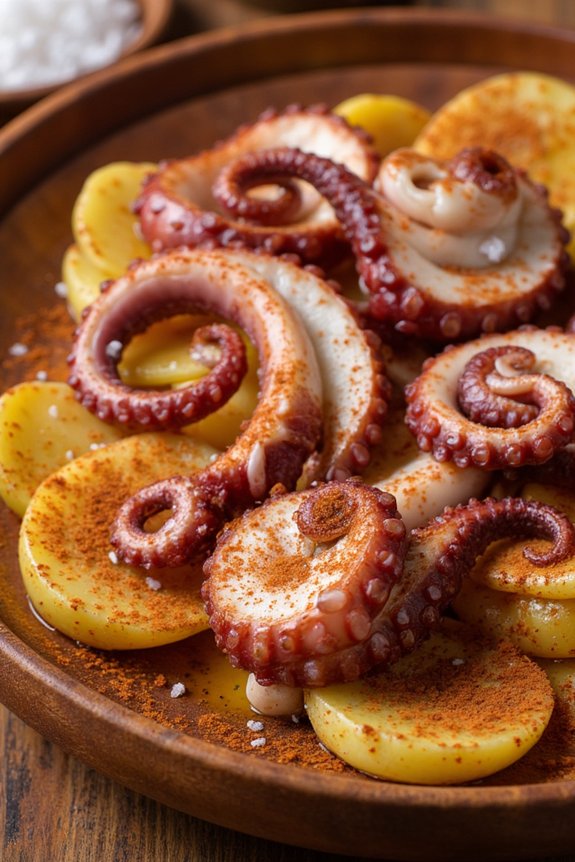
Pulpo a La Gallega, also known as Galician-style octopus, is a traditional Spanish street food dish that hails from the Galicia region in the northwest of Spain. This dish is renowned for its simplicity and the delightful way it highlights the natural flavors of the octopus. Typically served on wooden plates, Pulpo a La Gallega is seasoned with olive oil, coarse sea salt, and paprika, which gives the dish its characteristic smoky aroma and vibrant color.
This recipe brings the authentic taste of Galicia to your kitchen, perfect for a casual dinner or as an impressive appetizer. The key to a successful Pulpo a La Gallega lies in the perfect balance of seasoning and the tender texture of the octopus, which is achieved through careful cooking. Follow the instructions below to prepare a dish that serves 4-6 people, capturing the essence of this beloved street food.
Ingredients (Serves 4-6):
- 2 kg whole octopus, cleaned
- 2 bay leaves
- 1 large onion, halved
- 1 kg potatoes, peeled and sliced
- 100 ml extra virgin olive oil
- 1 tablespoon sweet paprika
- 1 teaspoon hot paprika (optional)
- Coarse sea salt to taste
Cooking Instructions:
- Prepare the Octopus: Start by cleaning the octopus thoroughly under cold running water. Verify all ink sacs and any other remnants are removed. If the octopus hasn’t been pre-tenderized, you may want to freeze it and then thaw it, which helps to soften the meat.
- Boil the Octopus: Fill a large pot with water and bring it to a boil. Add the bay leaves and onion to flavor the water. Once boiling, grab the octopus by the head and dip it into the boiling water three times, holding it for a few seconds each time before fully immersing it. This process helps the tentacles curl up beautifully. Let the octopus cook for about 40-45 minutes until tender. You can check the tenderness by piercing the thickest part with a fork; it should penetrate easily.
- Cook the Potatoes: While the octopus is cooking, bring another pot of salted water to a boil and add the sliced potatoes. Cook until they’re fork-tender, about 15-20 minutes. Drain and set aside.
- Slice the Octopus: Once the octopus is cooked, remove it from the pot and let it cool slightly. Cut the tentacles into 1/2-inch slices. Discard the head or use it according to your preference.
- Assemble the Dish: Arrange the cooked potato slices on a serving platter or wooden plate. Top with the octopus slices. Generously drizzle extra virgin olive oil over the octopus and potatoes.
- Season and Serve: Sprinkle the sweet paprika, hot paprika (if using), and coarse sea salt evenly over the dish. Serve immediately while warm, allowing the flavors to meld together.
Extra Tips: For an even more authentic taste, try using smoked paprika (pimentón de la Vera) for a deeper, smoky flavor. When cooking the octopus, avoid adding salt to the water as it can toughen the meat; instead, season generously at the end. If you prefer a spicier kick, adjust the amount of hot paprika to your liking. Remember, patience is key in guaranteeing the octopus reaches the perfect tender texture, so don’t rush the cooking process.
Empanadas Gallegas
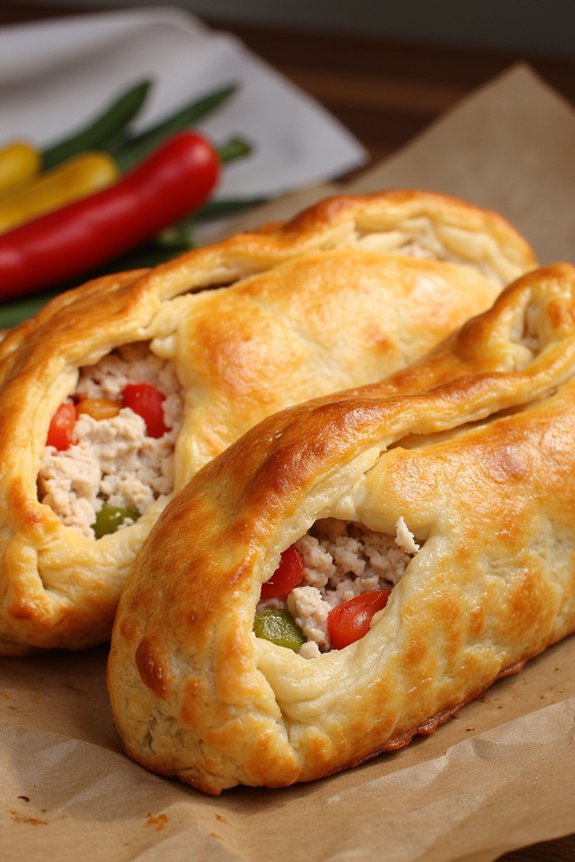
Empanadas Gallegas are a traditional Spanish street food originating from the Galicia region in northwestern Spain. These savory pastries are perfect for any occasion, whether it’s a casual family dinner or a festive gathering. The classic Empanada Gallega is usually filled with a delicious mixture of tuna, onions, tomatoes, and peppers, all encased in a perfectly flaky crust. The rich and hearty flavors of the filling combined with the buttery pastry create an irresistible dish that’s sure to be a hit with both friends and family.
The recipe for Empanadas Gallegas is versatile, allowing for various fillings such as meat, seafood, or vegetarian options. However, the traditional tuna filling is a staple and a must-try for anyone looking to experience an authentic taste of Spain. This recipe will guide you through the process of making Empanadas Gallegas for 4-6 people, guaranteeing that you capture the essence of this beloved street food.
Ingredients (Serves 4-6):
- 500g all-purpose flour
- 150ml olive oil
- 150ml white wine
- 1 teaspoon salt
- 2 large eggs
- 300g canned tuna, drained
- 1 large onion, finely chopped
- 1 red bell pepper, diced
- 1 green bell pepper, diced
- 3 tomatoes, peeled and chopped
- 2 cloves garlic, minced
- 1 teaspoon sweet paprika
- Salt and pepper to taste
- 1 egg (for egg wash)
Cooking Instructions:
- Prepare the Dough: In a large bowl, mix the flour and salt. Make a well in the center and add the olive oil, white wine, and eggs. Mix until a dough forms. Knead the dough on a lightly floured surface for about 10 minutes until it’s smooth and elastic. Cover the dough with a cloth and let it rest for at least 30 minutes.
- Make the Filling: Heat some olive oil in a large skillet over medium heat. Add the chopped onion, garlic, and both red and green bell peppers. Sauté for about 5 minutes until the vegetables are soft. Add the tomatoes and cook for another 5 minutes, stirring occasionally.
- Complete the Filling: Add the drained tuna to the skillet, breaking it up gently with a spoon. Stir in the sweet paprika, and season with salt and pepper to taste. Let the mixture simmer for about 10 minutes, allowing the flavors to meld together. Remove from heat and let it cool.
- Roll Out the Dough: Preheat your oven to 180°C (350°F). Divide the dough into two equal parts. Roll out one part on a floured surface to form a large rectangle, about 1/8 inch thick. Place the rolled dough on a baking sheet lined with parchment paper.
- Assemble the Empanada: Spread the cooled filling evenly over the rolled-out dough, leaving a 1-inch border around the edges. Roll out the second piece of dough to cover the filling. Place it over the filling and press the edges together to seal. Trim any excess dough and crimp the edges with a fork.
- Bake the Empanada: Beat the remaining egg and brush it over the top of the empanada for a golden finish. Use a knife to make a few small slits in the top to allow steam to escape. Bake in the preheated oven for 30-35 minutes or until the crust is golden brown.
Extra Tips:
For a more complex flavor, consider adding olives or hard-boiled eggs to the filling. If you prefer a spicier version, you can include a pinch of chili powder or use spicy paprika instead of sweet paprika.
Verify that the filling is completely cooled before assembling the empanada to prevent the dough from becoming soggy. Finally, serve the empanada either warm or at room temperature, as it tastes great both ways.
Montaditos
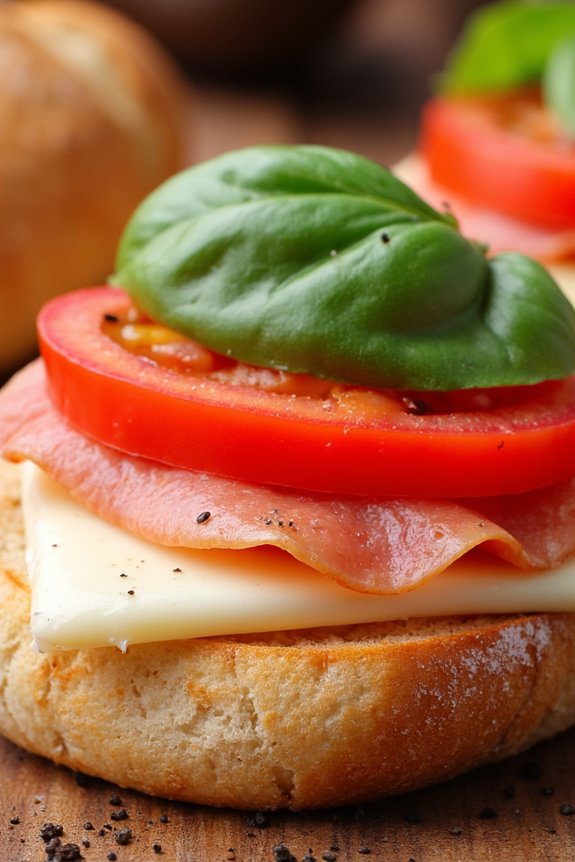
Montaditos are a popular type of Spanish tapas that consist of small open-faced sandwiches typically served on a baguette or similar bread. These delightful bites are perfect for gatherings, whether as an appetizer or a light meal.
Originating from Spain, Montaditos offer a versatile and simple way to enjoy a variety of flavors and ingredients. In this recipe, we focus on a classic combination: ham and cheese, capturing the essence of Spanish street food with rich and savory flavors.
The beauty of Montaditos lies in their simplicity and adaptability. This particular recipe calls for high-quality ingredients such as Serrano ham and Manchego cheese, which are staples in Spanish cuisine. The Montaditos are then enhanced with the addition of a garlic-rubbed bread base and a drizzle of olive oil, providing a beautiful blend of textures and tastes.
This recipe is designed to serve 4-6 people, making it perfect for a small gathering or family meal.
Ingredients (serves 4-6):
- 1 baguette, sliced into 1/2-inch thick pieces
- 2 tablespoons olive oil
- 2 cloves garlic, peeled and halved
- 200g Serrano ham, thinly sliced
- 150g Manchego cheese, thinly sliced
- 1 ripe tomato, thinly sliced
- Freshly ground black pepper, to taste
- Fresh basil leaves, for garnish (optional)
Cooking Instructions:
- Prepare the bread: Preheat your oven to 350°F (180°C). Arrange the baguette slices on a baking sheet. Lightly brush each slice with olive oil on both sides, then place in the oven to toast for 5-7 minutes until they’re golden brown and crispy.
- Rub with garlic: Once the bread slices are toasted, remove them from the oven. While still warm, rub the cut side of the garlic cloves over the top of each slice. This will infuse the bread with a subtle garlic flavor.
- Assemble the Montaditos: On each garlic-rubbed bread slice, layer a piece of Serrano ham, followed by a slice of Manchego cheese. Add a slice of tomato on top, and finish with a light sprinkle of freshly ground black pepper.
- Garnish and serve: Optionally, garnish each Montadito with a fresh basil leaf to add a touch of color and an extra layer of flavor. Serve immediately while the bread is still warm and the cheese slightly melts from the warmth of the bread.
Extra Tips:
For the best Montaditos, use a high-quality baguette that has a crispy crust and soft interior. Confirm the Serrano ham and Manchego cheese are sliced thinly to allow for easy layering and a balanced bite.
Feel free to experiment with additional toppings such as roasted peppers or olives to customize the Montaditos to your taste. Finally, pairing these Montaditos with a chilled glass of Spanish wine can enhance the dining experience, bringing a taste of Spain right to your table.
Pimientos De Padrón
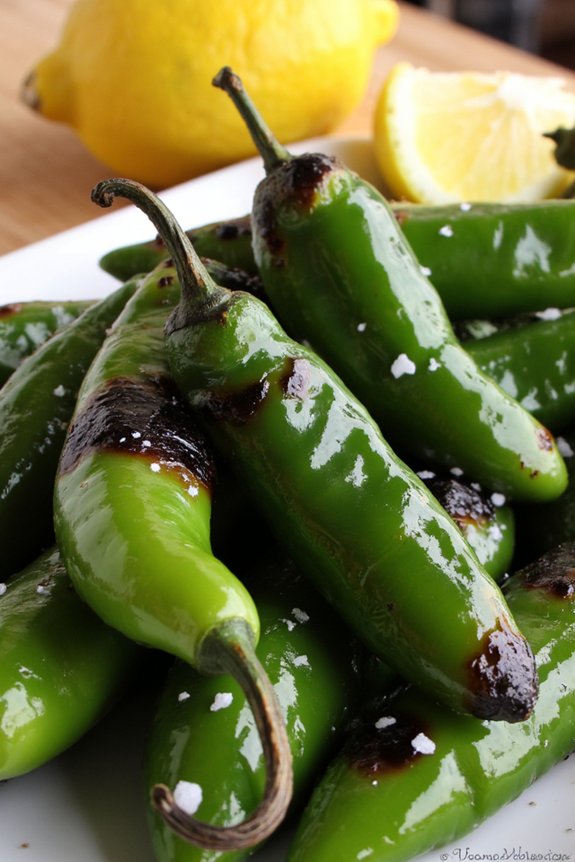
Pimientos De Padrón is a classic Spanish street food dish that brings together simplicity and flavor in a delightful way. Originating from the Galicia region, these small green peppers are known for their mild taste, with the occasional pepper packing a surprising punch of spiciness.
Traditionally served as a tapa, or small plate, they’re perfect for sharing at gatherings or enjoying as a quick snack. They’re typically fried until blistered and then sprinkled with a generous amount of sea salt to enhance their natural flavors.
This dish is incredibly easy to prepare and requires minimal ingredients, making it a favorite for those who love to indulge in authentic Spanish cuisine without much fuss. The secret to the perfect Pimientos De Padrón lies in the quality of the peppers and the way they’re cooked, guaranteeing they’re tender yet slightly crisp on the outside.
Serve them warm for the best experience, allowing the flavors to burst with each bite. Below is a simple recipe to create this delicious dish for a serving size of 4-6 people.
Ingredients:
- 500 grams of Pimientos De Padrón
- 3 tablespoons of olive oil
- Sea salt to taste
- Optional: Lemon wedges for serving
Cooking Instructions:
- Preparation: Begin by washing the Pimientos De Padrón thoroughly under cold water. Pat them dry with a clean kitchen towel to remove any excess moisture, which helps in achieving a nice blister during cooking.
- Heating the Oil: In a large frying pan, heat the olive oil over medium-high heat. You want the oil hot enough to quickly blister the peppers but not so hot that it smokes.
- Cooking the Peppers: Once the oil is heated, carefully add the Pimientos De Padrón to the pan in a single layer. It’s important not to overcrowd the pan to guarantee even cooking. Fry the peppers for about 5-7 minutes, turning occasionally with a spatula, until they’re blistered and lightly charred on all sides.
- Seasoning: Remove the peppers from the pan and place them on a serving platter. Immediately sprinkle with sea salt while they’re still hot, so the salt adheres to the peppers.
- Serving: Serve the Pimientos De Padrón immediately, accompanied by lemon wedges if desired. The tanginess from the lemon adds an extra layer of flavor that complements the peppers perfectly.
Extra Tips:
For the best results, always choose fresh Pimientos De Padrón that are firm and bright green. If you can’t find these specific peppers, you can substitute with shishito peppers, though the flavor will be slightly different.
Additionally, using high-quality olive oil will enhance the overall taste of the dish. Remember, the beauty of Pimientos De Padrón lies in their simplicity, so avoid adding too many extra ingredients that might overpower their unique flavor.
Enjoy experimenting with this dish and surprise your guests with the delightful experience of the occasional spicy pepper!
Croquetas De Jamón

Croquetas de Jamón, or Ham Croquettes, are a classic Spanish street food that offer a deliciously creamy and savory experience with every bite. Originating from Spain, these golden, crispy bites are traditionally made with a creamy béchamel sauce mixed with finely chopped cured ham. They’re then coated in breadcrumbs and fried to perfection.
Croquetas de Jamón are a popular tapas dish, often found in bars and restaurants across Spain, and they’re perfect for sharing with friends and family over a cold drink.
The key to making the perfect Croquetas de Jamón lies in achieving the right consistency for the béchamel sauce and guaranteeing the croquettes are well-coated in breadcrumbs for that signature crunch. The process may take a bit of time, but the end result is a delectable treat, perfect for any occasion.
Here’s how to make Croquetas de Jamón for 4-6 people.
Ingredients:
- 1 cup of finely chopped cured ham (such as Serrano or Iberico)
- 4 tablespoons of unsalted butter
- 1/2 cup of all-purpose flour
- 2 cups of whole milk
- A pinch of nutmeg
- Salt and pepper to taste
- 2 eggs
- 1 cup of breadcrumbs
- Vegetable oil for frying
Cooking Instructions:
- Prepare the Béchamel Sauce:
- In a medium saucepan, melt the butter over medium heat. Once melted, add the flour and stir continuously for about 2-3 minutes until it forms a smooth paste, known as a roux.
- Gradually add the milk to the roux, stirring constantly to avoid lumps. Cook the mixture for about 10-12 minutes until it thickens into a smooth béchamel sauce.
- Season the sauce with a pinch of nutmeg, salt, and pepper. Add the finely chopped ham, mixing well to incorporate it evenly into the sauce. Allow the mixture to cool slightly.
- Form the Croquettes:
- Once the béchamel sauce has cooled, use your hands or a spoon to shape it into small, oval-shaped croquettes, approximately 2 inches long.
- Coat the Croquettes:
- Beat the eggs in a shallow bowl. Place the breadcrumbs in another shallow bowl.
- Dip each croquette first into the beaten eggs, guaranteeing it’s fully coated, then roll it in the breadcrumbs to create an even coating. Repeat for all croquettes.
- Fry the Croquettes:
- Heat vegetable oil in a deep pan or fryer to 350°F (175°C). Carefully place a few croquettes at a time into the hot oil, frying them for about 3-4 minutes or until they turn golden brown.
- Remove the croquettes from the oil and place them on a plate lined with paper towels to drain excess oil. Repeat until all croquettes are fried.
Extra Tips:
For best results, prepare the béchamel mixture in advance and let it chill in the refrigerator for at least an hour before shaping the croquettes. This will make it easier to handle and shape.
Additionally, confirm the oil is hot enough before frying to achieve crispy croquettes without them absorbing too much oil. If you have leftover croquettes, they can be frozen after coating in breadcrumbs and fried directly from the freezer when needed.
Gazpacho Andaluz
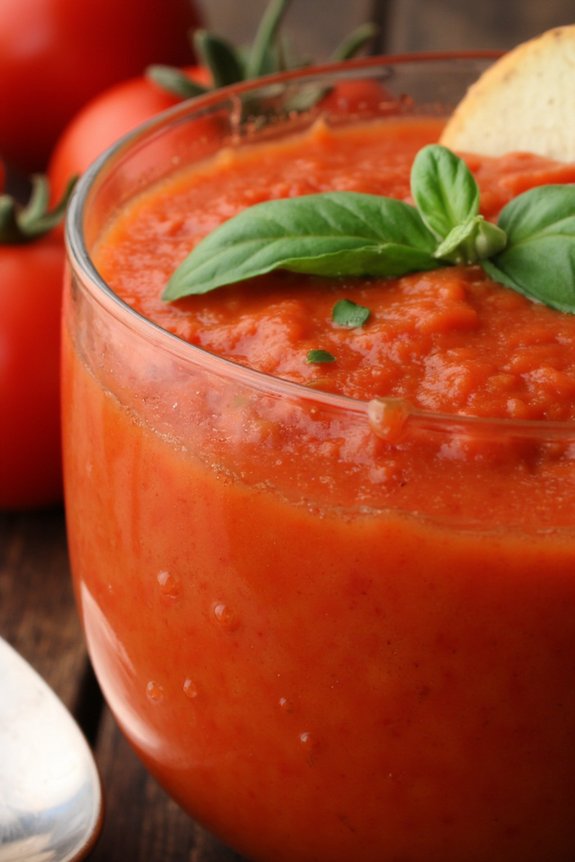
Gazpacho Andaluz is a revitalizing and traditional Spanish cold soup that originates from the Andalusian region. This dish is perfect for hot summer days when you crave something light yet flavorful. Made from fresh, raw vegetables, Gazpacho Andaluz is both nutritious and delicious, offering a burst of flavors with every spoonful.
The dish is known for its vibrant color and smooth texture, making it an appealing option for both casual meals and special occasions. This cold soup is characterized by its base of ripe tomatoes, cucumber, bell peppers, garlic, and onions, all blended together with olive oil and vinegar to create a creamy emulsion.
Gazpacho Andaluz is typically served cold, allowing the flavors to meld together beautifully, making it an ideal appetizer or a light main course. Enjoy it as a revitalizing starter or a palate cleanser between meals, and experience the authentic taste of Spain in every bite.
Ingredients for 4-6 Servings:
- 6 ripe tomatoes
- 1 cucumber
- 1 green bell pepper
- 1 small red onion
- 2 cloves of garlic
- 3 tablespoons of olive oil
- 2 tablespoons of sherry vinegar
- 1 teaspoon of salt
- 1 teaspoon of black pepper
- 1 slice of stale bread (optional)
- 2 cups of cold water
- Ice cubes (optional)
- Fresh basil or parsley for garnish
Cooking Instructions:
- Prepare the Vegetables: Start by washing all the vegetables thoroughly. Peel the cucumber and remove the seeds if preferred. Core the tomatoes and roughly chop them along with the cucumber, bell pepper, and onion.
- Blend the Ingredients: In a blender, combine the chopped tomatoes, cucumber, bell pepper, onion, and garlic cloves. Blend until smooth. If you prefer a thicker consistency, add a slice of stale bread to the mix and blend again.
- Emulsify with Oil and Vinegar: Once the vegetables are smooth, add the olive oil, sherry vinegar, salt, and black pepper. Blend again until the olive oil is fully emulsified into the mixture, resulting in a creamy texture.
- Adjust Consistency: Pour in the cold water to achieve your desired soup consistency. Blend once more to ensure everything is well combined. Taste and adjust seasoning if necessary.
- Chill the Soup: Transfer the gazpacho to a large bowl or pitcher and refrigerate for at least 2 hours to let the flavors meld together. For a quicker chill, add a few ice cubes to the soup before serving.
- Serve and Garnish: Serve the Gazpacho Andaluz cold, garnished with fresh basil or parsley. You can also drizzle a bit more olive oil on top for added flavor and presentation.
Extra Tips:
For the best flavor, use the ripest tomatoes you can find, as they’re the key ingredient in this dish. If you prefer a smoother texture, strain the mixture through a fine sieve to remove any pulp or seeds after blending.
Gazpacho can be stored in the refrigerator for up to 2 days, allowing the flavors to develop further. Feel free to experiment with additional garnishes like diced vegetables, croutons, or a splash of hot sauce for an extra kick.
Tostas De Tomate Y Jamón
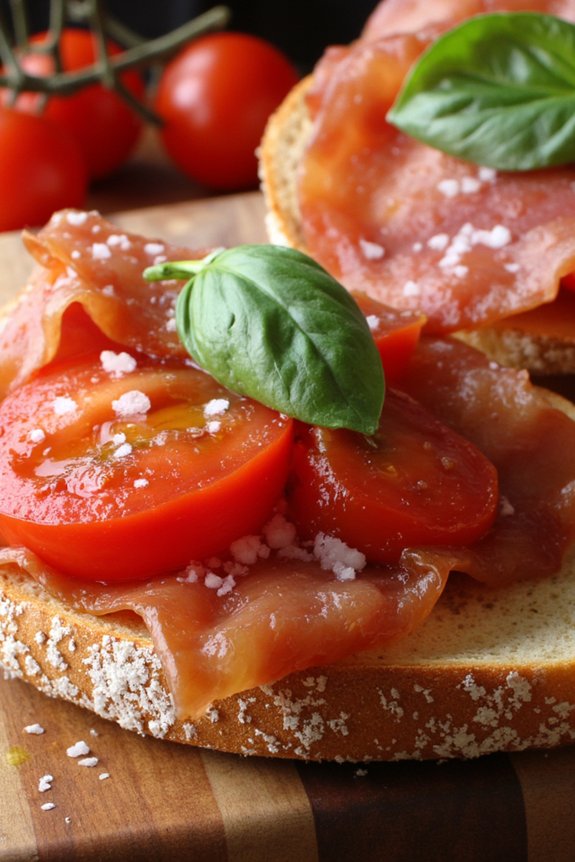
Tostas De Tomate Y Jamón is a quintessential Spanish street food that combines the simplicity of rustic bread with the rich flavors of ripe tomatoes and savory cured ham. This dish is perfect for a casual gathering or a quick weeknight meal, where the essence of Spain can be captured in every bite.
With its balance of textures and flavors, tostas de tomate y jamón offers a delightful culinary experience that showcases the best of Spanish ingredients.
The key to a perfect tosta is using quality ingredients, particularly when it comes to the bread and the jamón. Typically, these tostas are made with a hearty, crusty bread that can hold up to the juicy tomatoes and the draping slices of jamón. The tomatoes should be ripe and flavorful, and the jamón can be either Jamón Ibérico or Serrano, depending on availability and preference.
The dish is then finished with a drizzle of olive oil and a sprinkle of sea salt, elevating the flavors and bringing a touch of the Mediterranean to your table.
Ingredients (for 4-6 people):
- 1 loaf of crusty bread (such as ciabatta or baguette)
- 4 ripe tomatoes
- 200g of Jamón Ibérico or Serrano
- 2 cloves of garlic
- Extra virgin olive oil
- Sea salt
- Freshly ground black pepper
- Fresh basil leaves (optional, for garnish)
Instructions:
- Prepare the Bread: Cut the loaf of bread into thick slices, about 1-inch thick. Toast the slices on a grill or in a toaster until golden brown and crispy on the outside.
- Rub with Garlic: Once the bread is toasted, take a clove of garlic and rub it over the surface of each slice. This will impart a subtle garlic flavor without overpowering the other ingredients.
- Prepare the Tomatoes: Cut the tomatoes in half and grate them using the large holes of a box grater. Discard the skins. This will create a fresh tomato pulp with a smooth consistency.
- Assemble the Tostas: Spoon a generous amount of the grated tomato over each slice of toasted bread. Drizzle with extra virgin olive oil and season with sea salt and freshly ground black pepper to taste.
- Add the Jamón: Arrange slices of Jamón Ibérico or Serrano over the tomato-covered bread, draping them elegantly to cover the surface.
- Garnish and Serve: If desired, garnish with fresh basil leaves for an additional burst of color and flavor. Serve immediately to enjoy the tostas at their best.
Extra Tips:
For an even more authentic experience, try using a pan con tomate as your base. Simply toast the bread and rub it with ripe tomato halves instead of grating them. This technique is traditional in many parts of Spain and provides a different texture to the dish.
Additionally, if you prefer a hint of heat, you can add a pinch of red chili flakes before placing the jamón. Finally, be generous with the olive oil; it not only enhances the flavor but also adds a touch of luxury to the tostas.
Gambas Al Ajillo
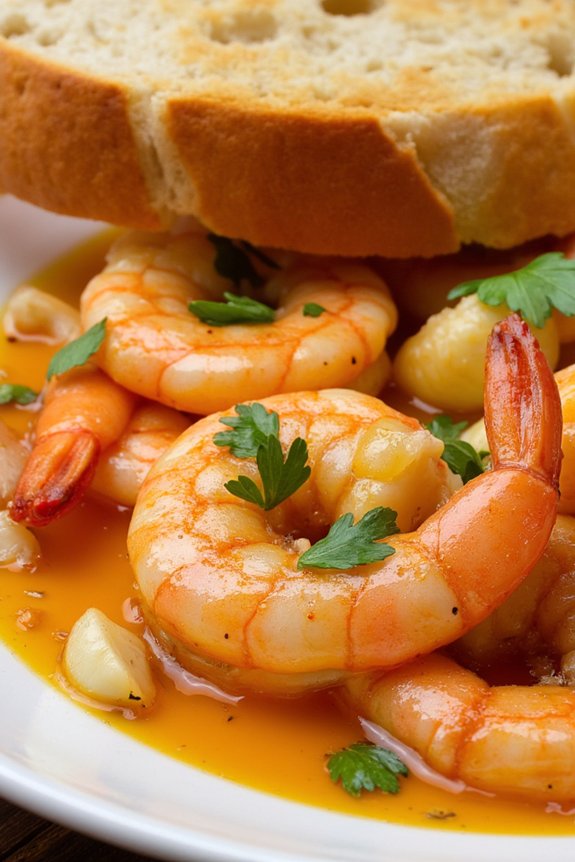
Gambas Al Ajillo, or Garlic Shrimp, is a classic Spanish street food dish that tantalizes the taste buds with its rich garlicky aroma and succulent shrimp. This dish is a staple in tapas bars throughout Spain, often enjoyed with a glass of chilled white wine and a side of crusty bread to soak up the flavorful sauce.
The beauty of Gambas Al Ajillo lies in its simplicity, using just a few fresh ingredients to create a dish that’s both quick to prepare and full of flavor. The key to perfecting Gambas Al Ajillo is to use high-quality shrimp and fresh garlic, which infuses the olive oil with a robust flavor, making it irresistible.
This recipe serves 4-6 people and is perfect for a casual gathering or a quick weeknight dinner. Its simplicity and bold flavors are sure to impress anyone who tastes it, transporting them to the vibrant streets of Spain with each bite.
Ingredients (Serves 4-6):
- 1 kg (2.2 lbs) large shrimp, peeled and deveined
- 8 cloves of garlic, thinly sliced
- 1 teaspoon red pepper flakes
- 1/2 cup extra virgin olive oil
- 1/4 cup dry white wine
- 2 tablespoons fresh parsley, chopped
- Salt to taste
- Freshly ground black pepper to taste
- Lemon wedges for serving
- Crusty bread for serving
Instructions:
- Prepare the Shrimp: Start by peeling and deveining the shrimp if they haven’t been already. Pat them dry with paper towels to guarantee they cook evenly and set them aside.
- Heat the Oil: In a large skillet over medium heat, pour in the olive oil and allow it to heat up. The oil is ready when it begins to shimmer.
- Infuse the Oil: Add the sliced garlic to the hot oil and cook for about 1-2 minutes until golden and fragrant. Be cautious not to burn the garlic, as it can turn bitter.
- Add the Shrimp: Increase the heat to medium-high and add the shrimp to the skillet. Season with salt, black pepper, and red pepper flakes. Stir the shrimp to coat them in the garlic-infused oil.
- Cook and Deglaze: Cook the shrimp for 2-3 minutes on each side until they’re pink and opaque. Pour in the white wine and let it simmer for about 1 minute, allowing the alcohol to evaporate and the flavors to meld.
- Finish with Herbs: Remove the skillet from heat and sprinkle the chopped parsley over the shrimp. Toss everything together to combine the flavors well.
- Serve: Transfer the shrimp and the aromatic oil to a serving dish. Serve immediately with lemon wedges and crusty bread for dipping.
Extra Tips:
When preparing Gambas Al Ajillo, it’s important to use fresh shrimp for the best flavor and texture. If fresh shrimp aren’t available, frozen shrimp can be used, but make sure to thaw them thoroughly and pat them dry before cooking.
Adjust the amount of red pepper flakes to suit your spice preference. For an extra layer of flavor, consider adding a splash of brandy or a pinch of smoked paprika to the oil along with the garlic. Always serve this dish hot to fully enjoy the luscious garlic-infused oil and the tender, juicy shrimp.
Chistorra Al Vino
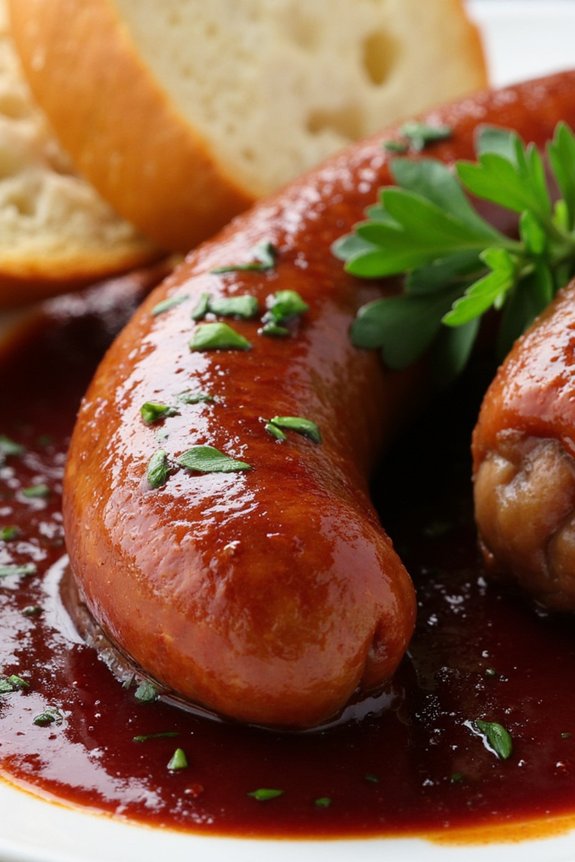
Chistorra Al Vino is a quintessential Spanish street food dish that combines the robust flavors of chistorra sausage with the richness of red wine. This dish is known for its simplicity and the way it allows the ingredients to speak for themselves. The chistorra, a type of fast-cured sausage from the Basque and Navarre regions of Spain, is the star of the show, infusing the dish with its spicy, smoky taste. Cooking it in wine not only enhances its flavor but also creates a delectable sauce that pairs beautifully with crusty bread.
This dish is perfect for a gathering or as a hearty appetizer, where the sausages are simmered in wine until they’re tender and juicy. The combination of the chistorra’s spices with the wine creates a rich and savory dish that’s sure to impress your guests. While it’s typically a simple dish to prepare, the key lies in choosing a good quality wine and allowing the sausages to slowly absorb the wine’s flavors.
Ingredients (Serves 4-6):
- 1 pound (about 450 grams) of chistorra sausage, cut into 2-inch pieces
- 2 cups of good quality red wine
- 2 tablespoons of olive oil
- 3 garlic cloves, thinly sliced
- 1 bay leaf
- Salt and freshly ground black pepper to taste
- Fresh parsley, chopped, for garnish
- Crusty bread, for serving
Cooking Instructions:
- Prepare the Ingredients: Begin by slicing the chistorra sausage into 2-inch pieces. Thinly slice the garlic cloves and set aside. Make certain all your ingredients are ready to go before you start cooking.
- Heat the Oil: In a large skillet or heavy-bottomed pan, heat the olive oil over medium heat. Once the oil is hot, add the sliced garlic and sauté for about 1-2 minutes until fragrant but not browned.
- Cook the Sausage: Add the chistorra pieces to the pan. Cook them for about 5-6 minutes, turning occasionally, until they’re browned on all sides. The goal here is to sear the outside, which will help lock in the flavors.
- Add the Wine: Pour the red wine into the pan, making sure it covers the sausages. Add the bay leaf, and season with salt and freshly ground black pepper to taste.
- Simmer the Dish: Bring the mixture to a gentle simmer. Reduce the heat to low, cover the pan, and let the sausages cook for about 20-25 minutes. This allows the chistorra to absorb the wine flavors and become tender.
- Finish the Dish: Once the sausages are cooked through and the wine has reduced slightly into a sauce, remove the bay leaf. Transfer the sausages and sauce to a serving dish.
- Garnish and Serve: Sprinkle freshly chopped parsley over the top for a burst of color and flavor. Serve the Chistorra Al Vino hot with slices of crusty bread to soak up the delicious sauce.
Extra Tips: When selecting the wine for this dish, opt for a Spanish red like a Rioja to enhance the authenticity of the flavors. If you prefer a thicker sauce, you can let the wine reduce a bit longer or add a teaspoon of cornstarch diluted in water to thicken it.
