

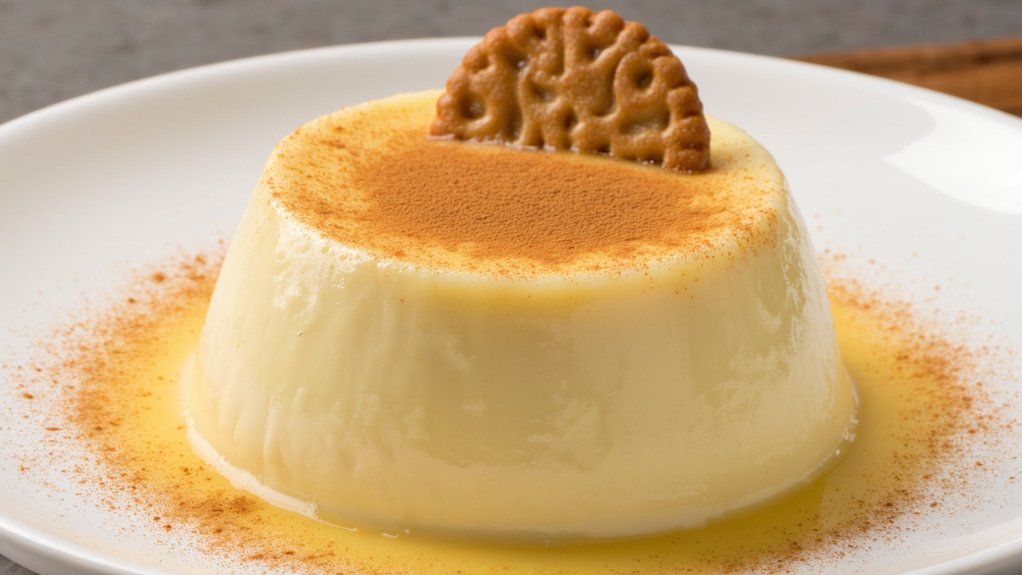
Spanish desserts are a beautiful blend of flavors and textures that are sure to delight. From the smooth caramel notes of a classic flan to the crispy, chocolatey goodness of churros, there’s something for every sweet tooth. The almond-rich Tarta De Santiago and the creamy Natillas are just a glimpse of the delicious journey through Spanish cuisine. Each dessert is a little taste of Spain’s rich culinary tradition. Ready to explore these sweet treats?
Classic Spanish Flan
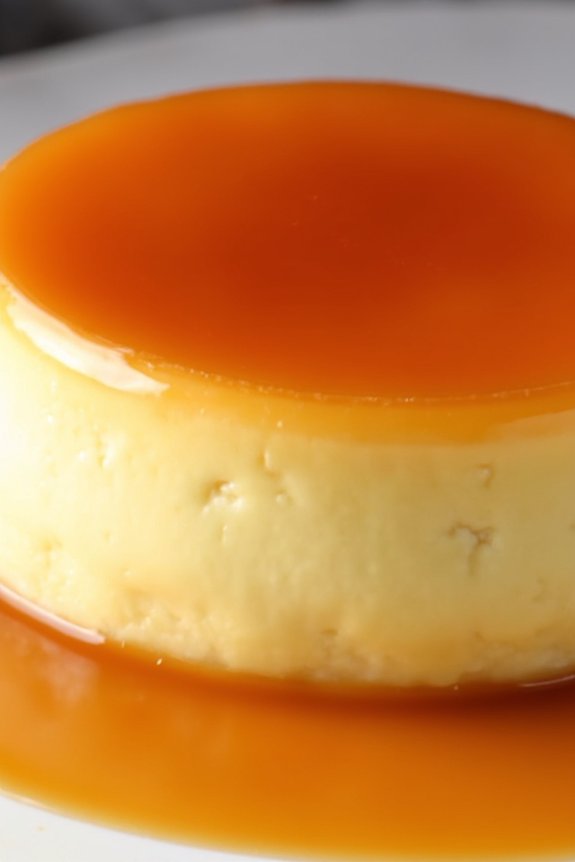
Spanish Flan is a traditional dessert that epitomizes the rich culinary heritage of Spain. It’s a smooth, creamy custard topped with a caramel glaze that melts in your mouth. This dessert isn’t only a favorite in Spain but also a beloved treat in many Spanish-speaking countries. The secret to a perfect flan lies in its delicate balance of sweetness and texture, achieved through careful preparation and baking.
The preparation of a Classic Spanish Flan involves creating a luscious custard with a hint of vanilla, which is then baked to perfection in a caramel-coated mold. This dessert is both elegant and comforting, making it an excellent choice for family gatherings and special occasions. With its simple ingredients and timeless appeal, Spanish Flan is sure to impress anyone with a taste for delightful desserts.
Ingredients for 4-6 Servings:
- 1 cup granulated sugar
- 6 large eggs
- 1 can (14 ounces) sweetened condensed milk
- 1 can (12 ounces) evaporated milk
- 1 tablespoon vanilla extract
- 1/2 cup water
Cooking Instructions:
- Prepare the Caramel:
- Begin by creating the caramel. In a medium saucepan over medium heat, combine the granulated sugar and water. Stir gently until the sugar dissolves, then stop stirring and let it cook until it turns a golden-brown color. Be careful not to burn the caramel. This should take about 8-10 minutes.
- Quickly pour the caramel into a round 9-inch baking dish, tilting the dish to evenly coat the bottom. Set aside to cool and harden.
- Make the Custard:
- Preheat your oven to 350°F (175°C).
- In a large mixing bowl, whisk the eggs until they’re well beaten. Add the sweetened condensed milk, evaporated milk, and vanilla extract. Mix until all ingredients are fully incorporated and smooth.
- Combine and Bake:
- Gently pour the custard mixture over the set caramel in the baking dish.
- Prepare a water bath by placing the baking dish into a larger pan. Fill the larger pan with hot water until it reaches halfway up the sides of the baking dish. This method helps the flan cook evenly.
- Carefully transfer to the preheated oven and bake for 50-60 minutes, or until the flan is set with a slight jiggle in the center.
- Cool and Serve:
- Once done, remove the baking dish from the water bath and let it cool to room temperature. Then, refrigerate the flan for at least 4 hours, or overnight, to fully set.
- To serve, run a knife around the edges of the flan to loosen it. Place a serving plate over the baking dish and invert quickly to release the flan with its caramel topping.
Extra Tips:
When making a Classic Spanish Flan, patience is key. Allow the caramel to reach the right golden brown color without rushing, as this will profoundly affect the flavor of the flan.
Additionally, make certain that the water bath is adequately filled with hot water to prevent the custard from curdling while baking. If you want a flan with an extra creamy texture, consider straining the custard mixture before pouring it over the caramel.
Finally, always chill the flan well before serving to let the flavors meld and for easier slicing. Enjoy your homemade Spanish Flan as a delightful end to any meal!
Churros With Chocolate Sauce

Churros With Chocolate Sauce is a classic Spanish dessert that’s loved worldwide for its crispy exterior and fluffy interior, accompanied by a rich and indulgent chocolate sauce. Perfect for a cozy evening or a festive gathering, this delightful treat is a guaranteed crowd-pleaser.
The churros are made by piping a simple dough into hot oil, resulting in golden, crispy delights that are wonderfully complemented by the smooth and silky chocolate sauce for dipping.
This recipe is designed to serve 4-6 people, making it ideal for sharing with family and friends. The churros are best enjoyed fresh out of the fryer, with the chocolate sauce providing a decadent contrast to the warmth and crunch of the churros.
Whether you’re a seasoned chef or a beginner in the kitchen, this recipe is straightforward and rewarding, bringing a touch of Spanish flair to your dessert repertoire.
Ingredients:
For the Churros:
- 1 cup water
- 1/4 cup unsalted butter
- 1 tablespoon granulated sugar
- 1/4 teaspoon salt
- 1 cup all-purpose flour
- 1 large egg
- 1 teaspoon vanilla extract
- Vegetable oil, for frying
- 1/2 cup granulated sugar (for coating)
- 1 teaspoon ground cinnamon (for coating)
For the Chocolate Sauce:
- 1/2 cup heavy cream
- 4 ounces dark chocolate, chopped
- 1 tablespoon unsalted butter
- 1 tablespoon light corn syrup (optional)
Cooking Instructions:
- Prepare the Dough: In a medium saucepan, combine the water, butter, sugar, and salt. Bring to a boil over medium heat. Once boiling, reduce the heat to low and add the flour all at once. Stir vigorously until the mixture forms a ball and pulls away from the sides of the pan, about 1-2 minutes.
- Incorporate Egg and Flavoring: Remove the saucepan from the heat and let it cool for about 5 minutes. Add the egg and vanilla extract to the dough, stirring quickly until the egg is fully incorporated and the mixture is smooth.
- Heat the Oil: In a large, deep pan, heat about 2 inches of vegetable oil to 375°F (190°C). Use a thermometer to verify the oil maintains the correct temperature.
- Pipe the Churros: Transfer the dough to a piping bag fitted with a large star tip. Carefully pipe 4-inch long strips of dough into the hot oil, using kitchen scissors to snip the dough at the desired length. Fry in batches to avoid crowding the pan.
- Fry the Churros: Fry the churros until golden brown and cooked through, about 2-3 minutes per side. Use a slotted spoon to transfer them to a paper towel-lined plate to drain excess oil.
- Coat with Cinnamon Sugar: While still warm, roll the churros in a mixture of 1/2 cup granulated sugar and 1 teaspoon ground cinnamon until evenly coated.
- Make the Chocolate Sauce: In a small saucepan, heat the heavy cream over medium heat until it begins to simmer. Remove from heat and add the chopped chocolate, butter, and corn syrup. Stir until the chocolate is completely melted and the sauce is smooth and glossy.
- Serve: Serve the churros warm with the chocolate sauce on the side for dipping. Enjoy immediately for the best texture and flavor.
Extra Tips:
To guarantee perfect churros, make sure the oil is at the right temperature before frying; too hot and the churros will brown too quickly on the outside and remain raw inside, too cool and they’ll absorb too much oil and become greasy.
If you don’t have a piping bag, a sturdy plastic bag with a corner snipped off can be used in a pinch. For the chocolate sauce, if you prefer a sweeter sauce, you can adjust the sugar to taste or use milk chocolate instead of dark chocolate.
Enjoy your churros with a sprinkle of powdered sugar for an extra touch of sweetness.
Tarta De Santiago (Galician Almond Cake)
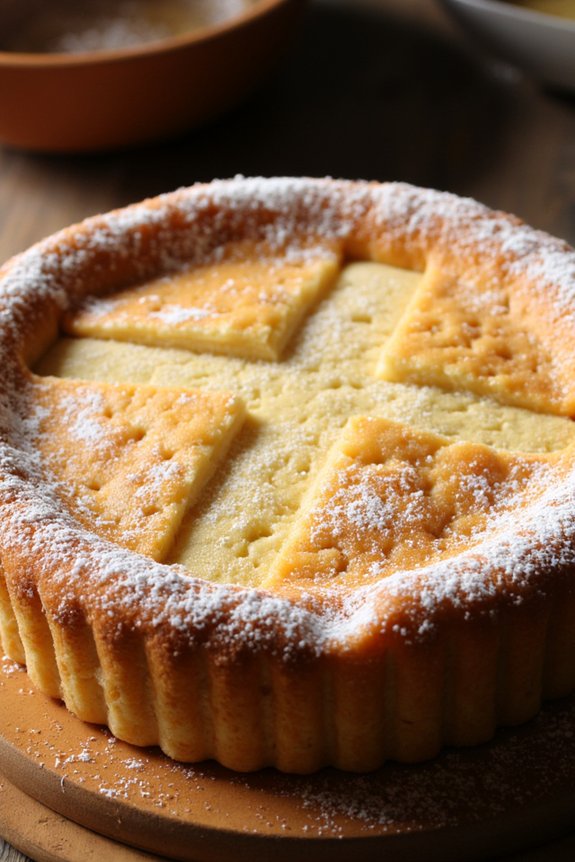
Tarta De Santiago, also known as Galician Almond Cake, is a traditional Spanish dessert that hails from the region of Galicia. This delicious cake is renowned for its simple yet flavorful composition, primarily made from ground almonds, sugar, and eggs. It’s traditionally marked with the cross of Saint James, making it a symbolic and cultural delight.
The cake’s dense and moist texture, combined with its sweet almond flavor, makes it a favorite among those who appreciate a subtly sweet dessert. Gluten-free by nature, Tarta De Santiago is a versatile cake, perfect for serving at any occasion. Its preparation is straightforward, making it an excellent choice for beginner bakers looking to explore Spanish cuisine.
The cake can be enjoyed on its own, with a dusting of confectioner’s sugar, or paired with a scoop of vanilla ice cream or a dollop of whipped cream for added indulgence. The following recipe provides all the necessary steps and ingredients to create this beloved Spanish treat, suitable for serving 4-6 people.
Ingredients:
- 250g ground almonds
- 250g granulated sugar
- 5 large eggs
- Zest of 1 lemon
- 1/2 teaspoon ground cinnamon
- Powdered sugar, for dusting
- Butter, for greasing the pan
Instructions:
- Preheat the Oven: Begin by preheating your oven to 350°F (175°C). This guarantees that the oven reaches the right temperature for baking the cake evenly.
- Prepare the Pan: Grease a 9-inch (23cm) round cake pan with butter. This will prevent the cake from sticking to the pan and guarantee easy removal after baking.
- Mix Dry Ingredients: In a large mixing bowl, combine the ground almonds, granulated sugar, lemon zest, and ground cinnamon. Stir the mixture well to guarantee all ingredients are evenly distributed.
- Whisk the Eggs: In a separate bowl, crack the eggs and whisk them together until they’re fully combined. This will help incorporate air into the mixture, giving the cake a light texture.
- Combine Wet and Dry Ingredients: Gradually add the whisked eggs into the almond mixture, stirring continuously until you obtain a smooth and homogeneous batter.
- Pour and Level the Batter: Pour the batter into the prepared cake pan, using a spatula to level the top for even baking.
- Bake the Cake: Place the cake pan in the preheated oven and bake for 30-35 minutes. The cake is ready when the top is golden brown, and a toothpick inserted into the center comes out clean.
- Cool and Decorate: Allow the cake to cool in the pan for about 10 minutes, then transfer it to a wire rack to cool completely. Once cooled, dust the top with powdered sugar. Optionally, place a stencil of the cross of Saint James on top before dusting to achieve the traditional design.
Extra Tips:
For the best results, use fresh, high-quality almonds to enhance the flavor of the cake. If you prefer a more intense lemon flavor, add a little more lemon zest.
When dusting with powdered sugar, guarantee the cake is completely cool to prevent the sugar from melting. Additionally, the Tarta De Santiago can be stored at room temperature for up to three days, making it a convenient dessert to prepare in advance. Enjoy this cake with a cup of coffee or tea for a truly delightful Spanish experience.
Crema Catalana
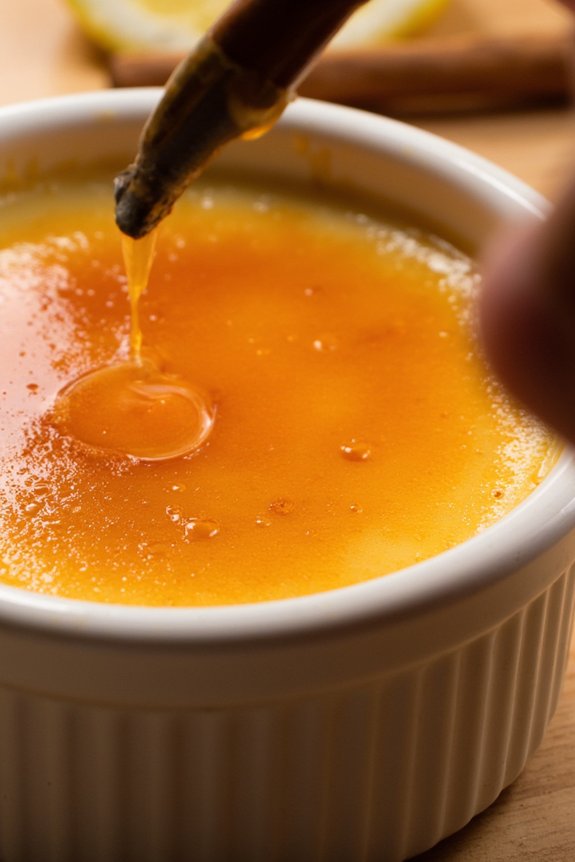
Crema Catalana is a classic Spanish dessert that’s often compared to the French crème brûlée, yet it possesses its own distinct flavor and texture. This creamy, rich dessert is flavored with cinnamon and citrus, giving it a unique and delightful taste.
Crema Catalana is traditionally served as a custard with a caramelized sugar topping that adds a satisfying crunch to each spoonful. It’s a popular dessert in Catalonia and throughout Spain, often enjoyed during special occasions or as a sweet conclusion to a festive meal.
The preparation of Crema Catalana is relatively simple, making it a great choice for both novice and experienced cooks. The key to achieving the perfect Crema Catalana is patience and attention to detail during the cooking process. The custard must be carefully cooked to achieve the right consistency, while the caramelized sugar topping is best prepared using a kitchen torch for an even, golden finish.
This dessert can be made ahead of time, allowing the flavors to meld and the custard to set properly before serving.
Ingredients (Serves 4-6):
- 500 ml whole milk
- 125 g granulated sugar
- 5 large egg yolks
- 1 cinnamon stick
- Zest of 1 lemon
- 1 tablespoon cornstarch
- Additional sugar for caramelizing
Cooking Instructions:
- Infuse the Milk: In a medium saucepan, combine the whole milk, cinnamon stick, and lemon zest. Place the saucepan over medium heat and bring the mixture to a simmer. Once simmering, remove it from the heat and allow the flavors to infuse for about 10 minutes.
- Prepare the Egg Mixture: In a separate bowl, whisk together the egg yolks and granulated sugar until the mixture is pale and creamy. Add the cornstarch and whisk until smooth.
- Combine and Cook: Remove the cinnamon stick from the infused milk. Gradually add the milk mixture to the egg mixture, whisking continuously to prevent the eggs from curdling. Pour the combined mixture back into the saucepan.
- Thicken the Custard: Place the saucepan over low heat and cook, stirring constantly, until the custard thickens and coats the back of a spoon. This should take about 10-15 minutes. Be careful not to let the mixture boil, as this can cause it to curdle.
- Chill the Custard: Once thickened, remove the custard from the heat and pour it into individual ramekins. Allow the custard to cool to room temperature, then cover each ramekin with plastic wrap and refrigerate for at least 2 hours, or until fully set.
- Caramelize the Sugar: Just before serving, evenly sprinkle a thin layer of sugar over the top of each custard. Use a kitchen torch to carefully caramelize the sugar until it’s golden brown and crisp.
Extra Tips:
For the best flavor, use fresh lemon zest and a good quality cinnamon stick. Be sure to continuously stir the custard while it’s on the heat to prevent it from sticking to the bottom of the pan and burning.
If you don’t have a kitchen torch, you can use the broiler in your oven to caramelize the sugar, but watch it closely to avoid burning. Crema Catalana is best enjoyed on the day it’s made, as the caramelized sugar topping will soften over time. However, the custard itself can be prepared a day in advance.
Leche Frita (Fried Milk)
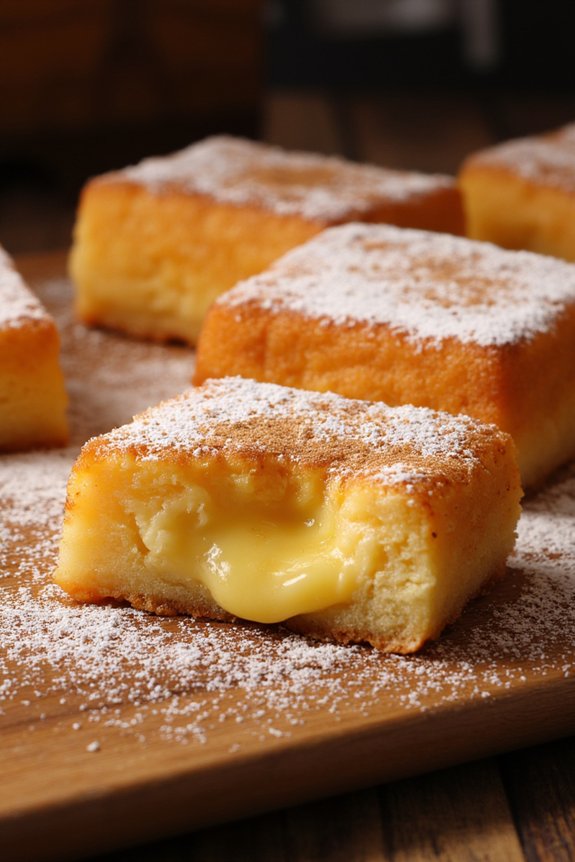
Leche Frita, a classic Spanish dessert, is a delightful treat that combines the creamy texture of milk custard with a crisp, golden exterior. Originating from the northern regions of Spain, this dessert is traditionally enjoyed during festive occasions and is treasured for its simplicity and luscious flavors.
The process involves cooking a milk-based custard, allowing it to set, cutting it into squares, and then frying the pieces until they’re perfectly golden. The contrast between the crispy coating and the soft, creamy center will leave you craving more with each bite.
This dessert isn’t only a joy to eat but also a joy to make, as it requires basic ingredients that you likely have in your pantry. With a little patience and attention to detail, you can master the art of making Leche Frita, impressing friends and family with your culinary skills. Enjoy it as a sweet finish to a meal or a comforting snack any time of the day. Follow the instructions below to create this delightful dessert for 4-6 people.
Ingredients:
- 1 liter of whole milk
- 120 grams of granulated sugar
- 100 grams of cornstarch
- 1 cinnamon stick
- Zest of 1 lemon
- 2 large eggs
- 100 grams of all-purpose flour
- Vegetable oil for frying
- Ground cinnamon for dusting
- Powdered sugar for dusting
Instructions:
- Prepare the Milk Mixture: In a saucepan, bring the milk to a gentle simmer over medium heat. Add the cinnamon stick and lemon zest. Allow the flavors to infuse for about 10 minutes, then remove from heat. Strain the milk to remove the cinnamon stick and zest.
- Create the Custard Base: In a bowl, mix the sugar and cornstarch. Gradually add the infused milk to the sugar and cornstarch mixture, whisking continuously to prevent lumps. Return this mixture to the saucepan.
- Cook the Custard: Cook the mixture over medium heat, stirring constantly, until it thickens and starts to bubble. This may take about 8-10 minutes. Once thickened, remove from heat and pour the custard into a greased baking dish, spreading it evenly. Cover with plastic wrap, making sure it touches the surface to prevent a skin from forming. Refrigerate for at least 4 hours or until set.
- Prepare for Frying: Once the custard is set, cut it into squares or rectangles. Set up a breading station with one bowl of beaten eggs and another with flour.
- Coat and Fry the Custard: Heat vegetable oil in a frying pan over medium-high heat. Dredge each custard piece in flour, then dip in the beaten eggs, guaranteeing it’s well-coated. Carefully place each piece in the hot oil, frying until golden brown on both sides, about 2-3 minutes per side. Remove and drain on paper towels.
- Serve: Dust the fried squares with powdered sugar and a sprinkle of cinnamon. Serve warm for the best experience.
Extra Tips:
For an extra burst of flavor, consider adding a splash of vanilla extract to the milk mixture. If you’re aiming for a more robust flavor, experiment with different citrus zests, such as orange, or even a pinch of nutmeg.
When frying, verify the oil isn’t too hot, as this can cause the outside to brown too quickly while leaving the inside undercooked. If you prefer a lighter version, you may bake the coated custard pieces at 200°C (392°F) until golden brown instead of frying. Enjoy your Leche Frita with a drizzle of honey or caramel sauce for added decadence!
Turrón De Jijona (Soft Almond Nougat)
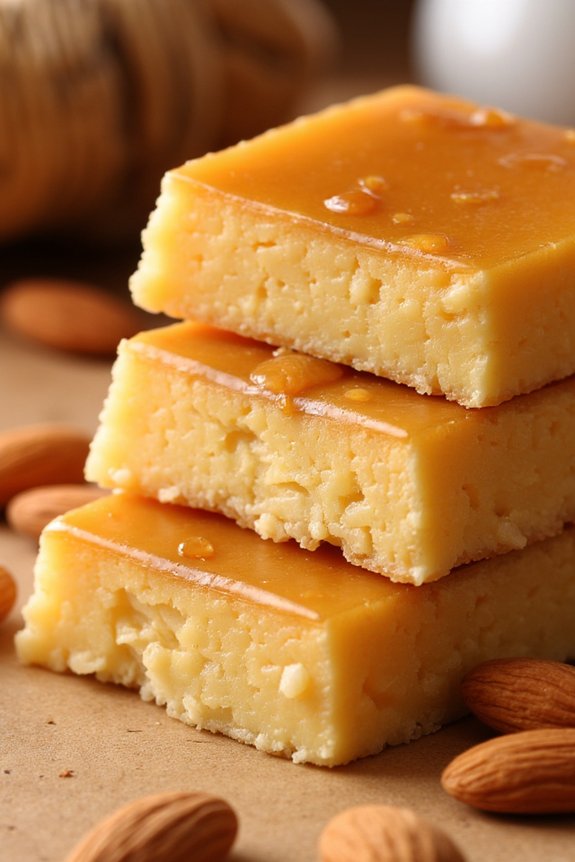
Turrón De Jijona, also known as soft almond nougat, is a traditional Spanish dessert that hails from the region of Jijona in Spain. This sweet treat is cherished during Christmas and other festive occasions. It’s renowned for its rich, nutty flavor and smooth, melt-in-your-mouth texture.
The primary ingredient in Turrón De Jijona is almonds, which are finely ground and mixed with honey and sugar to create a delightful confection. This nougat isn’t only delicious but also versatile, as it can be enjoyed on its own or used as an ingredient in various desserts.
Crafting Turrón De Jijona at home is a rewarding experience that allows you to appreciate the traditional methods passed down through generations. The process involves carefully toasting almonds and then blending them with a sweet syrup made from honey and sugar. The mixture is then cooked until it reaches the perfect consistency, after which it’s shaped and left to cool and set.
Making this nougat at home guarantees that you can enjoy an authentic taste of Spain, right in your own kitchen.
Ingredients for 4-6 servings:
- 250 grams raw almonds
- 200 grams honey
- 150 grams sugar
- 1 egg white
- 1/4 teaspoon cinnamon (optional)
Cooking Instructions:
- Prepare the Almonds: Preheat your oven to 180°C (350°F). Spread the raw almonds evenly on a baking sheet and toast them in the oven for about 10-12 minutes until they’re golden brown. Let them cool slightly, then grind them in a food processor until you have a fine almond powder.
- Create the Syrup: In a medium saucepan, combine the honey and sugar. Place the pan over low heat and stir continuously until the sugar has completely dissolved into the honey. This should take about 5-7 minutes.
- Mix in Almonds: Once the syrup is ready, slowly add the ground almonds to the saucepan, stirring constantly to combine. Continue to cook the mixture over low heat for another 10-15 minutes until it thickens.
- Incorporate Egg White: In a separate bowl, beat the egg white until stiff peaks form. Gently fold the beaten egg white into the almond mixture, making sure it’s fully incorporated. If desired, add cinnamon at this stage for additional flavor.
- Shape the Nougat: Line a rectangular loaf pan with parchment paper. Pour the almond mixture into the prepared pan, spreading it evenly. Press it down firmly to make sure it sets well.
- Cool and Set: Allow the turrón to cool to room temperature before placing it in the refrigerator to set for at least 4 hours, or overnight for best results.
- Serve: Once set, remove the turrón from the pan, slice it into individual pieces, and serve.
Extra Tips:
For the best results, use high-quality almonds, as they’re the star ingredient in this dish. Make sure that the almonds are ground to a fine consistency to achieve the desired smooth texture.
If you prefer a slightly different flavor profile, experiment by adding vanilla or lemon zest instead of cinnamon. Patience is key when cooking the nougat mixture; it requires a low and slow approach to prevent burning and guarantee the perfect consistency.
Finally, when pressing the mixture into the pan, use a spatula or the back of a spoon to pack it tightly, which will help it hold its shape once set.
Arroz Con Leche (Spanish Rice Pudding)
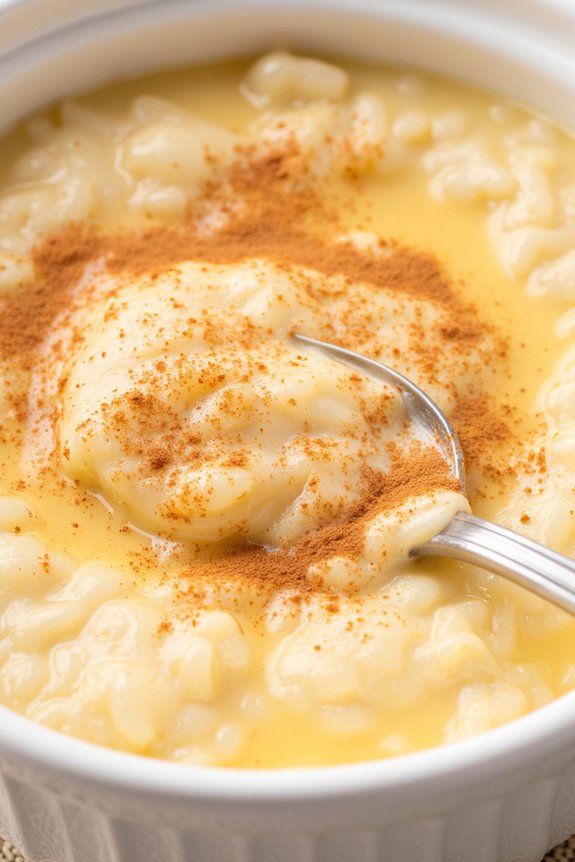
Arroz Con Leche, or Spanish Rice Pudding, is a delightful and creamy dessert that’s a staple in many Spanish households. This comforting dish is perfect for those who love the combination of rice and milk sweetened with sugar and flavored with cinnamon and citrus zest. Its creamy texture and rich flavors make it an irresistible treat, whether served warm on a chilly day or chilled for a revitalizing dessert option.
The origins of Arroz Con Leche can be traced back to the Moorish influence on Spanish cuisine. Over the centuries, this dessert has evolved into various regional versions across Spain, each with unique twists while maintaining the core ingredients. The simplicity of its preparation and the versatility of its ingredients make it a favorite for home cooks.
Here’s how you can prepare this traditional Spanish dessert to serve 4-6 people.
Ingredients:
- 1 cup of short-grain rice
- 4 cups whole milk
- 1 cup water
- 1 cup granulated sugar
- 1 cinnamon stick
- Peel of one lemon (avoid the white pith)
- 1 teaspoon vanilla extract
- Ground cinnamon for garnish
Cooking Instructions:
- Rinse the Rice: Start by rinsing the rice under cold water until the water runs clear. This helps to remove excess starch and prevents the pudding from becoming too sticky.
- Simmer the Rice: In a large pot, combine the rinsed rice with the water. Place over medium heat, bring to a boil, and then reduce the heat to low. Cover the pot and let the rice simmer for about 10 minutes until the water is absorbed.
- Infuse the Milk: Add the whole milk, cinnamon stick, and lemon peel to the pot with the partially cooked rice. Stir well to combine. Increase the heat to medium and bring the mixture to a gentle simmer, stirring frequently to prevent the milk from burning.
- Sweeten the Mixture: Once the milk mixture has reached a simmer, add the sugar and stir until it’s completely dissolved. Continue to cook over low heat, stirring frequently, for about 30-40 minutes or until the rice is tender and the mixture has thickened to your desired consistency.
- Flavor with Vanilla: Remove the pot from the heat and discard the cinnamon stick and lemon peel. Stir in the vanilla extract for a hint of additional flavor.
- Serve and Garnish: Let the Arroz Con Leche cool slightly before serving. For a warm dessert, serve immediately in bowls, or chill in the refrigerator if you prefer it cold. Sprinkle a dash of ground cinnamon on top for garnish before serving.
Extra Tips:
For a creamier texture, you can substitute half of the whole milk with heavy cream. Be sure to stir the mixture frequently to prevent it from sticking to the bottom of the pot or burning.
Adjust the amount of sugar to your taste preference, and if you want to experiment, consider adding a splash of rum or sherry for a unique twist. Remember, the pudding will thicken as it cools, so it’s okay if it seems slightly thin while still warm.
Ensaimada De Mallorca
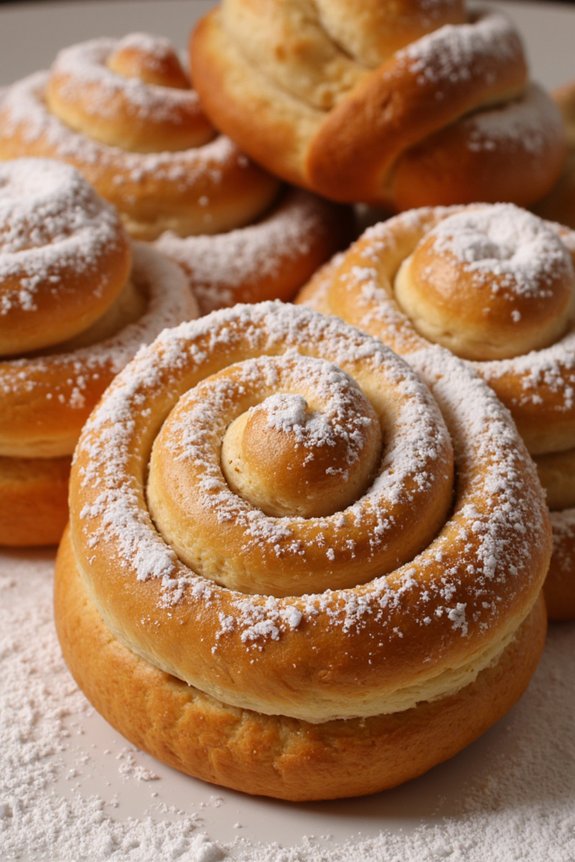
Ensaimada De Mallorca is a traditional Spanish pastry from the island of Mallorca, known for its soft, fluffy texture and delightful sweetness. This spiral-shaped delight is typically enjoyed as a breakfast treat or a dessert, paired with coffee or hot chocolate.
Ensaimada De Mallorca is made with a simple dough that’s enriched with sugar and lard, giving it a rich flavor and a melt-in-your-mouth consistency. Its preparation requires patience and a gentle touch to achieve the perfect airy texture.
The process of making Ensaimada De Mallorca involves several stages of resting and rising, allowing the dough to develop its characteristic lightness. Once baked to perfection, the pastry is often dusted with powdered sugar, adding to its visual and taste appeal.
While this recipe may seem intricate, the end result is a rewarding experience of genuine Mallorcan culinary artistry. Below is a recipe to make Ensaimada De Mallorca that serves 4-6 people.
Ingredients:
- 500 grams all-purpose flour
- 150 grams sugar
- 15 grams fresh yeast (or 7 grams active dry yeast)
- 2 large eggs
- 200 ml lukewarm water
- 150 grams pork lard (or unsalted butter as an alternative)
- 1/4 teaspoon salt
- Powdered sugar for dusting
Instructions:
- Prepare the Yeast Mixture: Dissolve the fresh yeast in lukewarm water. If using dry yeast, mix it with a teaspoon of sugar and let it sit until it becomes frothy, about 10 minutes.
- Make the Dough: In a large mixing bowl, combine the flour, sugar, and salt. Create a well in the center and add the eggs and the yeast mixture. Mix well until a dough starts to form.
- Knead the Dough: Transfer the dough to a floured surface and knead it for about 10 minutes until it becomes smooth and elastic. The dough should be slightly sticky but manageable.
- First Rise: Place the dough in a greased bowl, cover it with a damp cloth, and let it rise in a warm place for about 1 to 2 hours or until it has doubled in size.
- Shape the Ensaimada: Once risen, punch down the dough and roll it out into a thin rectangle. Spread the lard (or butter) evenly over the surface of the dough. Roll the dough tightly into a log shape.
- Form the Spiral: Coil the dough log into a spiral shape on a baking sheet lined with parchment paper. Leave enough space between the coils as they’ll expand during the next rise.
- Second Rise: Cover the shaped dough with a cloth and let it rise again for about 1 to 2 hours until it doubles in size.
- Bake the Ensaimada: Preheat the oven to 180°C (350°F). Bake the ensaimada for 20-25 minutes or until it’s golden brown.
- Cool and Dust: Allow the ensaimada to cool slightly on a wire rack. Dust generously with powdered sugar before serving.
Extra Tips:
For best results, verify that all ingredients are at room temperature before beginning the recipe. If you prefer a richer flavor, you can incorporate a little vanilla extract or grated lemon zest into the dough.
It’s important to handle the dough gently to maintain its airy texture. If you’re using butter instead of lard, the taste will be slightly different but still delicious.
Finally, patience is key—allowing sufficient time for the dough to rise properly is essential to achieving the perfect light and fluffy ensaimada.
Polvorones (Spanish Almond Shortbread Cookies)
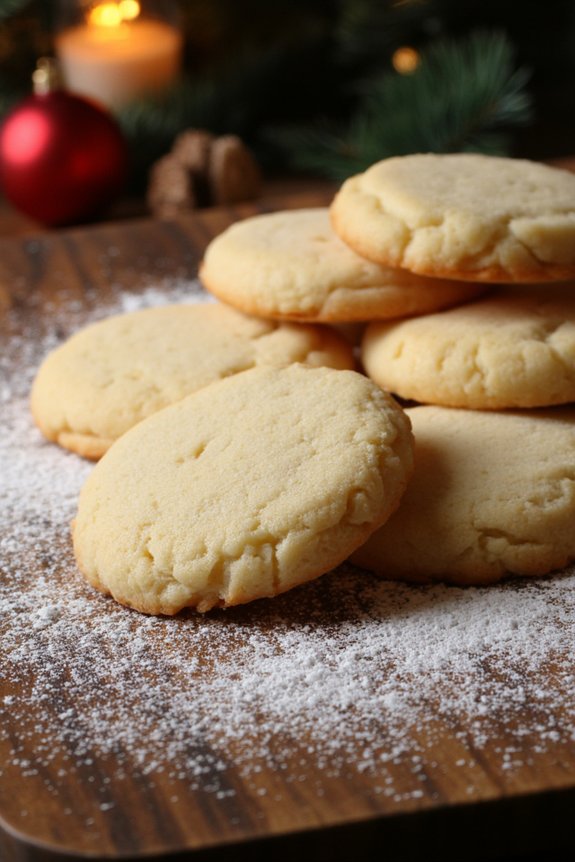
Polvorones, also known as Spanish Almond Shortbread Cookies, are a classic treat often enjoyed during the holiday season in Spain. Their rich, crumbly texture comes from a unique combination of almond flour and butter, making them melt in your mouth with every bite.
These cookies have a subtle nutty flavor complemented by a hint of cinnamon, making them perfect for pairing with a warm cup of coffee or tea. Traditionally, they’re dusted with powdered sugar to add an extra layer of sweetness and a festive look.
Making Polvorones at home isn’t only a delicious adventure but also connects you to Spanish culinary traditions. The recipe is simple, and the ingredients are easy to find, allowing you to recreate the authentic flavor of Spain in your kitchen. This recipe serves 4-6 people, making it ideal for sharing with family and friends or as a delightful addition to a holiday cookie platter.
Ingredients:
- 1 cup (125g) all-purpose flour
- 1 cup (100g) almond flour
- 1/2 cup (113g) unsalted butter, at room temperature
- 1/2 cup (60g) powdered sugar, plus extra for dusting
- 1/2 teaspoon ground cinnamon
- 1/4 teaspoon salt
- 1 teaspoon vanilla extract
- Zest of 1 lemon (optional)
Instructions:
- Preheat the Oven: Start by preheating your oven to 350°F (175°C). Line a baking sheet with parchment paper to prevent the cookies from sticking.
- Toast the Flour: Spread the all-purpose flour on a baking sheet and toast it in the oven for about 8-10 minutes, stirring halfway through. This process enhances the flavor of the flour. Let it cool completely before using.
- Mix the Dry Ingredients: In a mixing bowl, combine the cooled toasted flour, almond flour, ground cinnamon, and salt. Stir well to guarantee the ingredients are evenly distributed.
- Cream Butter and Sugar: In a separate bowl, beat the butter and powdered sugar together with an electric mixer until creamy and smooth. This should take about 3-4 minutes.
- Combine Ingredients: Gradually add the dry ingredient mixture to the butter and sugar, mixing on low speed until just combined. Add the vanilla extract and lemon zest, if using, and mix until the dough comes together.
- Shape the Cookies: Roll the dough into 1-inch balls and place them on the prepared baking sheet, leaving space between each cookie. Lightly flatten the balls with your fingers.
- Bake the Cookies: Bake the cookies in the preheated oven for 12-15 minutes, or until they’re lightly golden around the edges. Be careful not to overbake them, as they should remain soft inside.
- Cool and Dust: Let the cookies cool on the baking sheet for a few minutes before transferring them to a wire rack. Once completely cooled, dust them generously with powdered sugar.
Extra Tips:
For the best texture, make sure that the butter is at room temperature before creaming it with the sugar. This step helps achieve the perfect crumbly consistency of the cookies.
If you want to experiment with flavors, try adding a pinch of nutmeg or swapping the lemon zest for orange zest. These cookies are delicate and prone to crumbling, so handle them gently, especially when transferring them from the baking sheet to the cooling rack.
Polvorones can be stored in an airtight container for up to a week, making them a convenient make-ahead treat for holiday gatherings.
Natillas (Spanish Custard)
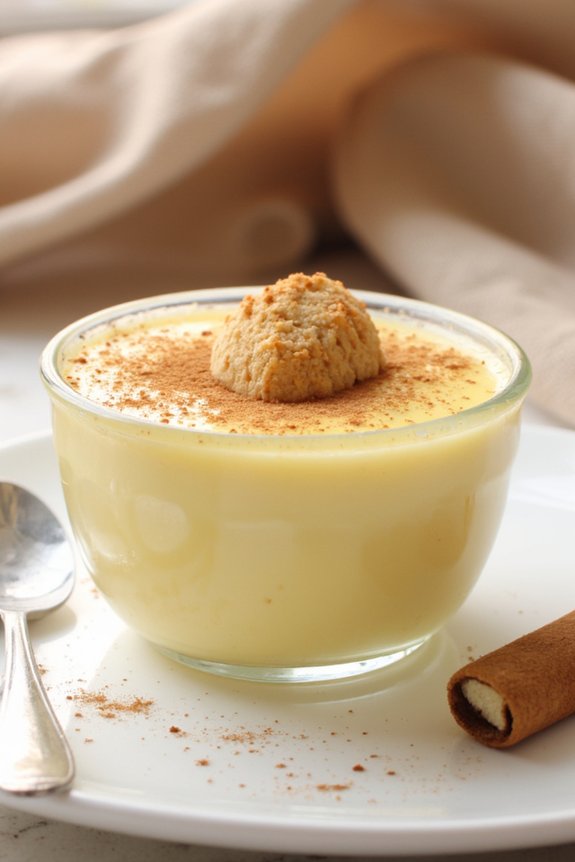
Natillas, a classic Spanish custard, is a creamy, comforting dessert that has been enjoyed in Spain for generations. It’s traditionally flavored with vanilla and cinnamon, delivering a smooth texture that makes it the perfect ending to any meal. The custard is often topped with a sprinkle of cinnamon or a crispy biscuit, adding a delightful contrast to its velvety richness. This dessert is commonly served chilled, allowing the flavors to meld together beautifully, making each spoonful a luscious experience.
Although natillas may seem similar to other custards, what sets it apart is its simplicity and the use of whole milk, which gives it a rich, authentic taste. The key to a perfect natillas lies in the gentle cooking process, which guarantees a silky smooth consistency without scrambling the eggs. When made correctly, this dessert captivates with its subtle sweetness and delicate flavors, making it a beloved treat in Spanish households.
Ingredients (Serves 4-6)
- 4 cups whole milk
- 1 cup granulated sugar
- 4 large egg yolks
- 1 tablespoon cornstarch
- 1 teaspoon vanilla extract
- 1 cinnamon stick
- Ground cinnamon for garnish
- Optional: Spanish Maria biscuits for topping
Cooking Instructions
- Prepare the Milk Mixture: In a medium saucepan, combine the whole milk, cinnamon stick, and half of the sugar. Place the saucepan over medium heat and slowly bring the mixture to a simmer. Stir occasionally to prevent the milk from scorching.
- Mix Egg Yolks and Sugar: While the milk is heating, in a separate bowl, whisk together the egg yolks, remaining sugar, and cornstarch until the mixture is smooth and pale.
- Temper the Egg Mixture: Once the milk reaches a simmer, remove the cinnamon stick. Gradually add a small amount of the hot milk to the egg mixture, whisking constantly to temper the eggs and prevent them from curdling.
- Combine and Cook: Pour the tempered egg mixture back into the saucepan with the remaining milk. Reduce the heat to low and continue to cook, stirring constantly, until the mixture thickens and coats the back of a spoon. This should take about 5-7 minutes.
- Add Vanilla: Remove the saucepan from the heat and stir in the vanilla extract. Mix well to incorporate.
- Strain and Cool: Pour the custard through a fine mesh sieve into a large bowl to remove any lumps or cooked egg bits. Allow it to cool slightly before covering with plastic wrap. Confirm the wrap touches the surface of the custard to prevent a skin from forming.
- Chill: Refrigerate for at least 4 hours or until thoroughly chilled. The natillas will thicken further as they cool.
- Serve: Before serving, sprinkle ground cinnamon on top. Optionally, place a Spanish Maria biscuit on each serving for an added crunch.
Extra Tips
When making natillas, patience is key. Always cook the custard over low heat and stir continuously to prevent the eggs from scrambling. If the custard begins to thicken too quickly, reduce the heat further.
It’s essential to strain the custard to achieve a smooth texture, so don’t skip this step. Also, if you prefer a slightly thicker custard, you can increase the amount of cornstarch slightly, but be cautious not to add too much, as it can affect the flavor and texture.
Enjoying natillas with a biscuit on top is traditional, but you can also experiment with different toppings like fresh fruit or a dollop of whipped cream.
