

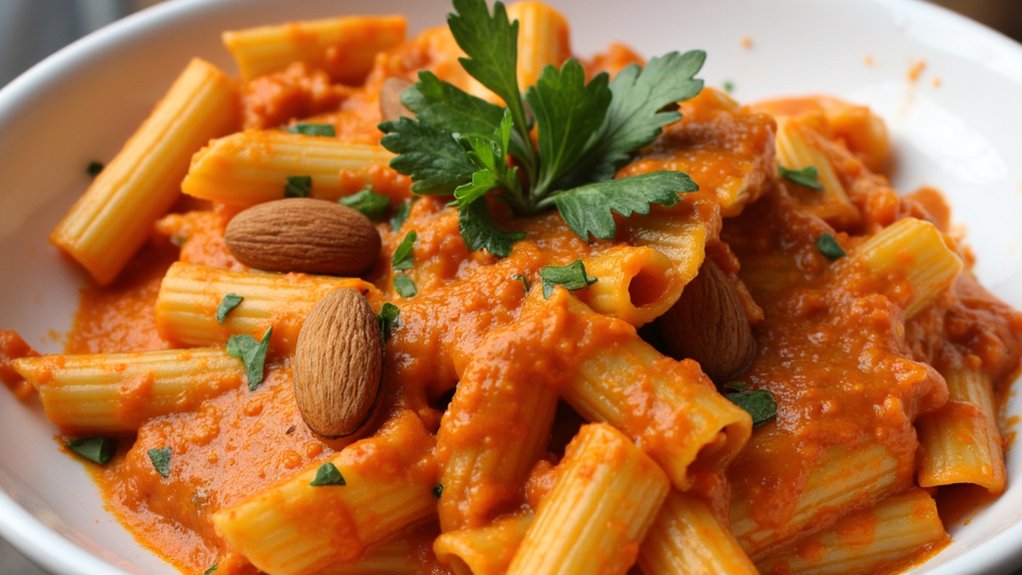
Discovering Spanish pasta recipes was like finding a treasure trove of flavors.
Each dish brings a unique twist to traditional pasta, blending Spanish ingredients with familiar noodles.
From saffron-infused spaghetti to chorizo and Manchego macaroni, these recipes offer a delightful culinary journey.
Perfect for those who love to explore new tastes while enjoying the comfort of pasta.
Get ready to be inspired and try something deliciously different.
Saffron and Seafood Paella Spaghetti
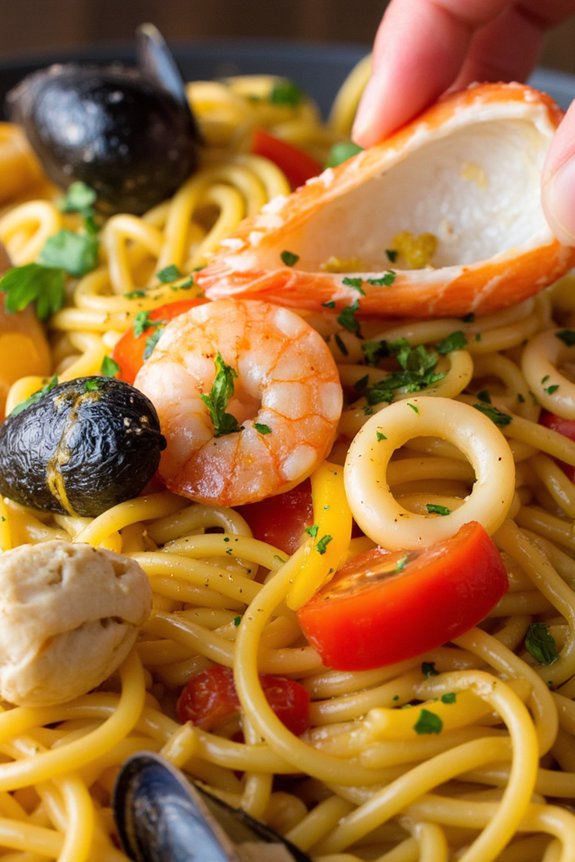
Saffron and Seafood Paella Spaghetti is an innovative twist on the classic Spanish paella dish, incorporating the flavors of saffron-infused rice into a delectable spaghetti meal. This dish brings the vibrant and aromatic essence of traditional paella to your dinner table with the combination of succulent seafood and perfectly cooked spaghetti.
It’s an ideal recipe for those who love Mediterranean cuisine and want to experience the fusion of classic Spanish ingredients in a new and exciting way. This recipe incorporates mussels, shrimp, and squid, guaranteeing every bite is bursting with the taste of the sea.
The saffron threads give the dish its distinctive golden color and unique flavor, while the addition of vegetables like bell peppers and tomatoes adds a rejuvenating and colorful touch. Perfect for a family dinner or a gathering with friends, this dish serves 4-6 people and promises to be a memorable culinary experience.
Ingredients:
- 400g spaghetti
- 1 pinch saffron threads
- 2 tablespoons olive oil
- 1 onion, finely chopped
- 3 cloves garlic, minced
- 1 red bell pepper, chopped
- 1 yellow bell pepper, chopped
- 2 tomatoes, diced
- 200g mussels, cleaned and debearded
- 200g shrimp, peeled and deveined
- 200g squid, cleaned and sliced into rings
- 1 teaspoon smoked paprika
- Salt and pepper to taste
- 500ml fish stock
- Fresh parsley, chopped, for garnish
- Lemon wedges, for serving
Cooking Instructions:
- Prepare the Saffron: Begin by soaking the saffron threads in a small bowl with a few tablespoons of warm water. Set it aside to steep while you prepare the other ingredients.
- Cook the Pasta: Bring a large pot of salted water to a boil. Add the spaghetti and cook according to package instructions until al dente. Drain and set aside.
- Sauté Aromatics: In a large pan, heat the olive oil over medium heat. Add the chopped onion and garlic, and sauté until the onion becomes translucent and fragrant, about 3-4 minutes.
- Add Vegetables: Stir in the chopped red and yellow bell peppers and diced tomatoes. Cook until the vegetables soften, approximately 5 minutes.
- Introduce Seafood: Add the mussels, shrimp, and squid to the pan. Stir in the smoked paprika, and season with salt and pepper. Cook for about 3 minutes until the seafood begins to turn opaque.
- Incorporate Saffron and Stock: Pour the saffron-infused water into the pan, followed by the fish stock. Stir well to combine, and bring the mixture to a simmer.
- Combine with Pasta: Add the cooked spaghetti to the pan, gently tossing it with the seafood and vegetables to make certain it absorbs the flavors. Allow the dish to simmer for an additional 3-5 minutes until everything is heated through.
- Garnish and Serve: Sprinkle the chopped fresh parsley over the top, and serve the Saffron and Seafood Paella Spaghetti with lemon wedges on the side for an extra burst of rejuvenation.
Extra Tips:
When preparing the seafood, make sure all the mussels are tightly closed before cooking; discard any that remain open after cooking.
For the best flavor, use high-quality saffron threads and let them steep for at least 10 minutes in warm water to release their full aroma and color. If you prefer a spicier kick, consider adding a pinch of cayenne pepper or red pepper flakes during the sautéing process.
Finally, keep an eye on the pasta to prevent it from becoming too soft; it should be slightly firm to complement the tender seafood.
Chorizo and Manchego Macaroni
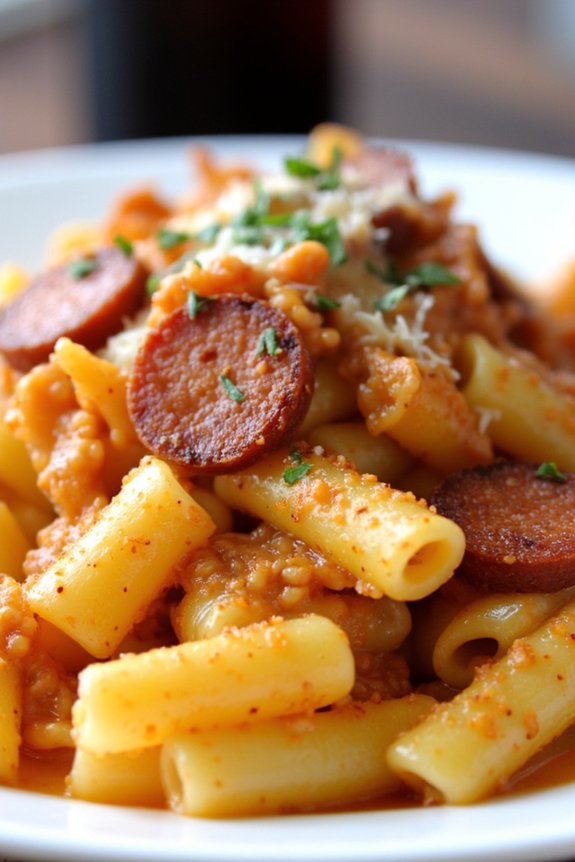
Chorizo and Manchego Macaroni is a delightful fusion of Spanish flavors and classic comfort food. This dish combines the spicy, smoky essence of chorizo with the rich, nutty taste of Manchego cheese, all enveloped in a creamy macaroni base.
It’s perfect for those who love a bit of a kick in their pasta dishes, while still savoring the comforting familiarity of macaroni and cheese. Whether you’re serving it as a main course or a hearty side dish, Chorizo and Manchego Macaroni is sure to impress your family and guests with its unique blend of flavors.
This recipe is designed to serve 4-6 people, making it ideal for family dinners or small gatherings. The balance of spicy chorizo, creamy sauce, and the distinct taste of Manchego cheese creates a memorable dish that’s easy to prepare.
With a few basic ingredients and simple cooking techniques, you can create a Spanish-inspired pasta dish that will transport your taste buds to the vibrant streets of Spain.
Ingredients:
- 500g macaroni pasta
- 200g Spanish chorizo, sliced
- 1 small onion, finely chopped
- 2 cloves garlic, minced
- 2 tablespoons olive oil
- 3 tablespoons all-purpose flour
- 2 cups milk
- 1 cup chicken broth
- 200g Manchego cheese, grated
- Salt and pepper to taste
- 1 teaspoon smoked paprika
- Fresh parsley, chopped, for garnish
Instructions:
- Cook the Pasta: Begin by bringing a large pot of salted water to a boil. Add the macaroni and cook according to the package instructions until al dente. Drain and set aside.
- Prepare the Chorizo and Onions: In a large skillet, heat the olive oil over medium heat. Add the sliced chorizo and cook until it begins to crisp, approximately 4-5 minutes. Remove the chorizo with a slotted spoon and set aside, leaving the rendered fat in the skillet.
- Saute the Onions and Garlic: In the same skillet with the chorizo fat, add the chopped onion and garlic. Cook over medium heat until the onion becomes translucent and fragrant, about 3-4 minutes.
- Make the Sauce: Sprinkle the flour over the onions and garlic, stirring constantly for about 1 minute to cook the flour. Gradually whisk in the milk and chicken broth, continuing to whisk until the mixture is smooth and begins to thicken.
- Add Cheese and Spices: Reduce the heat to low and stir in the grated Manchego cheese, salt, pepper, and smoked paprika. Stir continuously until the cheese has melted and the sauce is creamy and smooth.
- Combine Ingredients: Add the cooked macaroni and crispy chorizo to the cheese sauce. Stir everything together until the macaroni is well-coated with the sauce.
- Serve: Transfer the macaroni to a serving dish, sprinkle with chopped fresh parsley, and serve hot.
Extra Tips:
When cooking Chorizo and Manchego Macaroni, make sure not to overcook the pasta as it will continue to cook slightly when mixed with the hot cheese sauce.
If you prefer a slightly spicier dish, consider using hot Spanish chorizo or adding a pinch of red pepper flakes to the sauce. For a creamier texture, you can substitute half of the milk with heavy cream.
Finally, if Manchego cheese isn’t available, a good quality aged cheddar can be used as an alternative, though it will slightly alter the authentic taste of the dish.
Spanish Garlic Shrimp Linguine
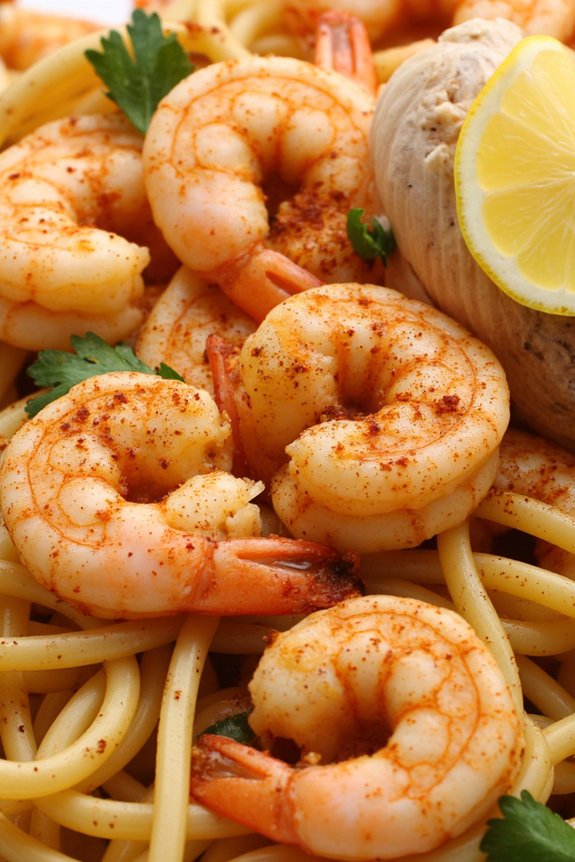
The key to a successful Spanish Garlic Shrimp Linguine lies in the quality of the ingredients. Fresh shrimp, high-quality olive oil, and aromatic garlic form the foundation of this dish. The linguine absorbs the savory sauce, creating a harmonious blend of flavors with each bite.
Finished with a sprinkle of fresh parsley and a squeeze of lemon, this dish is a reflection of the beauty of Mediterranean cooking. It’s easy to prepare and offers a taste of Spain with every forkful.
Ingredients (serves 4-6):
- 1 pound linguine pasta
- 1 pound large shrimp, peeled and deveined
- 1/4 cup extra virgin olive oil
- 6 cloves garlic, thinly sliced
- 1 teaspoon smoked paprika
- 1/4 teaspoon red pepper flakes
- Salt and pepper to taste
- 1/2 cup dry white wine
- Juice of 1 lemon
- 1/4 cup fresh parsley, chopped
- Lemon wedges, for serving
Cooking Instructions:
- Cook the Pasta: Bring a large pot of salted water to a boil. Add the linguine and cook according to package instructions until al dente. Reserve 1 cup of pasta water, then drain and set aside.
- Sauté the Garlic: In a large skillet, heat the olive oil over medium heat. Add the sliced garlic and sauté until fragrant and golden brown, about 2 minutes. Be careful not to burn the garlic.
- Cook the Shrimp: Add the shrimp to the skillet and season with smoked paprika, red pepper flakes, salt, and pepper. Cook for 2-3 minutes on each side, or until the shrimp are pink and opaque.
- Deglaze with Wine: Pour in the white wine, scraping up any browned bits from the bottom of the skillet. Allow it to simmer for 2-3 minutes until slightly reduced.
- Combine Pasta and Sauce: Add the cooked linguine to the skillet along with the reserved pasta water. Toss everything together until the pasta is well-coated with the sauce.
- Finish with Lemon and Parsley: Squeeze the lemon juice over the pasta and sprinkle with chopped parsley. Toss to combine, ensuring the flavors are evenly distributed.
- Serve: Transfer the pasta to serving plates, garnish with additional parsley and serve with lemon wedges on the side.
Extra Tips:
To enhance the flavors of your Spanish Garlic Shrimp Linguine, consider using high-quality, fresh shrimp and avoid overcooking them to maintain their tender texture.
Adjust the level of heat by varying the amount of red pepper flakes to suit your taste. If you prefer a richer sauce, you can add a tablespoon of butter when combining the pasta with the sauce.
Finally, if you like a more vibrant flavor, add a bit more lemon juice or zest for a revitalizing citrusy note. Enjoy this dish with a chilled glass of white wine for an authentic Mediterranean dining experience.
Smoky Paprika Fideuà
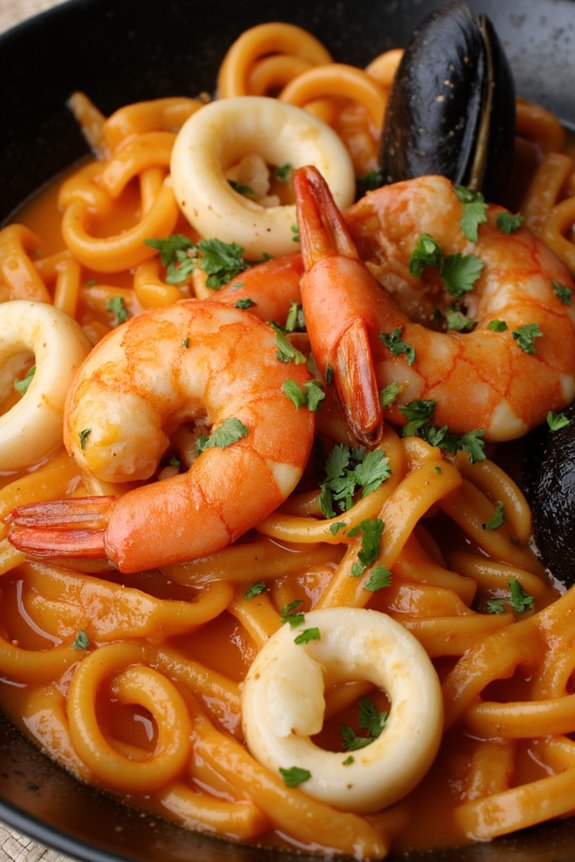
Smoky Paprika Fideuà is a delightful Spanish pasta dish that hails from the region of Valencia. It’s similar to paella but instead of rice, it uses short, thin noodles called fideuà. This dish is a perfect combination of seafood, savory broth, and the earthy, smoky flavor of Spanish paprika.
Traditionally cooked in a paella pan, this dish is both visually stunning and packed with rich, comforting flavors that are bound to impress your family or guests at the dinner table.
The smoky paprika fideuà is a true celebration of Spanish cuisine, showcasing the vibrant spices and fresh ingredients typical of Mediterranean cooking. The combination of saffron, smoked paprika, and a rich seafood stock creates an aromatic base for the noodles, which are typically toasted in olive oil to add an extra layer of depth to the dish.
The addition of prawns, mussels, and squid not only makes this fideuà hearty and satisfying but also brings the essence of the sea to your plate.
Ingredients for 4-6 servings:
- 1 lb (450g) fideuà pasta or short vermicelli
- 2 tablespoons olive oil
- 1 onion, finely chopped
- 3 cloves garlic, minced
- 1 teaspoon smoked paprika
- 1 pinch saffron threads
- 1 large tomato, grated
- 5 cups (1.2 liters) fish or seafood stock
- 1 lb (450g) mussels, cleaned
- 1 lb (450g) squid, cleaned and cut into rings
- 1 lb (450g) prawns, peeled and deveined
- Salt and pepper to taste
- Fresh parsley, chopped, for garnish
- Lemon wedges, for serving
Cooking Instructions:
- Prepare the Ingredients: Begin by cleaning all seafood. Rinse the mussels under cold water, scrubbing them and removing beards. Clean and cut the squid into rings. Peel and devein the prawns, keeping them whole.
- Toast the Pasta: In a large paella pan or wide skillet, heat 2 tablespoons of olive oil over medium heat. Add the fideuà pasta and stir frequently, toasting them until they’re golden brown. Remove the pasta from the pan and set aside.
- Sauté the Aromatics: In the same pan, add the chopped onion and sauté until translucent. Add the minced garlic and cook for another minute until fragrant.
- Build the Flavor Base: Stir in the smoked paprika and saffron threads. Add the grated tomato and cook for a few minutes until the tomato has softened and melded with the spices.
- Add the Stock: Pour in the fish or seafood stock, stirring to combine with the tomato mixture. Bring to a gentle boil.
- Cook the Seafood: Add the mussels, squid, and prawns to the pan. Season with salt and pepper. Cover and cook for about 5 minutes, or until the mussels have opened and the seafood is cooked through.
- Incorporate the Pasta: Add the toasted fideuà back into the pan, spreading it evenly. Reduce the heat to low and allow the pasta to absorb the stock, stirring occasionally, for about 8-10 minutes.
- Finish and Serve: Once the pasta is tender and has absorbed most of the liquid, remove from heat. Garnish with fresh parsley and serve with lemon wedges on the side.
Extra Tips:
When making Smoky Paprika Fideuà, use high-quality smoked paprika to guarantee the dish has a deep, rich flavor. If you can’t find fideuà pasta, short vermicelli is an acceptable substitute.
Toasting the pasta is vital as it adds a nutty flavor and helps the noodles maintain their structure while cooking. If you prefer a bit of extra heat, add a pinch of cayenne pepper along with the smoked paprika.
Ultimately, always verify your seafood is fresh; this not only enhances the flavor but also confirms the safety of your dish.
Patatas Bravas Penne
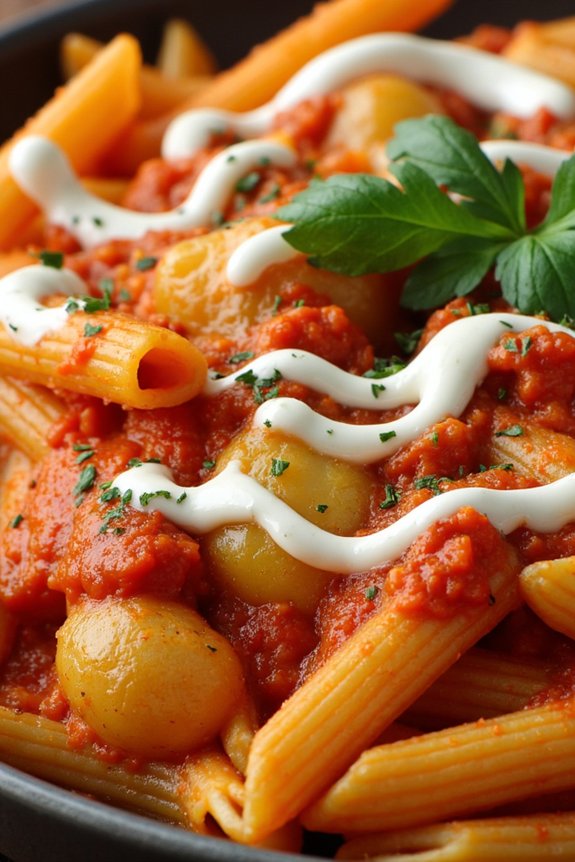
Patatas Bravas Penne is a delightful fusion dish that combines traditional Spanish flavors with classic Italian pasta. This recipe showcases the spicy and savory essence of the well-loved Spanish tapas dish, patatas bravas, and infuses it into penne pasta, creating a unique and satisfying meal. The dish features a rich tomato sauce spiced with smoked paprika and cayenne, enveloping tender penne pasta, while crispy golden potatoes add texture and heartiness.
It’s perfect for a cozy family dinner or a gathering with friends who appreciate a creative culinary twist. To complement the bold, spicy flavors, the dish is topped with a cooling, creamy aioli that balances the heat and adds a luxurious finish. The aioli is traditionally made with garlic and olive oil but can be enhanced with a touch of lemon juice for brightness.
This Patatas Bravas Penne isn’t only a feast for the taste buds but also a visually appealing dish with its vibrant red sauce, golden potatoes, and fresh herbs. It’s an easy-to-make recipe that will surely become a favorite in your pasta repertoire.
Ingredients (Serves 4-6):
- 400g penne pasta
- 2 large potatoes, peeled and diced
- 3 tablespoons olive oil
- 1 onion, finely chopped
- 3 cloves garlic, minced
- 1 can (400g) crushed tomatoes
- 1 teaspoon smoked paprika
- 1/2 teaspoon cayenne pepper
- Salt and pepper to taste
- Fresh parsley, chopped (for garnish)
- 1/2 cup aioli (store-bought or homemade)
- Juice of 1 lemon (optional, for aioli)
- 1/4 cup grated Parmesan cheese (optional)
Cooking Instructions:
- Prepare the Potatoes: Preheat your oven to 200°C (400°F). Place the diced potatoes on a baking sheet, drizzle with 1 tablespoon of olive oil, and season with salt and pepper. Toss to coat evenly. Roast in the preheated oven for about 25 minutes or until golden and crispy, turning halfway through for even browning.
- Cook the Pasta: While the potatoes are roasting, bring a large pot of salted water to a boil. Add the penne pasta and cook according to the package instructions until al dente. Drain and set aside, reserving a cup of pasta water.
- Make the Sauce: In a large skillet over medium heat, heat the remaining 2 tablespoons of olive oil. Add the chopped onion and cook until translucent, about 5 minutes. Stir in the minced garlic and cook for another minute until fragrant.
- Add the Tomatoes and Spices: Pour in the crushed tomatoes and add the smoked paprika and cayenne pepper. Stir well to combine. Let the sauce simmer for about 10 minutes, allowing the flavors to meld. If the sauce becomes too thick, add a bit of the reserved pasta water to achieve your desired consistency.
- Combine Pasta and Sauce: Add the cooked penne to the skillet with the sauce and toss to coat the pasta evenly. If using, stir in the grated Parmesan cheese until melted and incorporated.
- Finish the Dish: Remove the potatoes from the oven and add them to the pasta, gently folding them in. Adjust the seasoning with additional salt and pepper if needed.
- Serve and Garnish: Transfer the pasta to a serving dish. Drizzle the aioli over the top and sprinkle with fresh parsley. For an extra touch, you may add a squeeze of lemon juice over the aioli to enhance its flavor.
Extra Tips:
To guarantee the potatoes are crispy, make sure they’re spread out in a single layer on the baking sheet and not overcrowded, which can cause them to steam instead of roast.
If you prefer a milder heat, reduce the amount of cayenne pepper or substitute with a milder chili powder. For a homemade aioli, blend together garlic, olive oil, a touch of lemon juice, and a pinch of salt until smooth.
This dish is versatile and can be adapted by adding cooked chorizo or roasted bell peppers for extra flavor.
Albondigas Meatball Pasta
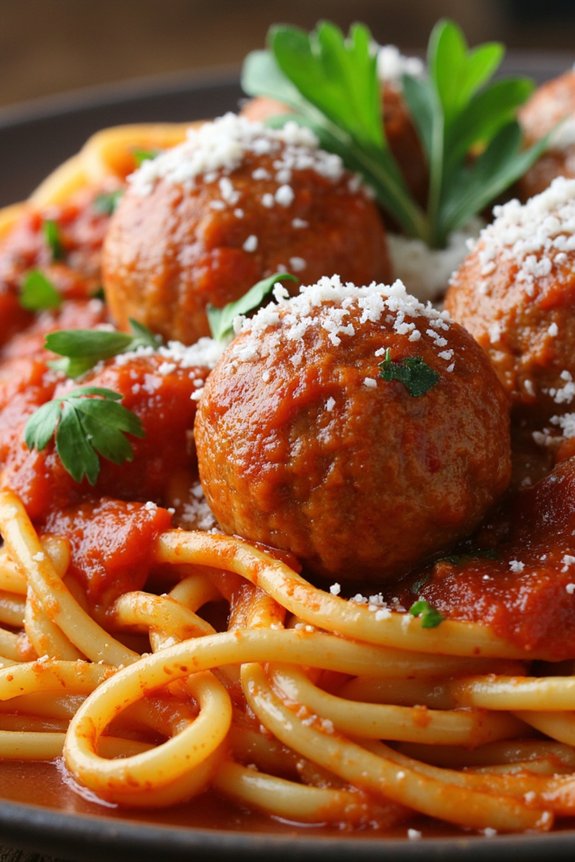
Albondigas Meatball Pasta is a delightful fusion of Spanish flavors with the comforting essence of homemade Italian pasta. This dish features succulent albondigas, or Spanish-style meatballs, cooked in a robust tomato sauce that’s infused with traditional Spanish spices and aromatic herbs.
Paired with perfectly cooked pasta, this recipe creates a harmonious blend of textures and tastes that will surely please any palate. Perfect for family gatherings or a hearty dinner, Albondigas Meatball Pasta is a dish that brings warmth and satisfaction to the table.
The key to this recipe lies in the preparation of the albondigas, which are made using a combination of ground meats, breadcrumbs, and a medley of spices. These meatballs are then simmered in a rich tomato sauce that’s seasoned with garlic, paprika, and a hint of saffron, lending it a deep, savory flavor profile.
The pasta, cooked al dente, provides the ideal base to soak up the flavorful sauce and complement the tender meatballs. With a serving size designed for 4-6 people, this dish is perfect for sharing and enjoying with loved ones.
Ingredients for 4-6 servings:
- 1 pound ground beef
- 1/2 pound ground pork
- 1/2 cup breadcrumbs
- 1/4 cup milk
- 1 egg
- 2 cloves garlic, minced
- 1 teaspoon smoked paprika
- 1/2 teaspoon ground cumin
- Salt and pepper to taste
- 2 tablespoons olive oil
- 1 onion, finely chopped
- 1 can (28 ounces) crushed tomatoes
- 1 teaspoon sugar
- 1/4 teaspoon saffron threads
- 1/4 cup chopped fresh parsley
- 12 ounces pasta (such as spaghetti or fettuccine)
- Grated Parmesan cheese for serving
Cooking Instructions:
- Prepare the Meatballs: In a large bowl, combine ground beef, ground pork, breadcrumbs, milk, egg, minced garlic, smoked paprika, ground cumin, salt, and pepper. Mix well until all ingredients are thoroughly combined. Shape the mixture into small meatballs, about 1 inch in diameter.
- Cook the Meatballs: Heat olive oil in a large skillet over medium heat. Add the meatballs in batches, making sure not to overcrowd the pan. Cook the meatballs until browned on all sides, about 5-7 minutes. Remove the meatballs from the skillet and set aside.
- Make the Sauce: In the same skillet, add the chopped onion and cook until translucent, about 5 minutes. Stir in the crushed tomatoes, sugar, saffron threads, salt, and pepper. Bring the mixture to a simmer and cook for 10 minutes to allow the flavors to meld.
- Simmer the Meatballs in Sauce: Return the meatballs to the skillet, nestling them into the tomato sauce. Cover and let them simmer on low heat for 20 minutes, or until the meatballs are cooked through and the sauce has thickened.
- Cook the Pasta: While the meatballs are simmering, cook the pasta in a large pot of salted boiling water until al dente, according to package instructions. Drain the pasta and set aside.
- Combine and Serve: Add the cooked pasta to the skillet with the meatballs and sauce, gently tossing to coat the pasta evenly. Sprinkle with chopped parsley and toss again. Serve hot, topped with grated Parmesan cheese.
Extra Tips:
When making Albondigas Meatball Pasta, it’s important to verify that the meatball mixture isn’t too dry. If it feels crumbly, add a little more milk to achieve the desired consistency.
Additionally, allowing the saffron threads to soak in a tablespoon of warm water before adding them to the sauce can help release their full flavor. For a touch of heat, consider adding a pinch of red pepper flakes to the sauce.
Ultimately, letting the dish rest for a few minutes after cooking will help the flavors to further develop, making each bite even more delicious.
Pisto Spaghetti Primavera
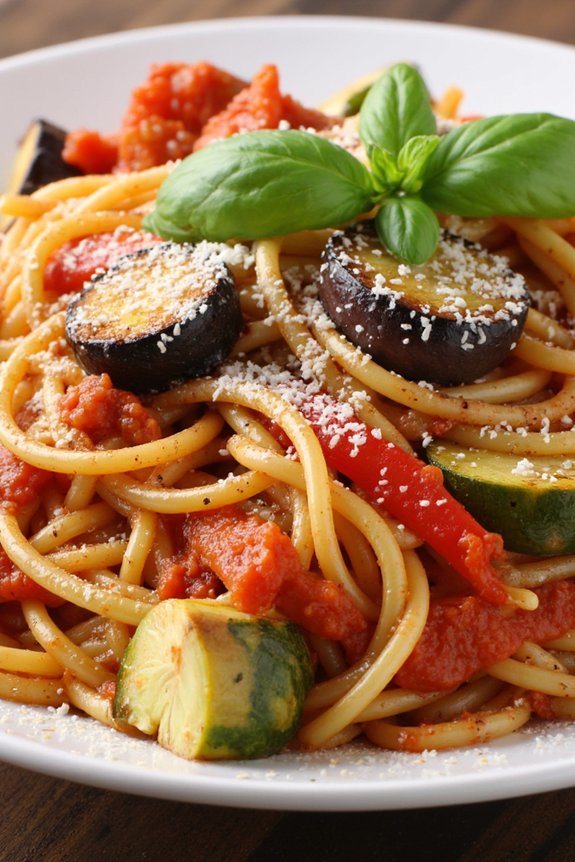
Pisto is a traditional Spanish dish that resembles a ratatouille, made from a combination of fresh, seasonal vegetables, often served as a tapa or a side dish. In this Pisto Spaghetti Primavera, we take the vibrant flavors of pisto and pair them with spaghetti, resulting in a delightful fusion that brings the essence of Spanish cuisine to your table.
This dish is perfect for a light lunch or dinner, capturing the freshness of spring vegetables combined with the comforting texture of pasta. The Primavera aspect highlights the use of fresh, colorful vegetables, making it not only a feast for the taste buds but also for the eyes.
This recipe serves 4-6 people and is ideal for those who appreciate the simplicity and richness of Mediterranean flavors. The preparation process is straightforward, allowing even novice cooks to achieve a delicious and impressive meal.
Ingredients (Serves 4-6):
- 400g spaghetti
- 2 tablespoons olive oil
- 1 medium onion, finely chopped
- 2 cloves garlic, minced
- 1 red bell pepper, diced
- 1 green bell pepper, diced
- 1 medium zucchini, sliced
- 1 large eggplant, diced
- 400g can of chopped tomatoes
- 1 teaspoon dried oregano
- 1 teaspoon dried basil
- Salt and black pepper to taste
- Fresh basil leaves for garnish
- Grated Parmesan cheese for serving (optional)
Cooking Instructions:
- Prepare the Vegetables: Begin by washing and preparing all the vegetables. Dice the onions, mince the garlic, and cut the bell peppers, zucchini, and eggplant into bite-sized pieces. This guarantees uniform cooking and an even distribution of flavors.
- Cook the Pasta: Bring a large pot of salted water to a boil. Add the spaghetti and cook according to the package instructions until al dente. Drain and set aside, reserving a cup of the pasta water.
- Sauté the Vegetables: In a large skillet or saucepan, heat the olive oil over medium heat. Add the chopped onion and garlic, sautéing until the onion becomes translucent and fragrant, about 2-3 minutes.
- Add the Remaining Vegetables: Stir in the red and green bell peppers, zucchini, and eggplant. Cook for approximately 5-7 minutes until the vegetables begin to soften.
- Incorporate the Tomatoes: Add the can of chopped tomatoes to the skillet. Stir in the dried oregano and basil, and season with salt and black pepper. Simmer the mixture for about 10 minutes, allowing the flavors to meld and the sauce to thicken slightly.
- Combine with Pasta: Add the cooked spaghetti to the skillet, tossing to coat with the vegetable mixture. If the sauce seems too thick, add some reserved pasta water, a little at a time, until the desired consistency is reached.
- Serve: Once the pasta is well coated and heated through, transfer to serving plates. Garnish with fresh basil leaves and, if desired, sprinkle with grated Parmesan cheese.
Extra Tips:
To enhance the flavor of your Pisto Spaghetti Primavera, consider using high-quality olive oil, as it adds richness to the dish. If you prefer a spicier kick, add a pinch of red pepper flakes while sautéing the garlic and onions.
For a heartier meal, you can include protein options such as grilled chicken or sautéed shrimp. Remember that the key to this dish is the freshness of the vegetables, so try to use produce that’s in season for the best results.
Enjoy your culinary trip to Spain with this delightful and simple pasta dish!
Creamy Piquillo Pepper Fettuccine
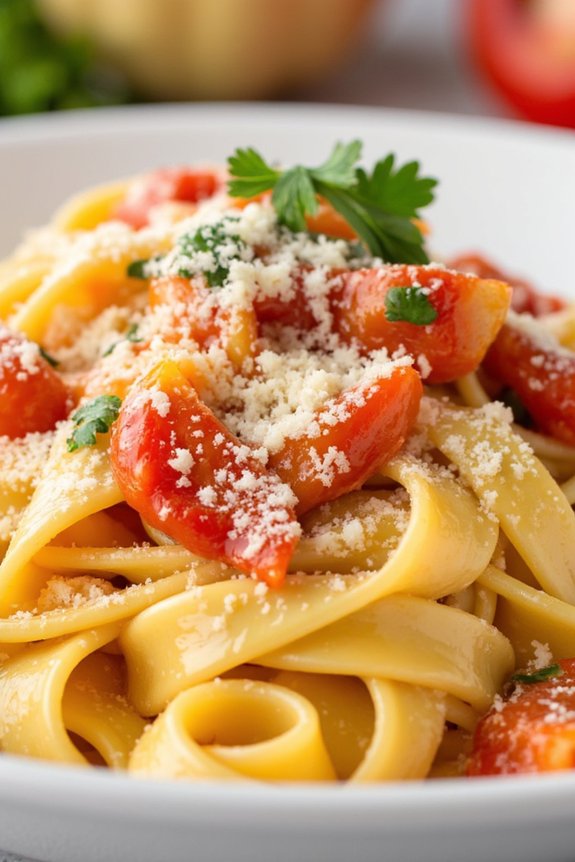
Creamy Piquillo Pepper Fettuccine is a delightful and vibrant dish that brings together the sweetness of piquillo peppers with the richness of cream, all enveloped around perfectly cooked fettuccine. This Spanish-inspired pasta recipe is a wonderful fusion of flavors that’s bound to impress your family and guests.
The piquillo peppers, which are known for their sweet and slightly tangy flavor, are blended into a smooth sauce that coats the fettuccine beautifully, making every bite a delightful experience.
Perfect as a comforting dinner option or a special occasion meal, this dish serves 4-6 people and can be paired with a fresh salad or some crusty bread to complete the meal. The preparation is simple yet rewarding, allowing the rich flavors of the ingredients to shine through. The creamy piquillo pepper sauce is the star of the show, offering a unique twist on the traditional creamy pasta dish.
Ingredients for 4-6 people:
- 500g fettuccine pasta
- 1 jar (about 200g) piquillo peppers, drained
- 1 cup heavy cream
- 1/2 cup grated Parmesan cheese
- 2 tablespoons olive oil
- 3 cloves garlic, minced
- 1 small onion, finely chopped
- 1 teaspoon smoked paprika
- Salt and pepper, to taste
- Fresh parsley, chopped for garnish
Cooking Instructions:
- Cook the Fettuccine: Begin by bringing a large pot of salted water to a boil. Add the fettuccine pasta and cook according to the package instructions until al dente. This usually takes about 8-10 minutes. Once cooked, drain the pasta and set aside.
- Prepare the Piquillo Pepper Sauce: While the pasta is cooking, heat the olive oil in a large skillet over medium heat. Add the chopped onion and minced garlic, sautéing until the onion becomes translucent and the garlic is fragrant, about 3-4 minutes.
- Blend the Sauce: In a blender, combine the sautéed onion and garlic with the drained piquillo peppers, heavy cream, and smoked paprika. Blend until smooth and creamy. Taste and adjust seasoning with salt and pepper.
- Combine Sauce and Pasta: Return the creamy piquillo pepper sauce to the skillet and bring it to a gentle simmer over low heat. Add the cooked fettuccine to the sauce, tossing to coat the pasta evenly. Stir in the grated Parmesan cheese, mixing until the cheese has melted and the pasta is fully coated with the sauce.
- Serve: Transfer the creamy piquillo pepper fettuccine to serving plates. Garnish with freshly chopped parsley and extra Parmesan cheese if desired. Serve immediately for the best texture and flavor.
Extra Tips:
To enhance the flavor of the dish, consider roasting the piquillo peppers briefly in the oven before blending them into the sauce, as this can add a deeper, smoky flavor.
If you prefer a bit of a spicy kick, you can add a pinch of red pepper flakes to the sauce while blending. Make sure to use freshly grated Parmesan cheese for the best melting and flavor results.
If the sauce becomes too thick, you can thin it out with a bit of the pasta cooking water. Finally, always taste and adjust the seasoning at the end to guarantee the sauce is well-balanced.
Gazpacho Pasta Salad
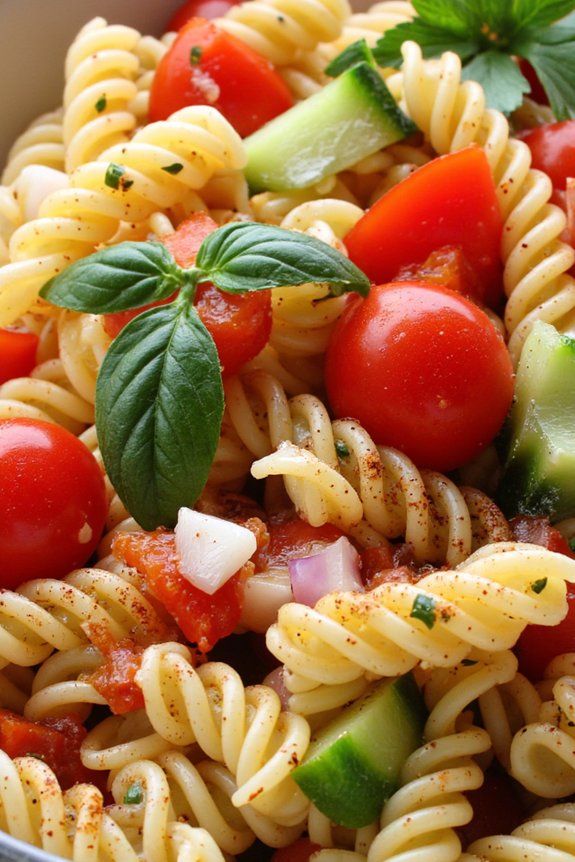
Gazpacho Pasta Salad is a revitalizing and vibrant dish that combines the zesty flavors of traditional Spanish gazpacho with the satisfying texture of pasta. This dish is perfect for warm weather gatherings or as a light lunch.
The salad features a medley of fresh vegetables, herbs, and pasta, all tossed together with a tangy vinaigrette that brings out the essence of Mediterranean cuisine. This recipe serves 4-6 people and is an ideal choice for those who enjoy experimenting with flavors and textures.
It’s a versatile dish that can be adjusted to taste, and it’s easily adaptable for various dietary needs. Whether you’re hosting a summer barbecue or simply looking for a revitalizing meal, Gazpacho Pasta Salad is sure to impress.
Ingredients:
- 12 ounces fusilli or rotini pasta
- 2 cups cherry tomatoes, halved
- 1 medium cucumber, diced
- 1 red bell pepper, diced
- 1 green bell pepper, diced
- 1 small red onion, finely chopped
- 2 cloves garlic, minced
- 1/4 cup fresh parsley, chopped
- 1/4 cup fresh basil, chopped
- 1/4 cup red wine vinegar
- 1/4 cup extra virgin olive oil
- 1 tablespoon lemon juice
- 1 teaspoon salt
- 1/2 teaspoon black pepper
- 1/2 teaspoon smoked paprika
Cooking Instructions:
- Cook the Pasta: Begin by cooking the pasta in a large pot of salted boiling water according to the package instructions until al dente. Once cooked, drain the pasta and rinse it under cold water to stop the cooking process and cool it down. Transfer the pasta to a large mixing bowl.
- Prepare the Vegetables: While the pasta is cooking, prepare the vegetables. Halve the cherry tomatoes, dice the cucumber, red and green bell peppers, and finely chop the red onion. Mince the garlic cloves, and add all the chopped vegetables and garlic to the bowl with the pasta.
- Make the Dressing: In a small mixing bowl, whisk together the red wine vinegar, extra virgin olive oil, lemon juice, salt, black pepper, and smoked paprika until well combined. Taste and adjust the seasoning if necessary.
- Combine the Ingredients: Pour the prepared dressing over the pasta and vegetable mixture. Add the chopped parsley and basil to the bowl, then toss everything together until the pasta and vegetables are thoroughly coated with the dressing.
- Chill and Serve: Cover the bowl with plastic wrap or transfer the salad to an airtight container. Chill the Gazpacho Pasta Salad in the refrigerator for at least 1 hour before serving to allow the flavors to meld together. Serve cold as a side dish or a main course.
Extra Tips:
For an extra burst of freshness, consider adding a splash of freshly squeezed lime juice just before serving. If you prefer a bit of heat, feel free to add a pinch of red pepper flakes to the dressing.
This dish can also be made ahead of time, as it tastes even better the next day once the flavors have fully developed. If you need to make the salad gluten-free, simply substitute the pasta with a gluten-free alternative.
Serrano Ham Carbonara
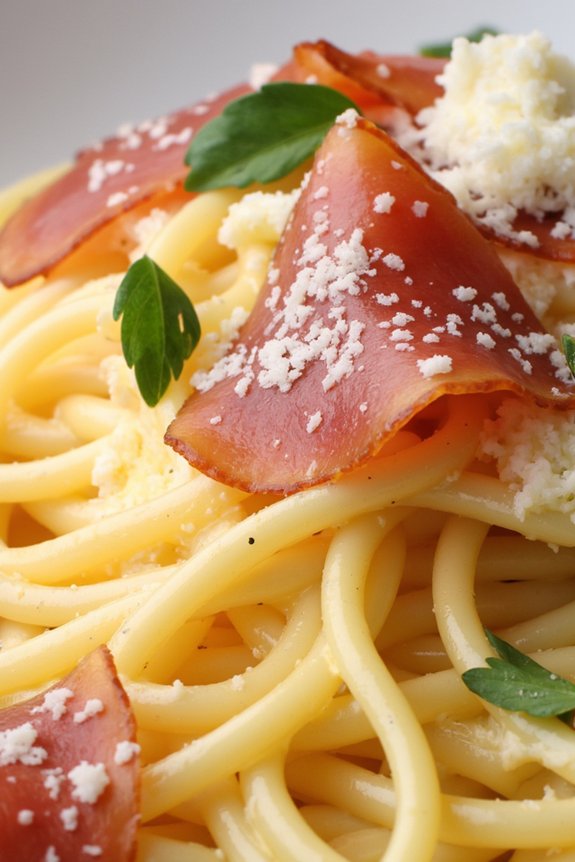
Serrano Ham Carbonara is a delightful fusion of Italian and Spanish culinary traditions, bringing together the rich flavors of cured Serrano ham and the creamy texture of classic carbonara sauce. This dish is perfect for those who appreciate the salty, savory notes of high-quality ham paired with the comforting warmth of pasta.
Ideal for a family dinner or a cozy gathering with friends, this recipe offers a satisfying meal that’s both indulgent and easy to prepare. The Serrano Ham Carbonara isn’t only flavorful but also quick to make, guaranteeing you spend less time in the kitchen and more time enjoying your meal.
With a few fresh ingredients, this dish can be prepared in under 30 minutes, making it a go-to option for busy weeknights. The combination of eggs, cheese, and ham creates a luscious sauce that clings perfectly to the pasta, delivering a delightful bite every time.
Ingredients (serving size: 4-6 people):
- 500g spaghetti or fettuccine
- 150g Serrano ham, thinly sliced
- 3 large eggs
- 100g Parmesan cheese, grated
- 2 cloves garlic, minced
- 2 tablespoons olive oil
- Salt and freshly ground black pepper, to taste
- Fresh parsley, chopped, for garnish
Cooking Instructions:
- Prepare the Ingredients: Begin by boiling a large pot of salted water. Once boiling, add the pasta and cook according to the package instructions until al dente. Reserve about 1 cup of the pasta cooking water and then drain the pasta.
- Cook the Ham: While the pasta cooks, heat the olive oil in a large skillet over medium heat. Add the minced garlic and sauté for about 1 minute until fragrant. Add the Serrano ham and cook until it becomes crispy, about 3-4 minutes.
- Mix the Sauce: In a separate bowl, whisk together the eggs and grated Parmesan cheese until well combined. Season with a pinch of salt and a generous amount of black pepper.
- Combine Pasta and Sauce: Once the pasta is drained, immediately add it to the skillet with the ham. Remove the skillet from the heat and pour the egg and cheese mixture over the hot pasta, tossing quickly to combine. The heat from the pasta will cook the eggs and create a creamy sauce. Add reserved pasta water a little at a time to reach desired sauce consistency.
- Serve the Dish: Once thoroughly mixed, transfer the Serrano Ham Carbonara to individual serving plates. Garnish with chopped parsley and additional Parmesan cheese if desired.
Extra Tips:
For the best results, make sure that the pasta is hot when mixing with the egg mixture, as the heat is essential for creating the creamy texture of the sauce without scrambling the eggs.
If you prefer a more robust flavor, consider using a mix of Parmesan and Pecorino Romano cheeses. Additionally, always taste and adjust seasoning before serving, as the saltiness of Serrano ham can vary. Enjoy your culinary creation with a side of crusty bread or a fresh green salad.
Spanish Ratatouille Tagliatelle
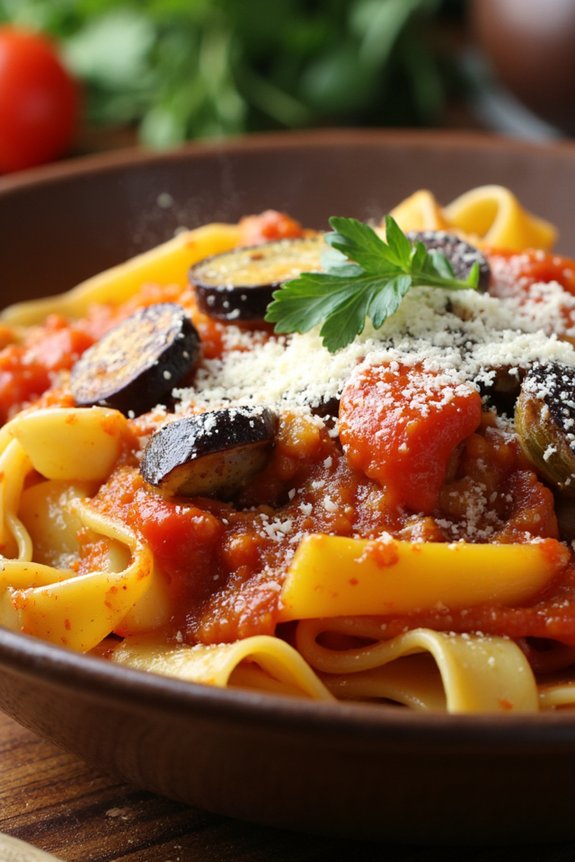
The Spanish twist on this classic pasta dish involves incorporating ingredients like bell peppers, eggplant, and zucchini, which are staples in Spanish cuisine. The vegetables are sautéed to perfection and tossed with a luscious tomato sauce that beautifully coats the tagliatelle. The final touch is a sprinkle of fresh parsley and a hint of grated Manchego cheese, adding depth and an authentic Spanish flavor to the dish.
This recipe serves 4-6 people, making it perfect for gatherings or a family meal.
Ingredients for Spanish Ratatouille Tagliatelle (Serves 4-6):
- 400g tagliatelle pasta
- 2 tablespoons olive oil
- 1 large onion, finely chopped
- 2 cloves garlic, minced
- 1 red bell pepper, diced
- 1 yellow bell pepper, diced
- 1 medium zucchini, sliced
- 1 medium eggplant, diced
- 400g can of diced tomatoes
- 1 teaspoon smoked paprika
- Salt and pepper to taste
- 1/4 cup fresh parsley, chopped
- 1/2 cup grated Manchego cheese
Cooking Instructions:
- Cook the Pasta: Begin by boiling a large pot of water. Add a pinch of salt and cook the tagliatelle according to the package instructions until al dente. Drain the pasta and set aside, reserving a cup of the pasta water.
- Sauté the Vegetables: In a large skillet, heat the olive oil over medium heat. Add the chopped onion and garlic, and sauté for about 2-3 minutes until they’re translucent and fragrant.
- Add the Peppers and Eggplant: Stir in the diced red and yellow bell peppers and the diced eggplant. Cook for about 5 minutes, stirring occasionally, until the vegetables begin to soften.
- Incorporate the Zucchini and Tomatoes: Next, add the sliced zucchini to the skillet and cook for an additional 3 minutes. Pour in the can of diced tomatoes, including their juice, and stir well to combine.
- Season the Ratatouille: Sprinkle the smoked paprika over the vegetable mixture and season with salt and pepper to taste. Let the mixture simmer for about 10 minutes, allowing the flavors to meld together.
- Combine with Pasta: Add the cooked tagliatelle to the skillet, gently tossing to coat the pasta with the ratatouille sauce. If the mixture seems too thick, add some of the reserved pasta water to reach your desired consistency.
- Garnish and Serve: Remove the skillet from the heat and sprinkle with fresh parsley and grated Manchego cheese. Serve immediately while hot, making sure that each serving has a generous portion of both pasta and vegetables.
Extra Tips:
When preparing the vegetables, verify that they’re chopped to similar sizes for even cooking. If Manchego cheese is unavailable, a mild cheddar or Parmesan can be used as a substitute.
For an added depth of flavor, consider roasting the vegetables before adding them to the skillet. This dish can also be enhanced with other herbs like basil or oregano if desired.
Finally, remember to taste the sauce and adjust the seasoning before combining it with the pasta to achieve a perfectly balanced flavor.
Rioja Red Wine Pasta
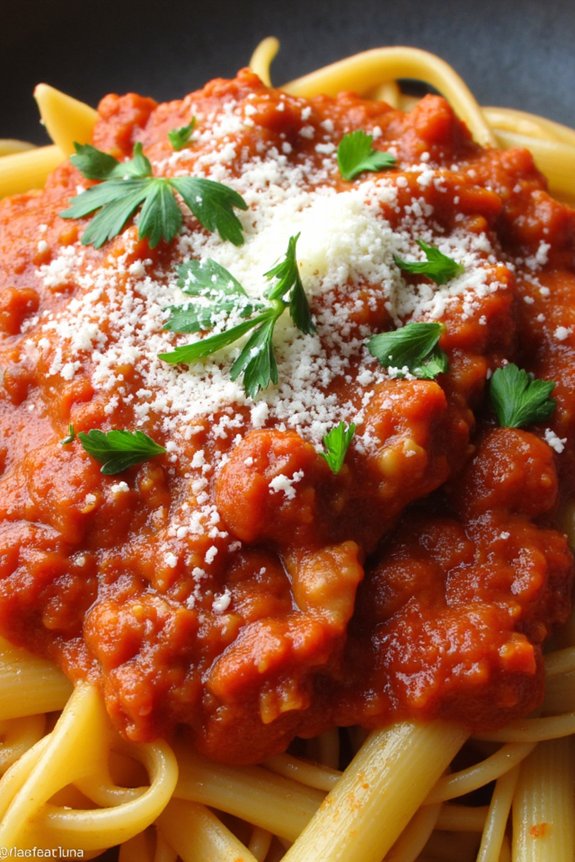
Rioja Red Wine Pasta is an exquisite Spanish dish that combines the rich flavors of Rioja wine with the simplicity of pasta. This dish is perfect for a cozy dinner or a special occasion. The deep, fruity notes of the red wine blend beautifully with the garlic, onions, and tomatoes, creating a rich and vibrant sauce that perfectly coats the pasta.
This recipe celebrates the essence of Spanish cuisine by using quality ingredients and simple techniques to bring out the best flavors.
To make the Rioja Red Wine Pasta, you’ll start by creating a savory sauce using fresh garlic, onions, and ripe tomatoes, which are then reduced with a generous amount of Rioja red wine. The sauce is then tossed with al dente pasta, and the dish is finished off with a sprinkle of fresh parsley and grated Manchego cheese, adding a touch of freshness and creaminess.
This recipe serves 4-6 people, making it a great choice for a family meal or a small gathering with friends.
Ingredients:
- 500g (1 lb) of your choice of pasta (such as spaghetti or penne)
- 2 tablespoons olive oil
- 1 large onion, finely chopped
- 4 cloves garlic, minced
- 2 cups canned crushed tomatoes
- 1 cup Rioja red wine
- Salt and pepper to taste
- 1 teaspoon dried oregano
- 1 teaspoon sugar
- 1/4 cup fresh parsley, chopped
- 1/2 cup grated Manchego cheese
Instructions:
- Cook the Pasta: Begin by bringing a large pot of salted water to a boil. Add the pasta and cook according to the package instructions until al dente. Once cooked, drain the pasta and set aside, reserving a cup of pasta water.
- Sauté the Aromatics: In a large skillet, heat the olive oil over medium heat. Add the chopped onion and sauté for about 5 minutes until it becomes translucent. Add the minced garlic and continue to sauté for another 2 minutes until fragrant.
- Prepare the Sauce: Stir in the crushed tomatoes, Rioja red wine, salt, pepper, oregano, and sugar. Bring the mixture to a simmer and let it cook for about 15-20 minutes, stirring occasionally, until the sauce thickens and reduces slightly.
- Combine Pasta and Sauce: Add the cooked pasta to the skillet with the sauce, tossing to coat the pasta evenly. If the sauce is too thick, add a little reserved pasta water to reach the desired consistency.
- Garnish and Serve: Once the pasta is well-coated, turn off the heat and mix in the fresh parsley. Serve the pasta hot, garnished with grated Manchego cheese.
Extra Tips:
For the best results, use a high-quality Rioja wine that you’d enjoy drinking, as it greatly impacts the flavor of the dish. Fresh tomatoes can be used in place of canned ones if they’re in season, which will add a fresh and vibrant flavor to the sauce.
Finally, if Manchego cheese is unavailable, Parmesan or Pecorino Romano can be used as substitutes. Adjust the seasoning as needed, and feel free to add a splash of cream if you prefer a richer sauce.
Tortilla Española Lasagna
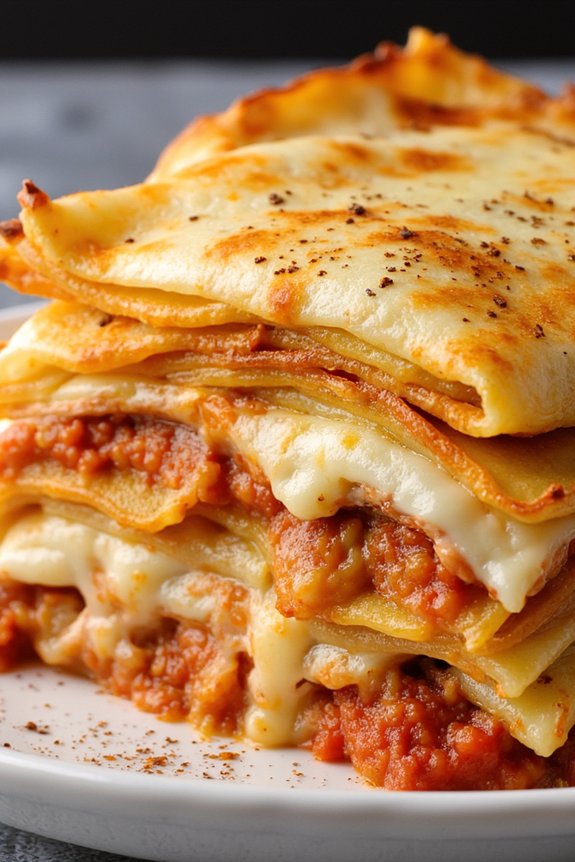
Tortilla Española Lasagna is an innovative fusion of two classic dishes: the traditional Spanish Tortilla Española and the beloved Italian lasagna. This delightful combination brings together the flavors of a hearty potato and egg tortilla with layers of creamy béchamel sauce and savory tomato sauce, all interspersed with sheets of tender pasta. It’s a comforting and satisfying dish that’s perfect for family dinners or gatherings, offering a unique twist on the standard lasagna.
The preparation of Tortilla Española Lasagna involves creating each component from scratch: the tortilla, the béchamel sauce, and the tomato sauce. Once these elements are ready, they’re layered with pasta sheets in a baking dish and baked to perfection. The dish serves 4-6 people, making it an ideal main course for a small dinner party or a cozy family meal. The combination of textures and flavors in every bite is sure to impress your guests and provide a memorable dining experience.
Ingredients (Serves 4-6)
- 5 large eggs
- 4 medium potatoes, thinly sliced
- 1 onion, finely chopped
- 3 cloves garlic, minced
- 9 lasagna sheets
- 2 cups milk
- 2 tablespoons all-purpose flour
- 2 tablespoons butter
- 1 cup tomato puree
- 1 teaspoon dried oregano
- 1/2 teaspoon smoked paprika
- Salt and pepper to taste
- Olive oil for frying
- 1 cup grated cheese (mozzarella or a blend)
Cooking Instructions
- Prepare the Tortilla Española: Heat a generous amount of olive oil in a large frying pan over medium heat. Add the thinly sliced potatoes and chopped onion, and cook, stirring occasionally, until the potatoes are tender and the onions are caramelized. Drain any excess oil.
- Mix the Eggs: In a large bowl, beat the eggs and season with salt and pepper. Add the cooked potatoes and onions to the eggs, stirring gently to combine.
- Cook the Tortilla: In the same pan, heat a little olive oil over medium heat. Pour in the potato and egg mixture, spreading it evenly. Cook until the bottom is set, then carefully flip (or slide onto a plate and invert back into the pan) to cook the other side. Once done, remove from heat and set aside.
- Prepare the Béchamel Sauce: In a saucepan, melt the butter over medium heat. Stir in the flour and cook for a minute. Gradually whisk in the milk, stirring continuously until the sauce thickens. Season with salt and pepper, then set aside.
- Prepare the Tomato Sauce: In another pan, heat a little olive oil and sauté the minced garlic until fragrant. Add the tomato puree, dried oregano, smoked paprika, salt, and pepper. Let it simmer for about 10 minutes.
- Assemble the Lasagna: Preheat your oven to 375°F (190°C). In a baking dish, spread a layer of tomato sauce on the bottom. Place a layer of lasagna sheets, followed by slices of the tortilla, a layer of béchamel sauce, and a sprinkle of cheese. Repeat the layers until all ingredients are used, finishing with a layer of cheese on top.
- Bake: Cover with aluminum foil and bake in the preheated oven for 25 minutes. Remove the foil and bake for an additional 10 minutes, or until the top is golden and bubbly. Let it rest for a few minutes before serving.
Extra Tips
When preparing the tortilla, verify the potatoes are thinly sliced to cook evenly and quickly. If flipping the tortilla is challenging, you can place the pan under a broiler to cook the top.
For the béchamel sauce, continuous stirring is key to prevent lumps from forming. Feel free to customize the lasagna by adding additional layers of vegetables like spinach or mushrooms if desired.
This dish pairs beautifully with a fresh green salad or a glass of Spanish red wine. Enjoy your Tortilla Española Lasagna!
Pulpo a La Gallega Linguine
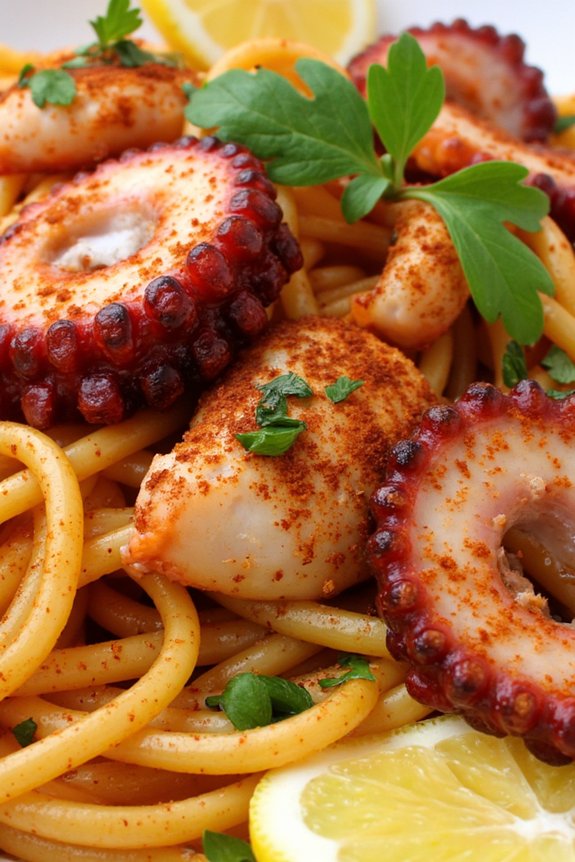
Pulpo a La Gallega Linguine is a delightful twist on traditional Spanish and Italian flavors, combining the tender, savory taste of octopus with the comforting texture of linguine pasta. This dish takes inspiration from the classic Pulpo a La Gallega, a beloved Spanish tapas dish featuring boiled octopus seasoned with olive oil, salt, and paprika.
By incorporating these flavors into a pasta dish, you can enjoy a hearty and satisfying meal that brings together the best of both culinary worlds. This recipe is perfect for a family dinner or a special occasion meal, serving 4-6 people. The key to success is guaranteeing the octopus is cooked to perfection – tender, yet firm enough to hold its shape.
The linguine serves as the perfect base, absorbing the rich, smoky flavors of the paprika and the briny notes of the octopus. With a touch of garlic and a sprinkling of fresh parsley, this dish is sure to impress both lovers of Spanish cuisine and pasta aficionados alike.
Ingredients:
- 1 medium-sized octopus (about 2 pounds), cleaned
- 1 pound linguine pasta
- 4 tablespoons extra virgin olive oil
- 1 teaspoon smoked paprika
- 4 cloves garlic, minced
- Salt to taste
- Freshly ground black pepper to taste
- 1 tablespoon chopped fresh parsley
- 1 lemon, cut into wedges
Cooking Instructions:
1. Prepare the Octopus: Begin by bringing a large pot of water to a boil. Add a pinch of salt. Submerge the octopus in the boiling water for about 1 hour, or until tender. You can test for doneness by inserting a knife into the thickest part; it should go through without resistance.
Once cooked, remove the octopus and let it cool slightly. Cut into bite-sized pieces.
2. Cook the Linguine: While the octopus is cooking, bring another pot of salted water to a boil. Add the linguine and cook according to package instructions until al dente. Drain and set aside, reserving 1 cup of pasta water.
3. Infuse the Olive Oil: In a large skillet over medium heat, add the olive oil and minced garlic. Sauté for 1-2 minutes until the garlic is fragrant but not browned.
4. Combine with Octopus: Add the octopus pieces to the skillet with the garlic-infused olive oil. Sprinkle with smoked paprika, salt, and pepper. Sauté for about 3-5 minutes, stirring occasionally, until the octopus is evenly coated and slightly crispy at the edges.
5. Mix with Linguine: Add the cooked linguine to the skillet, tossing gently to combine. If the pasta seems dry, add a splash of the reserved pasta water to create a light sauce that coats the pasta.
6. Finish the Dish: Remove the skillet from heat and sprinkle with chopped parsley. Serve the Pulpo a La Gallega Linguine immediately, with lemon wedges on the side for a fresh, zesty finish.
Extra Tips: For an even more authentic flavor, consider using a Spanish smoked paprika, known as pimentón de la Vera. Its distinctive smokiness will enhance the dish’s depth.
When cooking the octopus, a slow simmer guarantees it becomes tender without turning mushy. If fresh octopus is unavailable, pre-cooked frozen octopus can be a convenient alternative, just adjust the cooking time accordingly.
Finally, don’t forget to taste and adjust the seasoning before serving, as the right balance of salt and paprika is essential to achieving the dish’s signature flavor.
Catalan Romesco Rigatoni
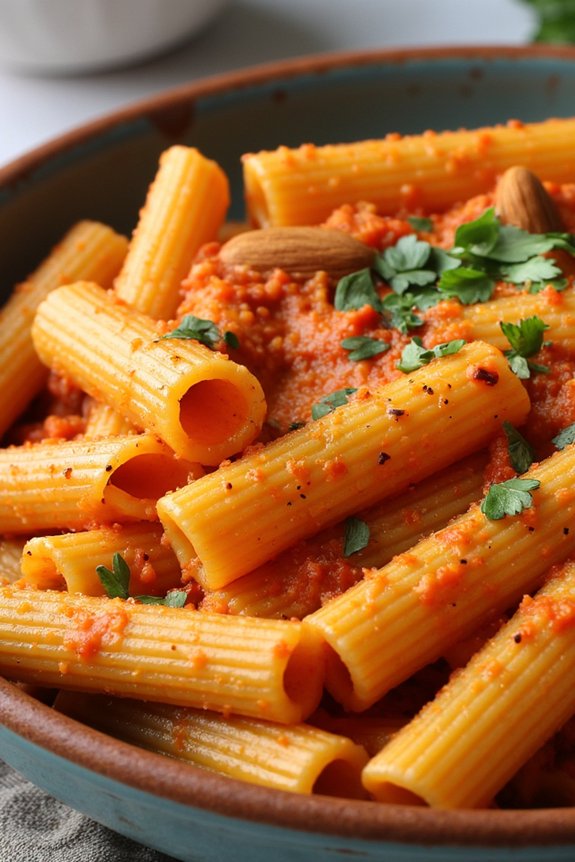
Catalan Romesco Rigatoni is a delightful and robust pasta dish that brings the vibrant flavors of Catalonia to your table. This dish combines the hearty texture of rigatoni pasta with a rich and smoky romesco sauce, which is traditionally made from roasted red peppers, tomatoes, almonds, and garlic.
The sauce is infused with a hint of smoked paprika and sherry vinegar, giving it a unique depth of flavor. Perfect for a cozy dinner with family or friends, this dish is both satisfying and simple to prepare, allowing the authentic flavors of Spain to shine.
The combination of the al dente rigatoni and the creamy romesco sauce creates a comforting meal that’s both delicious and nutritious. The sauce isn’t only full of flavor but also packed with healthy ingredients, including nuts and tomatoes, which provide a good source of vitamins and minerals.
Whether you’re looking to impress your guests with a taste of Spain or simply craving a hearty pasta dish, Catalan Romesco Rigatoni is sure to delight your palate.
Ingredients for 4-6 servings:
- 1 pound rigatoni pasta
- 2 large red bell peppers
- 4 medium tomatoes
- 1/2 cup blanched almonds
- 4 cloves garlic
- 1/4 cup olive oil
- 1 tablespoon sherry vinegar
- 1 teaspoon smoked paprika
- Salt and pepper to taste
- Fresh parsley, chopped (for garnish)
Cooking Instructions:
- Preheat and Prepare Vegetables: Preheat your oven to 400°F (200°C). Place the red bell peppers and tomatoes on a baking sheet. Roast them in the oven for about 25-30 minutes, until the skins are blistered and charred. Remove from the oven and let them cool slightly.
- Peel and Blend: Once the peppers and tomatoes are cool enough to handle, peel off the skins. Remove the seeds from the peppers. Transfer the peeled vegetables to a blender. Add the blanched almonds, garlic cloves, olive oil, sherry vinegar, and smoked paprika. Blend until smooth. Season with salt and pepper to taste.
- Cook Pasta: While the sauce is blending, bring a large pot of salted water to a boil. Add the rigatoni and cook according to the package instructions until al dente. Drain the pasta, reserving about 1 cup of pasta water.
- Combine Pasta and Sauce: Return the drained pasta to the pot. Pour the romesco sauce over the pasta. Stir to coat the rigatoni thoroughly. If the sauce is too thick, add some reserved pasta water to reach your desired consistency.
- Serve: Transfer the pasta to serving plates. Garnish with freshly chopped parsley and serve immediately.
Extra Tips:
To enhance the smokiness of the romesco sauce, consider adding a pinch more smoked paprika or a few drops of liquid smoke, if available.
If you prefer a nuttier flavor, you can toast the almonds before blending. For an added layer of richness, sprinkle some grated Manchego cheese over the pasta just before serving.
This dish can be made ahead of time by preparing the romesco sauce in advance and storing it in the refrigerator for up to three days. Reheat gently before combining with freshly cooked pasta.
