

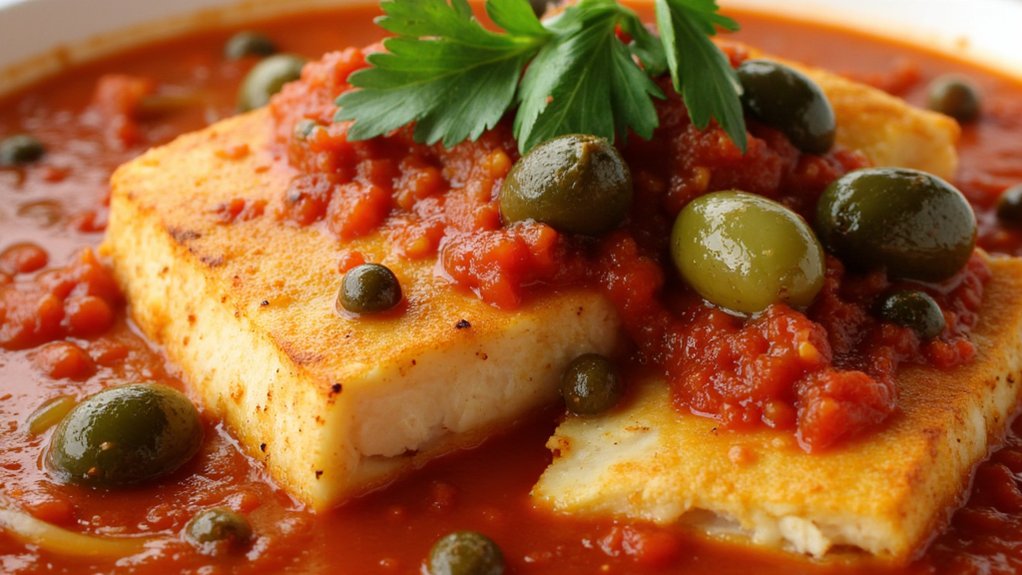
Spring is here, and with it comes the joy of Easter celebrations and delicious Spanish recipes. I’m excited to share 13 beautiful Spanish Easter dishes that are sure to bring fresh flavors to your table. From the sweet simplicity of Torrijas to the savory richness of Bacalao Al Pil-Pil, each recipe tells a story of tradition. Discover the cozy warmth of Sopa De Ajo or indulge in the delightful Leche Frita. Let’s explore these delightful dishes together and bring a taste of Spain to your Easter festivities.
Torrijas: Spanish-Style French Toast
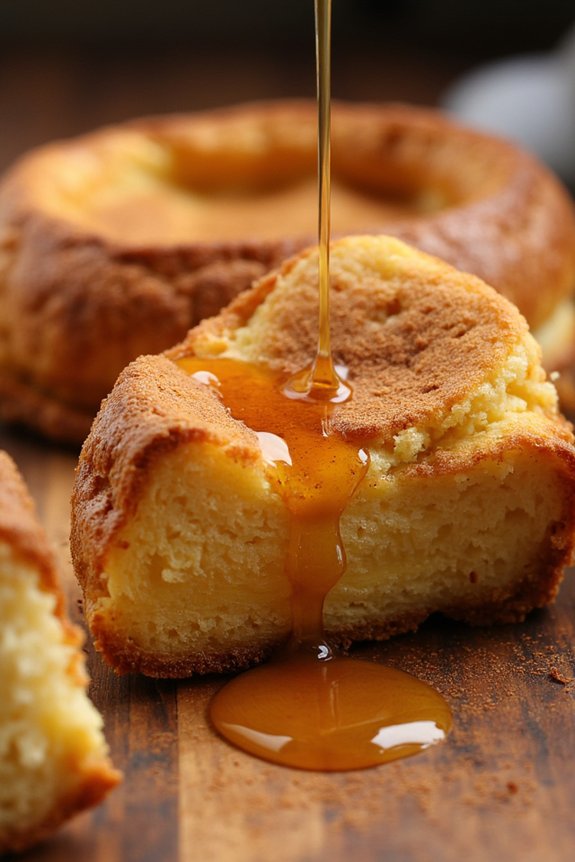
Torrijas, a delightful Spanish-style French toast, is a traditional Easter treat that has been enjoyed in Spain for centuries. This beloved dish is reminiscent of the classic French toast but offers a unique twist with its use of aromatic ingredients like cinnamon and lemon, which infuse the bread with a distinct, sweet flavor.
Perfect for breakfast, dessert, or a special treat during the Easter holiday, Torrijas are cherished for their golden, crispy exterior and luscious, custardy interior.
This dish is typically made using stale bread, which is soaked in a rich mixture of milk, sugar, and spices, then dipped in beaten eggs before being fried to perfection. Torrijas are often drizzled with honey or dusted with sugar and cinnamon for an added layer of sweetness. The recipe below is designed to serve 4-6 people, making it ideal for family gatherings or sharing with friends.
Ingredients for Torrijas (serving size: 4-6 people):
- 1 loaf of stale bread (preferably baguette or similar)
- 2 cups of whole milk
- 1 cup of granulated sugar
- 1 cinnamon stick
- Peel of 1 lemon (avoid the white pith)
- 3 large eggs
- Olive oil or butter for frying
- Ground cinnamon for sprinkling
- Honey for drizzling (optional)
Cooking Instructions:
- Prepare the Milk Mixture: In a saucepan, combine the milk, half of the sugar, the cinnamon stick, and the lemon peel. Heat the mixture over medium heat until it’s just about to boil, then remove it from the heat and let it steep for about 10 minutes to infuse the flavors.
- Slice the Bread: While the milk is steeping, slice the stale bread into thick slices, about 1 inch thick. Lay the slices out in a single layer in a large, shallow dish.
- Soak the Bread: Strain the milk mixture to remove the cinnamon stick and lemon peel. Pour the warm, infused milk over the bread slices, guaranteeing they’re evenly soaked. Allow the bread to absorb the milk for about 10 minutes or until they’re thoroughly soaked but not falling apart.
- Prepare the Egg Wash: In a separate bowl, beat the eggs with the remaining sugar until well combined.
- Heat the Oil: In a large frying pan, heat a generous amount of olive oil or butter over medium heat until hot but not smoking.
- Dip and Fry: Carefully dip each milk-soaked bread slice into the beaten egg mixture, ensuring it’s fully coated. Place the slices in the hot oil and fry until golden brown on each side, about 2-3 minutes per side. Adjust the heat as necessary to avoid burning.
- Drain and Serve: Once fried, remove the Torrijas from the pan and place them on a paper towel-lined plate to drain any excess oil. Sprinkle with ground cinnamon and drizzle with honey if desired. Serve warm.
Extra Tips: For best results, use day-old or slightly stale bread, as it absorbs the milk mixture better without becoming overly soggy. If your bread is too fresh, you can lightly toast it to help with absorption.
Additionally, confirm the oil is at the right temperature before frying to achieve a crispy exterior without burning. Torrijas can be enjoyed warm or at room temperature, and they pair beautifully with a cup of coffee or tea.
Bacalao Al Pil-Pil: Cod in Garlic Sauce
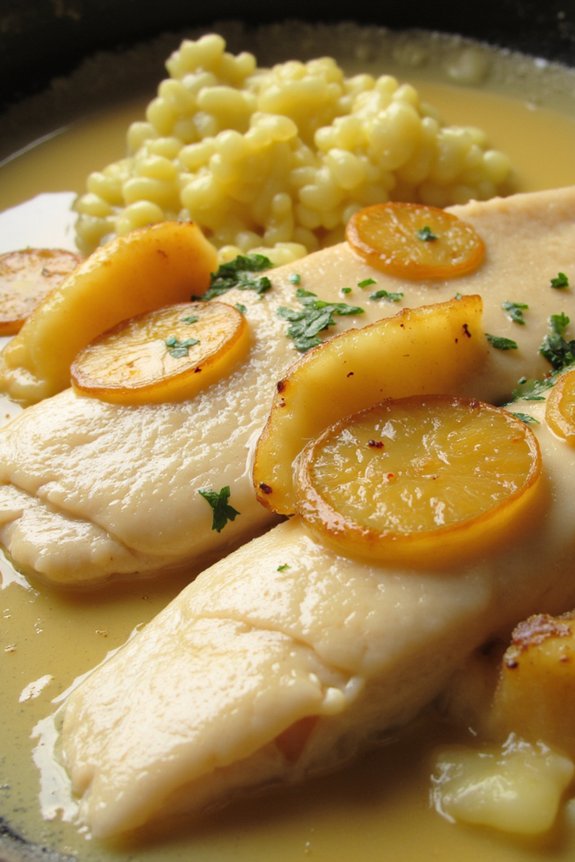
Bacalao Al Pil-Pil, or Cod in Garlic Sauce, is a classic Spanish dish, perfect for Easter celebrations. This Basque delicacy is renowned for its simplicity and the luscious, silky sauce that accompanies the tender pieces of cod. The dish gets its name from the sound the sauce makes as it bubbles and emulsifies in the pan.
Traditionally, Bacalao Al Pil-Pil highlights the use of high-quality salted cod, which is rehydrated and then cooked with garlic and olive oil to create a flavorful sauce that has become a hallmark of Spanish cuisine.
This dish is a harmonious blend of just a few ingredients, allowing the flavors of the cod and garlic to shine through. The key to a successful Bacalao Al Pil-Pil lies in the emulsion of the garlic-infused oil with the natural gelatin released from the cod. This creates a thick, luxurious sauce that perfectly coats the fish.
Served with crusty bread or a side of potatoes, this dish is sure to be a favorite on your Easter table, impressing family and guests alike with its rich flavors and elegant presentation.
Ingredients (serving size: 4-6 people):
- 800g salted cod fillets, soaked and desalted
- 200ml extra virgin olive oil
- 4 cloves of garlic, thinly sliced
- 1 dried red chili, optional
- Fresh parsley, chopped (for garnish)
Cooking Instructions:
- Prepare the Cod: Start by soaking the salted cod fillets in cold water for 24-48 hours, changing the water every 8 hours to remove excess salt. Once desalted, pat the fillets dry with paper towels.
- Infuse the Oil: In a large, shallow pan, heat the olive oil over low heat. Add the sliced garlic and optional dried chili. Allow the garlic to gently infuse the oil without browning, about 5 minutes. Remove the garlic and chili from the oil and set aside.
- Cook the Cod: Increase the heat to medium-low and place the desalted cod fillets skin-side down in the infused oil. Cook the cod gently for about 5-7 minutes on each side, or until the fish is opaque and flakes easily with a fork.
- Create the Pil-Pil Sauce: Once the cod is cooked, remove it from the pan and set aside. Begin to whisk the oil in the pan energetically to create an emulsion. This is done by swirling the pan in circular motions or using a small sieve to stir, allowing the natural gelatin released from the fish to bind with the oil, forming a creamy sauce.
- Combine and Serve: Return the cod to the pan and gently coat it with the pil-pil sauce. Reheat the garlic slices slightly in the sauce, if desired, and garnish with chopped parsley before serving.
Extra Tips:
When preparing Bacalao Al Pil-Pil, patience is key, especially when creating the sauce. Make certain that the oil isn’t too hot, as this will prevent the emulsion from forming.
Use a high-quality extra virgin olive oil for the best flavor, and consider using a sieve or spoon to help emulsify the sauce if needed. Additionally, if you’re not a fan of spicy dishes, feel free to leave out the dried chili, as it’s entirely optional and should be adjusted according to your preference for heat.
Enjoy this dish with a side of crusty bread to soak up every bit of the delicious sauce.
Sopa De Ajo: Garlic Soup
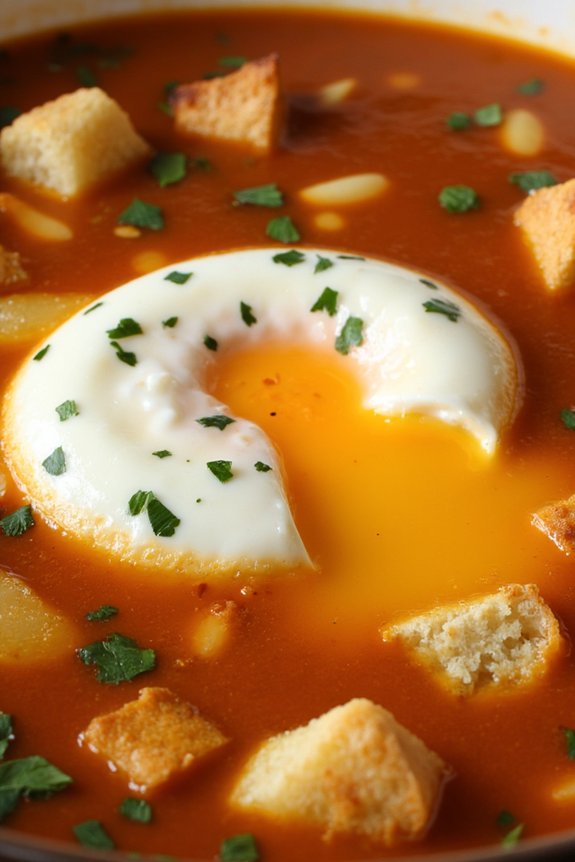
Sopa De Ajo, also known as Garlic Soup, is a traditional Spanish dish that’s particularly popular during the Easter season. This rustic, flavorful soup is beloved for its simplicity and heartwarming qualities. Originating from the humble kitchens of Castile, Sopa De Ajo combines the rich flavors of garlic, smoked paprika, and crusty bread, creating a comforting meal.
It’s perfect for those cooler spring evenings or when you need a dish that’s both satisfying and easy to prepare. The soup’s smooth texture and aromatic components make it a staple in Spanish culinary tradition.
This delightful soup isn’t only deeply nourishing but also incredibly straightforward to make. It primarily uses ingredients that are likely already in your pantry, making it an ideal choice for a quick and affordable meal.
Sopa De Ajo is often served as a starter, but it can easily be enjoyed as a main course. The use of eggs in the soup adds a touch of richness and protein, while the bread thickens the broth, making it hearty and filling.
Whether you’re looking for a way to celebrate the Easter holiday or simply want to enjoy a taste of Spain, Sopa De Ajo is a dish that brings warmth and comfort to the table.
Ingredients (Serves 4-6):
- 8 cloves of garlic, thinly sliced
- 4 tablespoons olive oil
- 1 teaspoon smoked paprika
- 1/4 teaspoon cayenne pepper (optional)
- 4 cups chicken or vegetable broth
- 4 slices of day-old crusty bread, cut into cubes
- 4 eggs
- Salt and pepper to taste
- Fresh parsley, chopped (for garnish)
Cooking Instructions:
- Prepare the Garlic: In a large pot, heat the olive oil over medium heat. Add the sliced garlic and sauté gently until it becomes golden brown and fragrant, being careful not to burn it.
- Add the Spices: Stir in the smoked paprika and cayenne pepper (if using) with the garlic, allowing the spices to blend into the oil for about 30 seconds.
- Incorporate the Broth: Pour in the chicken or vegetable broth, stirring well to combine. Bring the mixture to a gentle simmer.
- Add the Bread: Toss in the bread cubes into the simmering broth. Let them soak and soften, stirring occasionally, for about 5 minutes or until the bread breaks down and thickens the soup.
- Poach the Eggs: Crack the eggs one at a time into a small bowl and gently slide them into the simmering soup. Cover the pot and let the eggs poach for about 4-5 minutes, or until the whites are set but the yolks remain runny.
- Season and Serve: Taste and adjust the seasoning with salt and pepper. Ladle the soup into bowls, ensuring each serving gets a poached egg. Garnish with freshly chopped parsley.
Extra Tips:
For the best results, use day-old bread as it absorbs the broth better and adds more texture to the soup. If you prefer a thicker consistency, you can blend a portion of the soup before adding the eggs.
Adjust the level of cayenne pepper to your taste for a spicier kick. Additionally, if you wish to add a bit more protein or texture, consider including shredded leftover ham or chorizo into the soup.
Serve Sopa De Ajo with a side of extra crusty bread to mop up the flavorful broth.
Hornazo: Spanish Meat Pie
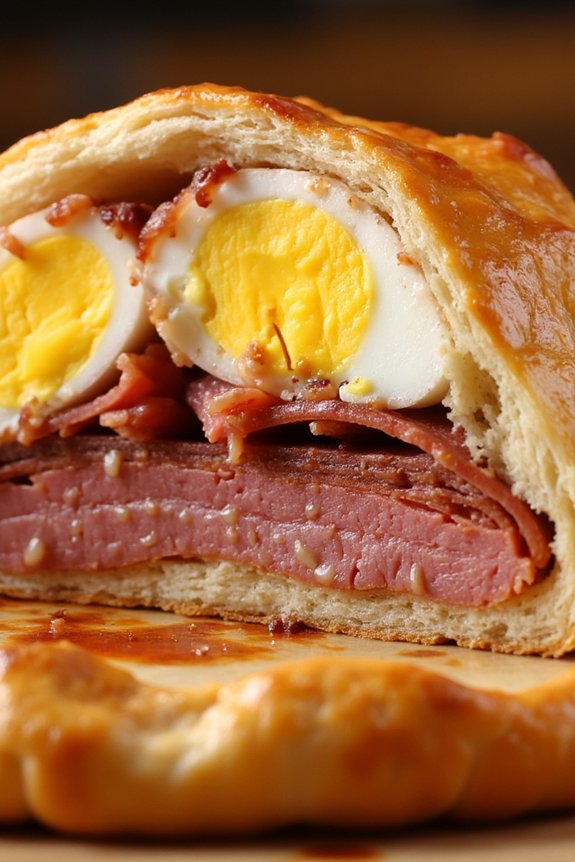
Hornazo is a traditional Spanish meat pie that’s typically enjoyed during the Easter season. Originating from the region of Salamanca, this savory pie is packed with a delicious combination of meats and flavors, making it a hearty and satisfying meal.
The pie is usually made with a rich, flaky pastry crust and filled with a variety of cured meats, hard-boiled eggs, and sometimes chorizo, creating a mouthwatering blend of textures and tastes.
This dish is perfect for a family gathering or a festive celebration, as it can be prepared in advance and served either warm or at room temperature. Its robust flavors make it a favorite among meat lovers and a staple in Spanish Easter cuisine.
The preparation of Hornazo requires a little time and patience, but the end result is well worth the effort, offering a delightful and authentic taste of Spain.
Ingredients for 4-6 servings:
- 500g all-purpose flour
- 150ml olive oil
- 150ml white wine
- 10g salt
- 1 teaspoon sweet paprika
- 3 large eggs (2 for the filling, 1 for egg wash)
- 200g cured ham (jamón)
- 200g chorizo sausage
- 200g pancetta or bacon
- Salt and pepper to taste
Cooking Instructions:
1. Prepare the Dough: In a large mixing bowl, combine the flour, olive oil, white wine, salt, and sweet paprika. Mix the ingredients together until a dough begins to form. Knead the dough on a floured surface for about 10 minutes until smooth and elastic.
Wrap the dough in plastic wrap and let it rest at room temperature for about 30 minutes.
2. Boil the Eggs: While the dough is resting, place two eggs in a saucepan and cover them with water. Bring the water to a boil and let the eggs cook for 10 minutes.
Once done, cool the eggs under cold running water, peel them, and set them aside.
3. Preheat the Oven: Preheat your oven to 180°C (350°F). This guarantees that the oven is hot enough to bake the Hornazo evenly.
4. Prepare the Filling: Slice the cured ham, chorizo, and pancetta into thin strips. Cut the hard-boiled eggs into slices. Set all the filling ingredients aside.
5. Roll out the Dough: Divide the dough into two equal parts. Roll out one half on a floured surface to form the base of the pie, making sure it’s large enough to cover the bottom of your baking dish.
Place the rolled-out dough in the dish and press it to the edges.
6. Assemble the Pie: Layer the sliced cured ham, chorizo, pancetta, and hard-boiled eggs evenly over the dough base. Season with a little salt and pepper to taste.
7. Cover the Pie: Roll out the second half of the dough to form the top crust. Place it over the filling, pressing the edges to seal. Trim any excess dough and crimp the edges for a decorative finish.
8. Egg Wash and Bake: Beat the remaining egg and brush it over the top of the pie to give it a golden, glossy finish.
Using a fork, pierce a few holes in the top crust to allow steam to escape during baking. Place the pie in the preheated oven and bake for 45-50 minutes or until the crust is golden brown.
9. Cool and Serve: Once baked, remove the Hornazo from the oven and let it cool slightly before serving. It can be enjoyed warm or at room temperature.
Extra Tips:
When preparing Hornazo, feel free to customize the filling to suit your taste. You can add other cured meats or even vegetables like roasted peppers for an extra layer of flavor.
If you find the dough difficult to work with, let it rest a little longer to make it more pliable. Additionally, if you prefer a spicier pie, consider using spicy chorizo instead of sweet.
The pie can be stored in the refrigerator for up to three days and reheated in the oven for a few minutes before serving.
Pestiños: Honey-Sweetened Pastries
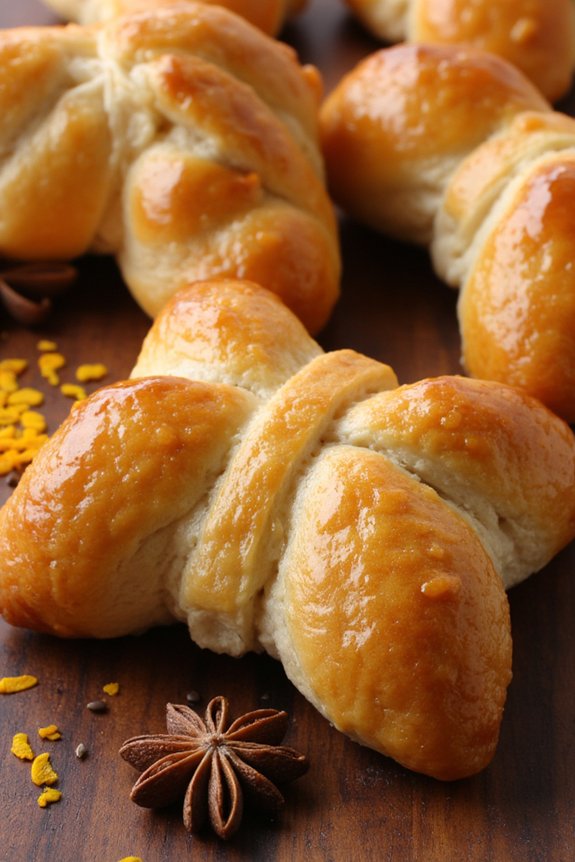
Pestiños are a delightful Spanish treat often enjoyed during the Easter season. These honey-sweetened pastries are deeply rooted in Andalusian traditions and are characterized by their unique flavor profile, featuring hints of orange, aniseed, and cinnamon. The dough is rolled out, cut into small pieces, and then folded into distinctive shapes before being fried to golden perfection.
Once cooked, they’re generously coated in honey, creating a sweet, sticky, and utterly irresistible confection. Making pestiños at home is a rewarding experience that allows you to savor a traditional Spanish flavor. The process involves preparing a dough infused with aromatic spices, rolling it out, shaping, and frying. The final touch of drenching them in honey makes these pastries both a feast for the eyes and the palate.
Ideal for sharing with family and friends, pestiños bring a touch of Spanish culinary tradition to any gathering.
Ingredients for 4-6 servings:
- 500g all-purpose flour
- 125ml olive oil
- 125ml white wine
- 1 tablespoon anise seeds
- Zest of 1 orange
- 1 teaspoon ground cinnamon
- 1 pinch of salt
- 500ml sunflower oil (for frying)
- 200g honey
- 50ml water
Cooking Instructions:
- Infuse the Olive Oil: Begin by heating the olive oil in a small saucepan over low heat. Add the anise seeds and orange zest to the oil, allowing them to infuse for about 5 minutes. The oil shouldn’t boil, just gently warm. Remove from heat and let it cool down to room temperature.
- Prepare the Dough: In a large mixing bowl, combine the flour, cinnamon, and salt. Add the cooled olive oil infusion and the white wine to the dry ingredients. Mix well until a dough forms. Knead the dough on a floured surface for about 5 minutes until it’s smooth and elastic.
- Shape the Pestiños: Roll out the dough to a thickness of about 2mm. Cut the dough into small rectangles (approximately 5×10 cm). Fold each rectangle into a bow-tie shape by pinching the middle of the long side.
- Fry the Pestiños: Heat the sunflower oil in a deep frying pan or saucepan to 180°C (350°F). Fry the pestiños in batches until they’re golden brown, approximately 2-3 minutes per side. Use a slotted spoon to remove them from the oil and drain on paper towels.
- Coat with Honey: In another small saucepan, gently heat the honey with the water until combined and fluid, but not boiling. Dip each pestiño into the honey mixture, making certain they’re well coated. Allow excess honey to drip off before placing them on a wire rack to cool.
Extra Tips:
For the best texture, verify the dough is rolled out evenly and not too thick. If you prefer a less sweet version, you can reduce the amount of honey or even dust them with powdered sugar instead.
It’s crucial to monitor the oil temperature when frying to avoid burning the pastries. Using a candy thermometer can help maintain the right temperature. Finally, pestiños taste best when freshly made, but they can be stored in an airtight container for a few days if needed.
Potaje De Vigilia: Lenten Chickpea Stew
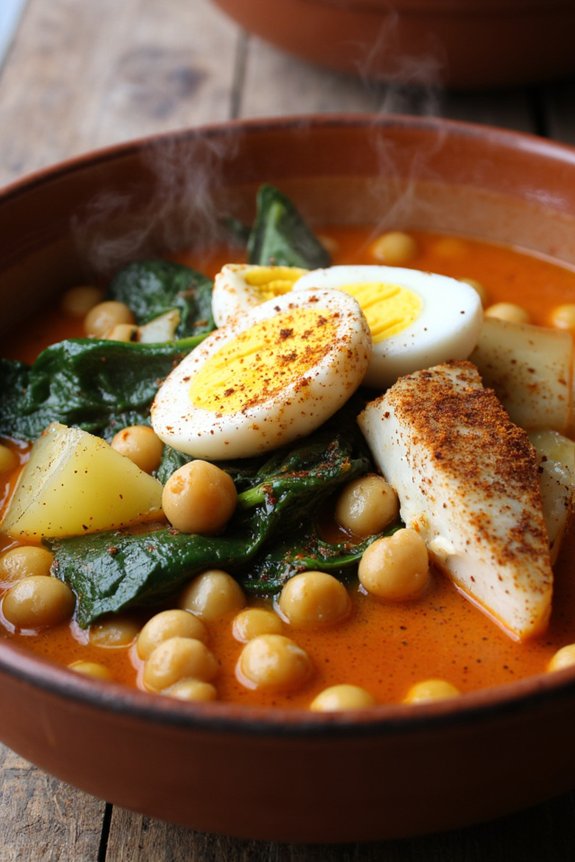
Potaje de Vigilia, also known as Lenten Chickpea Stew, is a traditional Spanish dish commonly enjoyed during the Easter season, especially on Good Friday. This hearty stew is both nourishing and flavorful, making it a perfect choice for those observing Lent, as it’s traditionally a meatless dish. The stew is filled with chickpeas, spinach, and cod, which are simmered together with a blend of aromatic spices to create a comforting and wholesome meal.
The origins of Potaje de Vigilia date back to times when the Catholic Church prescribed abstinence from meat during Lent. This dish has evolved over the years, maintaining its popularity due to its delicious taste and satisfying nature. It’s a true representation of Spanish culinary tradition, combining simple, humble ingredients into a rich and savory stew.
Here’s a recipe to make Potaje de Vigilia for 4-6 people:
Ingredients:
- 400 grams dried chickpeas (or 2 cans of cooked chickpeas)
- 200 grams salted cod, desalted and cut into pieces
- 300 grams fresh spinach, washed
- 2 medium potatoes, peeled and diced
- 1 large onion, finely chopped
- 3 cloves garlic, minced
- 1 bay leaf
- 1 teaspoon sweet paprika
- 1 teaspoon ground cumin
- 4 tablespoons olive oil
- Salt and pepper to taste
- Water or vegetable broth
- 2 hard-boiled eggs, sliced (optional, for garnish)
Instructions:
- Preparation of Chickpeas: If using dried chickpeas, soak them in water overnight. Drain and rinse before using. For canned chickpeas, simply drain and rinse them.
- Desalting the Cod: Place the salted cod in a bowl of cold water and let it soak for 24 hours, changing the water every 6 hours. Once desalted, pat dry with a paper towel and cut into pieces.
- Cooking the Base: In a large pot, heat the olive oil over medium heat. Add the chopped onion and sauté until translucent, about 5 minutes. Stir in the minced garlic and cook for another minute.
- Building the Stew: Add the sweet paprika and ground cumin to the pot, stirring to combine with the onion and garlic. Add the chickpeas, potatoes, bay leaf, and enough water or vegetable broth to cover the ingredients. Bring the mixture to a boil.
- Simmering: Reduce the heat to a simmer, cover the pot, and let cook for about 1 hour if using dried chickpeas (or 20 minutes for canned chickpeas), until the chickpeas are tender.
- Adding Spinach and Cod: Once the chickpeas are cooked, add the spinach and cod pieces to the pot. Stir well and let simmer for an additional 10-15 minutes, until the spinach is wilted and the cod is cooked through.
- Seasoning: Taste and adjust the seasoning with salt and pepper as needed. Remember that the cod is naturally salty, so be cautious with the salt.
- Serving: Serve the Potaje de Vigilia hot, garnished with slices of hard-boiled egg if desired. Enjoy this wholesome stew with crusty bread on the side.
Extra Tips: When preparing Potaje de Vigilia, verify the cod is thoroughly desalted to prevent the dish from becoming overly salty. Using dried chickpeas will give the stew a more authentic texture, but canned chickpeas are a convenient alternative. Feel free to adjust the spices to your liking, and experiment by adding other vegetables such as carrots or leeks for additional flavor. This stew is perfect for making ahead of time, as the flavors develop even more when reheated the next day.
Mona De Pascua: Easter Cake

Mona de Pascua is a traditional Spanish Easter cake that’s deeply rooted in the festive celebrations of Spain. Originating from Catalonia, this delightful cake is a symbol of Easter and is typically given to children by their godparents on Easter Monday.
The cake is a visual masterpiece often decorated with colorful feathers, chocolate eggs, or figures, making it not only a treat for the taste buds but also a feast for the eyes. The cake itself is a sweet, light sponge, sometimes flavored with citrus zest or almonds, and can be filled or topped with chocolate, jam, or cream, depending on the region and personal preference.
Creating a Mona de Pascua at home is a wonderful way to bring Spanish tradition to your Easter celebrations. While the cake may seem elaborate, it’s quite straightforward to make. The key is in the decoration, which allows for creativity and personalization.
Whether you choose to follow a traditional recipe or give it a modern twist, the Mona de Pascua is sure to be a hit with both children and adults alike. This recipe will yield enough cake to serve 4-6 people, perfect for a small family gathering or as a centerpiece for your Easter table.
Ingredients for 4-6 servings:
- 4 large eggs
- 200g granulated sugar
- 200g all-purpose flour
- 1 teaspoon baking powder
- Zest of 1 lemon
- 100g unsalted butter, melted
- 100ml milk
- 1 teaspoon vanilla extract
- 200g dark chocolate, melted (for topping)
- Assorted chocolate eggs and decorations
Cooking Instructions:
- Preheat the Oven: Start by preheating your oven to 180°C (350°F). Grease and line a 22cm round cake tin with parchment paper to prevent sticking.
- Prepare the Batter: In a large mixing bowl, beat the eggs and sugar together until the mixture is pale and fluffy. This should take about 5-7 minutes. Add in the lemon zest and vanilla extract, mixing until combined.
- Combine Dry Ingredients: In a separate bowl, sift together the flour and baking powder. Gradually fold this into the egg mixture, alternating with the milk and melted butter, until you have a smooth batter.
- Bake the Cake: Pour the batter into the prepared cake tin and smooth the top with a spatula. Bake in the preheated oven for 25-30 minutes, or until a toothpick inserted into the center comes out clean. Allow the cake to cool in the tin for 10 minutes before transferring it to a wire rack to cool completely.
- Decorate the Cake: Once the cake is completely cool, pour the melted dark chocolate over the top, spreading it evenly with a spatula. Let the chocolate set slightly before decorating with chocolate eggs and any other desired decorations.
- Serve and Enjoy: Allow the chocolate to fully set before slicing and serving. Enjoy your homemade Mona de Pascua with family and friends as part of your Easter festivities.
Extra Tips:
When making Mona de Pascua, make certain that your ingredients are at room temperature before beginning, as this will help the batter come together more smoothly.
If you prefer a different flavor, consider adding a teaspoon of almond extract or a splash of orange blossom water to the batter for a fragrant twist. For a more traditional touch, you can also include a layer of apricot jam between the cake and the chocolate topping.
Finally, when decorating, let your creativity shine—use colorful sprinkles, marzipan shapes, or edible flowers to make your cake a true Easter centerpiece.
Espinacas Con Garbanzos: Spinach and Chickpeas
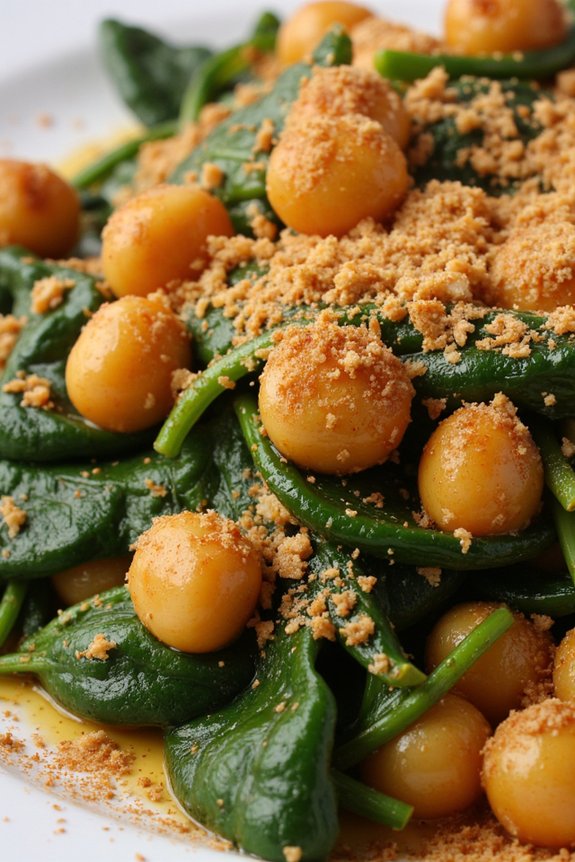
Espinacas Con Garbanzos, or Spinach and Chickpeas, is a traditional Spanish dish often enjoyed during the Easter season. This hearty and nutritious dish is a staple in many Spanish households, particularly in the region of Andalusia. It combines the earthy flavors of chickpeas with the freshness of spinach, all enhanced by a blend of aromatic spices.
Perfect as a main course or a flavorful side dish, Espinacas Con Garbanzos is a wonderful way to incorporate healthy greens and legumes into your Easter menu. The dish isn’t only rich in flavor but also packed with nutrients, making it an ideal choice for those looking to enjoy a wholesome meal.
The combination of spinach and chickpeas provides a good source of protein, fiber, and essential vitamins. The use of simple, yet flavorful ingredients makes this dish a favorite among both vegetarians and non-vegetarians alike. Whether you’re preparing it for a festive gathering or a simple family dinner, Espinacas Con Garbanzos is sure to delight your taste buds.
Ingredients for 4-6 people:
- 500g fresh spinach
- 400g canned chickpeas, drained and rinsed
- 4 tablespoons olive oil
- 1 medium onion, finely chopped
- 3 garlic cloves, minced
- 1 teaspoon ground cumin
- 1 teaspoon smoked paprika
- 1/2 teaspoon ground cinnamon
- 1/4 teaspoon cayenne pepper (optional)
- 1 slice of stale bread or 2 tablespoons of breadcrumbs
- 2 tablespoons red wine vinegar
- Salt and pepper to taste
Cooking Instructions:
- Prepare the Spinach: Rinse the spinach thoroughly under cold running water to remove any grit. Drain and set aside.
- Cook the Aromatics: In a large skillet or pan, heat the olive oil over medium heat. Add the chopped onion and cook for about 5 minutes until it becomes translucent. Stir in the minced garlic and cook for another minute until fragrant.
- Add the Spices: Sprinkle in the ground cumin, smoked paprika, ground cinnamon, and cayenne pepper (if using). Stir well to coat the onions and garlic with the spices, allowing the flavors to blend.
- Toast the Bread: Push the onion mixture to one side of the pan and add the slice of stale bread or breadcrumbs to the other side. Toast the bread until golden brown, then crumble it into small pieces directly in the pan.
- Incorporate the Spinach and Chickpeas: Add the drained chickpeas to the pan and cook for about 3 minutes, stirring occasionally. Gradually add the spinach, allowing it to wilt before adding more. This should take about 5 minutes.
- Finish the Dish: Pour in the red wine vinegar and season with salt and pepper to taste. Stir everything together, ensuring the spinach and chickpeas are well coated with the spiced mixture. Cook for an additional 2-3 minutes to allow the flavors to meld.
- Serve: Transfer the Espinacas Con Garbanzos to a serving dish and enjoy it warm. It pairs well with crusty bread or can be served over rice.
Extra Tips:
For a more robust flavor, consider using smoked paprika instead of regular paprika, as it adds a depth of smokiness to the dish. If you prefer a creamier texture, you can mash some of the chickpeas slightly while cooking.
Additionally, if you can’t find fresh spinach, frozen spinach can be used as a substitute; just be sure to thaw and drain it thoroughly before adding it to the pan. Finally, adjusting the level of cayenne pepper will allow you to control the spiciness to your preference.
Buñuelos De Viento: Light Fritters
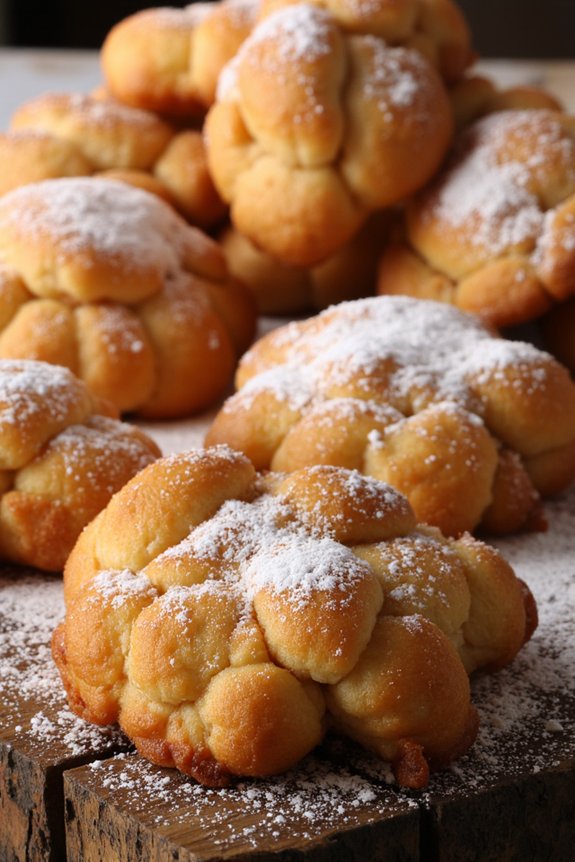
Buñuelos De Viento, also known as “light fritters,” are a delightful Spanish treat often enjoyed during Easter celebrations. These airy, crispy pastries are traditionally served with a dusting of sugar and can be filled with sweet creams or enjoyed plain.
The name “Buñuelos De Viento” translates to “puffs of wind,” which perfectly describes their light and delicate texture. They’re a popular indulgence during festive occasions and can be found in many Spanish households during the Easter period.
Creating these delicious fritters at home can be a fun and rewarding experience. The key to perfect Buñuelos De Viento is in achieving the right consistency of the dough and frying them to a golden perfection. This recipe is designed for a serving size of 4-6 people, making it ideal for a festive gathering or a sweet family treat.
With a few simple ingredients and some careful attention to the cooking process, you can bring a taste of Spain to your Easter celebrations.
Ingredients (Serves 4-6)
- 1 cup all-purpose flour
- 1 cup water
- 4 tablespoons unsalted butter
- 1 tablespoon granulated sugar
- A pinch of salt
- 4 large eggs
- Vegetable oil, for frying
- Powdered sugar, for dusting
Cooking Instructions
- Prepare the Dough Base: In a medium saucepan, combine the water, butter, granulated sugar, and salt. Heat over medium heat until the butter is melted and the mixture comes to a boil. Remove from heat.
- Incorporate the Flour: Add the flour all at once to the saucepan. Stir vigorously with a wooden spoon until the mixture forms a smooth ball and pulls away from the sides of the pan.
- Cool and Add Eggs: Allow the dough to cool slightly. Add the eggs one at a time, beating well after each addition until the dough is smooth and glossy.
- Heat the Oil: Pour vegetable oil into a large, deep frying pan or pot to a depth of about 2 inches. Heat the oil over medium-high heat until it reaches 350°F (175°C).
- Fry the Buñuelos: Using a small cookie scoop or two teaspoons, carefully drop small balls of dough into the hot oil. Fry in batches, turning occasionally, until they’re puffed and golden brown, about 4-5 minutes.
- Drain and Dust: Remove the fritters with a slotted spoon and drain on paper towels. Once slightly cooled, dust generously with powdered sugar before serving.
Extra Tips
For the perfect Buñuelos De Viento, make certain the oil remains at a consistent temperature to prevent them from becoming greasy.
If the dough seems too runny, let it rest for a few minutes to thicken before frying. You can also experiment with fillings like vanilla cream or dulce de leche for an extra touch of sweetness.
Always taste one of the first batches to adjust the cooking time or seasoning as needed. Enjoy your fritters fresh, as they’re best served warm and crispy.
Leche Frita: Fried Milk Dessert
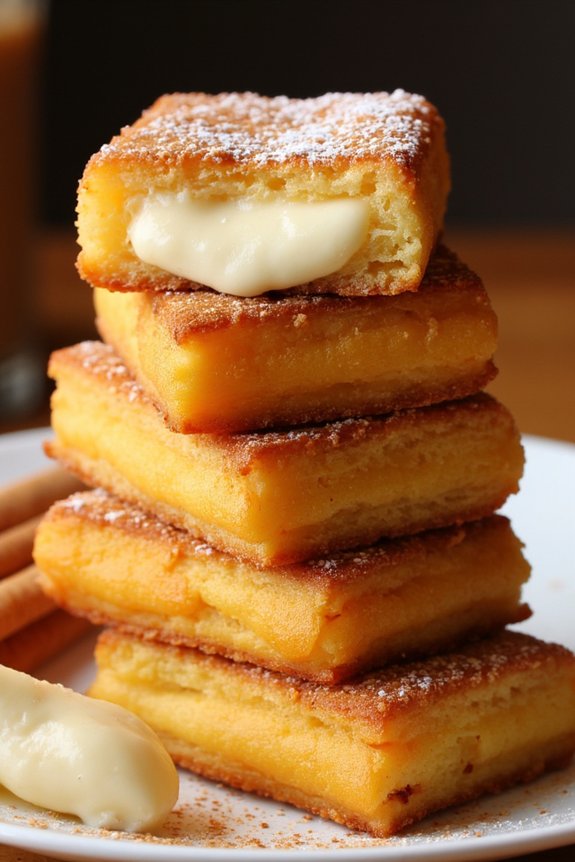
Leche Frita, or Fried Milk Dessert, is a classic Spanish treat that’s both unique and delicious. This dessert is known for its creamy interior and crispy exterior, providing a delightful contrast in textures. Originating from the northern regions of Spain, Leche Frita is often enjoyed during Easter celebrations but can be found year-round in Spanish households.
The process involves creating a thick milk pudding that’s set, cut into pieces, coated in a crispy layer, and then fried to perfection. The dessert is typically flavored with cinnamon and lemon, giving it a subtle yet inviting aroma. While preparing Leche Frita may seem complicated at first glance, it’s actually quite simple once you get the hang of it.
This recipe serves 4-6 people, making it perfect for a family gathering or a special occasion. By following the steps carefully, you can create this delightful Spanish Easter recipe that will surely impress your friends and family.
Ingredients (serves 4-6 people):
- 1 liter whole milk
- 150g sugar
- 120g cornstarch
- 1 cinnamon stick
- Zest of 1 lemon
- 2 large eggs
- 100g all-purpose flour
- Vegetable oil for frying
- Ground cinnamon for dusting
- Powdered sugar for dusting
Instructions:
1. Infuse Milk: Begin by pouring 800ml of the whole milk into a saucepan. Add the cinnamon stick and lemon zest. Heat the milk over medium heat until it reaches a gentle simmer. Don’t let it boil.
Once simmering, remove the saucepan from heat and let it cool slightly, allowing the flavors to infuse.
2. Prepare Cornstarch Mixture: In a separate bowl, mix the remaining 200ml of milk with the cornstarch until smooth. Confirm there are no lumps, as this will be the base for your pudding.
3. Combine and Thicken: Remove the cinnamon stick and lemon zest from the infused milk. Return the milk to the stove and gradually whisk in the cornstarch mixture and sugar. Stir continuously over medium heat until the mixture thickens and starts to pull away from the sides of the saucepan.
4. Set the Pudding: Once thickened, pour the mixture into a greased rectangular dish or baking tray. Smooth the top with a spatula. Let it cool to room temperature, then cover with plastic wrap and refrigerate for at least 4 hours, or until fully set.
5. Prepare for Frying: Once the pudding has set, cut it into squares or rectangles. Beat the eggs in one bowl and place the flour in another. Dip each piece of pudding first into the flour, confirming it’s fully coated, and then into the beaten eggs.
6. Fry the Pudding: Heat vegetable oil in a frying pan over medium-high heat. Carefully place the coated pudding pieces into the hot oil and fry until golden brown on all sides. Remove and drain on paper towels.
7. Serve: Dust the fried pieces with powdered sugar and ground cinnamon before serving. Enjoy warm or at room temperature.
Extra Tips:
When making Leche Frita, patience is key. Make sure to stir the milk and cornstarch mixture constantly to avoid lumps and confirm a smooth consistency.
Also, allow enough time for the pudding to set properly in the refrigerator; this will make it easier to cut and fry. For a richer flavor, you can experiment with adding vanilla extract or a splash of anise liqueur to the milk mixture.
Finally, confirm your oil is hot enough before frying to achieve that perfect crispy exterior without absorbing too much oil.
Empanadas Gallegas: Galician Turnovers
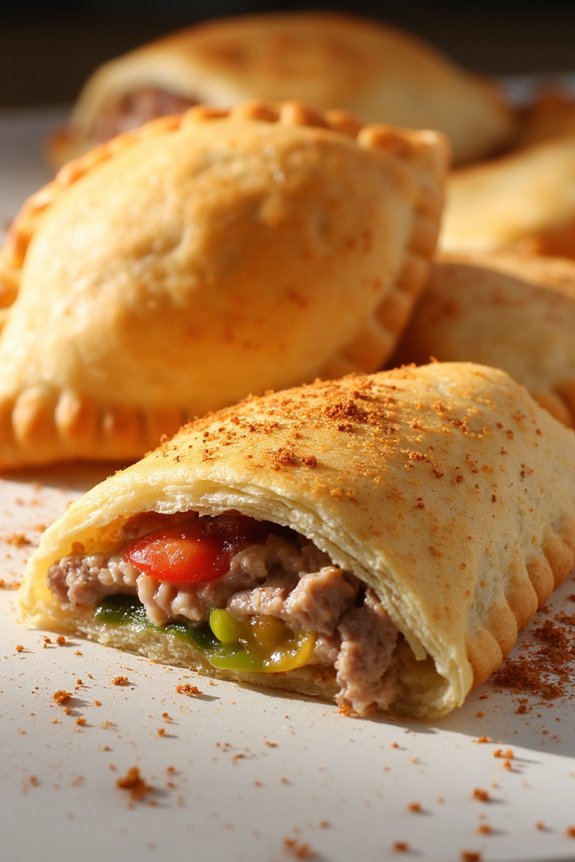
Empanadas Gallegas, or Galician Turnovers, are a beloved Spanish dish originating from the coastal region of Galicia. These savory pastries are typically filled with a delicious blend of seafood, meat, or vegetables, encased in a golden, flaky dough. Traditionally served during Easter celebrations, Empanadas Gallegas bring a taste of Galicia’s rich culinary heritage to the table.
They’re perfect as a main dish or a hearty appetizer, making them a versatile addition to any festive gathering. The beauty of Empanadas Gallegas lies in their adaptability. While the traditional filling often includes tuna or cod, with the addition of bell peppers, onions, and tomatoes, you can customize the recipe based on your preference or the availability of ingredients.
The dough, a simple mixture of flour, water, yeast, and a touch of olive oil, is rolled out and wrapped around the filling, creating a portable and satisfying treat. Whether you’re hosting an Easter brunch or simply want to try a new dish, these turnovers are sure to impress your guests.
Ingredients (Serves 4-6)
For the Dough:
- 4 cups all-purpose flour
- 1 cup warm water
- 1/4 cup olive oil
- 1 packet (7g) dry yeast
- 1 teaspoon salt
- 1 teaspoon sugar
For the Filling:
- 1/4 cup olive oil
- 1 large onion, finely chopped
- 2 cloves garlic, minced
- 1 red bell pepper, diced
- 1 green bell pepper, diced
- 2 medium tomatoes, peeled and chopped
- 2 cans (6 oz each) tuna, drained
- Salt and pepper to taste
- 1 teaspoon smoked paprika
- 1/2 teaspoon saffron threads (optional)
- 1 egg, beaten (for egg wash)
Cooking Instructions
- Prepare the Dough:
- In a large mixing bowl, combine warm water, sugar, and yeast. Allow the mixture to sit for about 5 minutes until it becomes frothy.
- Add olive oil and salt to the yeast mixture. Gradually incorporate the flour, mixing until a dough forms.
- Knead the dough on a floured surface for about 8-10 minutes until smooth and elastic.
- Place the dough in a lightly oiled bowl, cover with a damp cloth, and let it rise for about 1 hour or until it doubles in size.
- Prepare the Filling:
- Heat olive oil in a large skillet over medium heat. Add the chopped onion and garlic, sauté until the onion is translucent.
- Stir in the bell peppers and cook until they begin to soften.
- Add the chopped tomatoes, tuna, salt, pepper, smoked paprika, and saffron, if using. Cook for another 5-7 minutes, stirring occasionally, until the vegetables are tender and the flavors meld together. Set aside to cool.
- Assemble the Empanadas:
- Preheat the oven to 375°F (190°C). Line a baking sheet with parchment paper.
- Divide the dough into two equal portions. Roll out one portion on a floured surface into a large rectangle about 1/4 inch thick.
- Spread the prepared filling evenly over the dough, leaving a 1-inch border around the edges.
- Roll out the second portion of dough and place it over the filling, sealing the edges by pinching and folding them over.
- Brush the top with beaten egg to achieve a golden crust.
- Bake:
- Transfer the empanada to the prepared baking sheet. Make a few slits on the top to allow steam to escape.
- Bake for 35-40 minutes, or until the crust is golden brown and crispy.
- Allow it to cool slightly before slicing and serving.
Extra Tips
When preparing Empanadas Gallegas, make certain that the filling isn’t too wet, as excess moisture can make the dough soggy. If you prefer a vegetarian option, consider using mushrooms or eggplant in place of tuna.
Additionally, if saffron is unavailable, you can substitute with a pinch of turmeric for color. Finally, empanadas can be made ahead of time; simply assemble and refrigerate them unbaked, then pop them in the oven when you’re ready to serve.
Arroz Con Leche: Creamy Rice Pudding
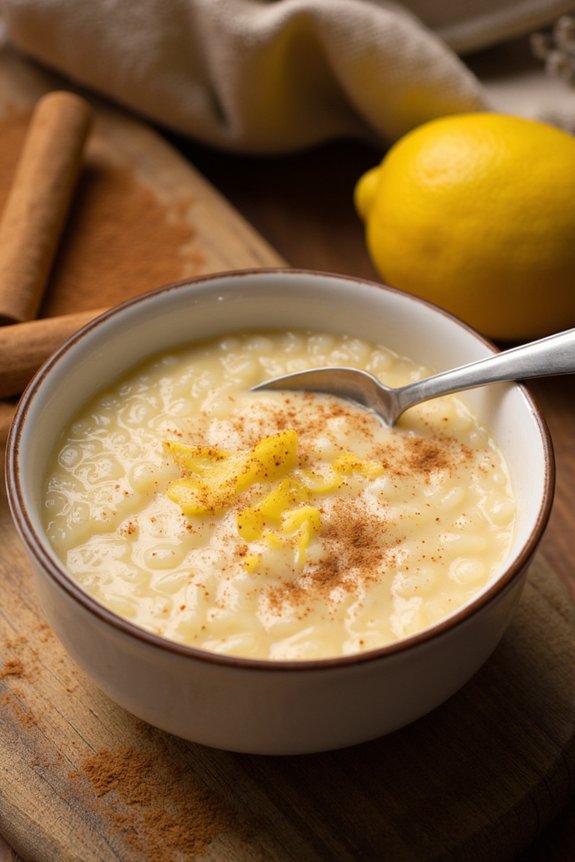
Arroz Con Leche, or Creamy Rice Pudding, is a traditional Spanish dessert that brings warmth and comfort to any meal. This sweet delicacy is particularly cherished during Easter celebrations, offering a creamy texture and subtle hints of cinnamon and citrus. The combination of simple ingredients such as rice, milk, sugar, and spices results in a velvety treat that’s both satisfying and delightfully aromatic.
Arroz Con Leche isn’t only easy to prepare, but it also fills the kitchen with an inviting fragrance that’s reminiscent of home and tradition.
The beauty of Arroz Con Leche lies in its versatility and adaptability. While the basic recipe remains the same, you can easily adjust the sweetness or spice levels to suit your taste. The addition of lemon or orange peel infuses the pudding with a revitalizing zest, while the cinnamon provides a warm, comforting note.
Served either warm or chilled, Arroz Con Leche is a timeless dish that can be enjoyed as a dessert or a sweet snack. This recipe will guide you through creating a perfectly creamy and flavorful rice pudding that serves 4-6 people.
Ingredients:
- 1 cup of short-grain rice
- 4 cups of whole milk
- 1 cup of water
- 1 cup of granulated sugar
- 1 cinnamon stick
- 2 strips of lemon or orange peel (avoid the white pith)
- 1 teaspoon of vanilla extract
- 1 tablespoon of unsalted butter
- Ground cinnamon, for garnish
Instructions:
- Rinse the Rice: Begin by rinsing the rice under cold water until the water runs clear. This step helps remove excess starch and prevents the pudding from becoming too sticky.
- Boil the Rice: In a large saucepan, combine the rinsed rice with 1 cup of water. Bring it to a boil over medium heat, then reduce the heat to low. Cover and simmer for about 10 minutes, or until the rice has absorbed most of the water.
- Add Milk and Flavors: Add the milk, cinnamon stick, and lemon or orange peel to the saucepan with the rice. Stir well and bring the mixture to a gentle simmer over medium heat. Be careful not to let it boil over.
- Cook the Pudding: Reduce the heat to low and cook the rice mixture, stirring frequently, for about 45 minutes. This allows the rice to become tender and the pudding to thicken. Be patient and stir often to prevent the rice from sticking to the bottom of the pan.
- Sweeten and Finish: Remove the cinnamon stick and citrus peels from the pudding. Stir in the sugar, vanilla extract, and butter. Continue to cook for another 5-10 minutes, until the sugar is fully dissolved and the pudding reaches your desired consistency.
- Serve: Spoon the Arroz Con Leche into serving bowls. You can enjoy it warm or refrigerate it for a few hours to serve chilled. Before serving, sprinkle a little ground cinnamon on top for an extra touch of flavor and presentation.
Extra Tips:
For a richer texture, you can substitute part of the whole milk with evaporated milk or cream. If you prefer a less sweet pudding, adjust the amount of sugar to your liking.
It’s important to keep the heat low and stir often during cooking to make sure the pudding doesn’t scorch. Additionally, you can experiment by adding raisins or a splash of rum for an adult version of this classic dish.
Bacalao a La Vizcaína: Basque-Style Cod
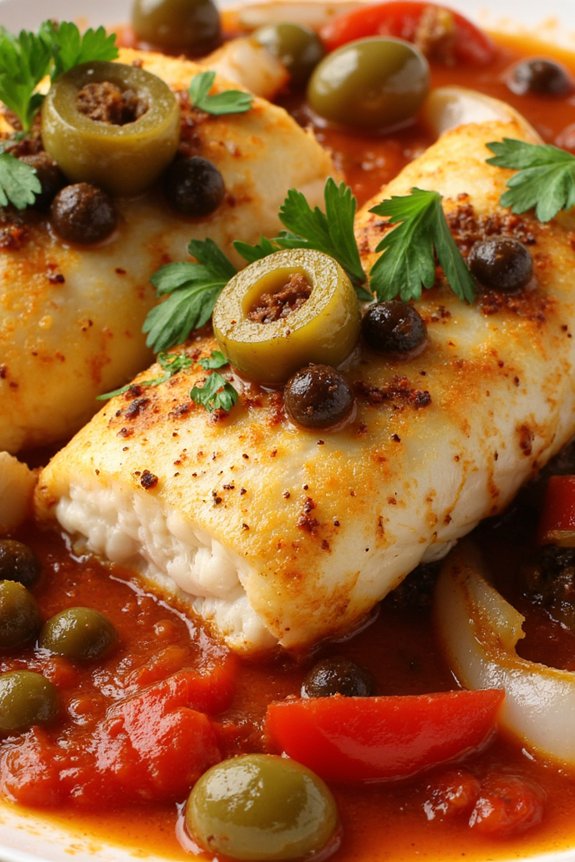
Bacalao a La Vizcaína, or Basque-Style Cod, is a traditional Spanish dish typically enjoyed during Easter. This savory and flavorful dish highlights the rich culinary heritage of the Basque region, combining tender pieces of salt cod with a vibrant sauce made from red peppers, tomatoes, and onions. The dish’s harmonious blend of flavors and textures makes it a standout on any Easter feast table.
To prepare Bacalao a La Vizcaína, it’s essential to start with high-quality salt cod, which should be soaked to remove excess salt and rehydrate the fish. The sauce, a cornerstone of the dish, is prepared using fresh ingredients that are slowly cooked to develop a deep, robust flavor. This dish serves 4-6 people, making it perfect for a family gathering or a festive celebration.
Ingredients
- 2 pounds salt cod, soaked and desalted
- 1/4 cup olive oil
- 2 large onions, thinly sliced
- 4 cloves garlic, minced
- 2 red bell peppers, roasted and peeled
- 4 ripe tomatoes, peeled and chopped
- 1 cup fish stock
- 1/2 cup pitted green olives, sliced
- 1/4 cup capers
- 2 bay leaves
- 1 teaspoon smoked paprika
- Salt and pepper to taste
- Fresh parsley, chopped for garnish
Cooking Instructions
- Prepare the Cod: Begin by soaking the salt cod in cold water for at least 24 to 48 hours, changing the water every 8 hours to guarantee the excess salt is removed. Once desalinated, drain and pat the cod dry with paper towels.
- Cook the Aromatics: Heat the olive oil in a large skillet over medium heat. Add the sliced onions and garlic, cooking until the onions become translucent and fragrant, about 8-10 minutes.
- Make the Sauce: Add the roasted red bell peppers and chopped tomatoes to the skillet. Stir in the fish stock, sliced olives, capers, bay leaves, and smoked paprika. Season with salt and pepper. Reduce the heat to low and let the sauce simmer gently for about 20-25 minutes, allowing the flavors to meld together.
- Add the Cod: Once the sauce is well developed, gently place the pieces of desalted cod into the skillet. Cover and simmer for another 10-15 minutes until the cod is cooked through and flakes easily with a fork.
- Finish and Serve: Remove the bay leaves and adjust seasoning if necessary. Serve the Bacalao a La Vizcaína hot, garnished with freshly chopped parsley, alongside crusty bread or steamed potatoes to soak up the delicious sauce.
Extra Tips
When preparing Bacalao a La Vizcaína, it’s vital to thoroughly desalinate the cod to prevent the dish from being overly salty. If time permits, roast the red peppers yourself for a deeper flavor rather than using jarred ones.
This dish benefits from a slow and gentle cooking process, allowing the sauce to intensify and the cod to absorb all its rich flavors. If you’re preparing this dish in advance, note that it often tastes even better the next day as the flavors continue to develop.
